
Industry route / Frozen prepared foods
Frozen Food Processing Systems
Review the process, equipment duties and project boundary from one defined basis.
Choose the Warm-Side Condition Entering Freezing
Freezer configuration cannot be separated from upstream product size, temperature, water and loading distribution.
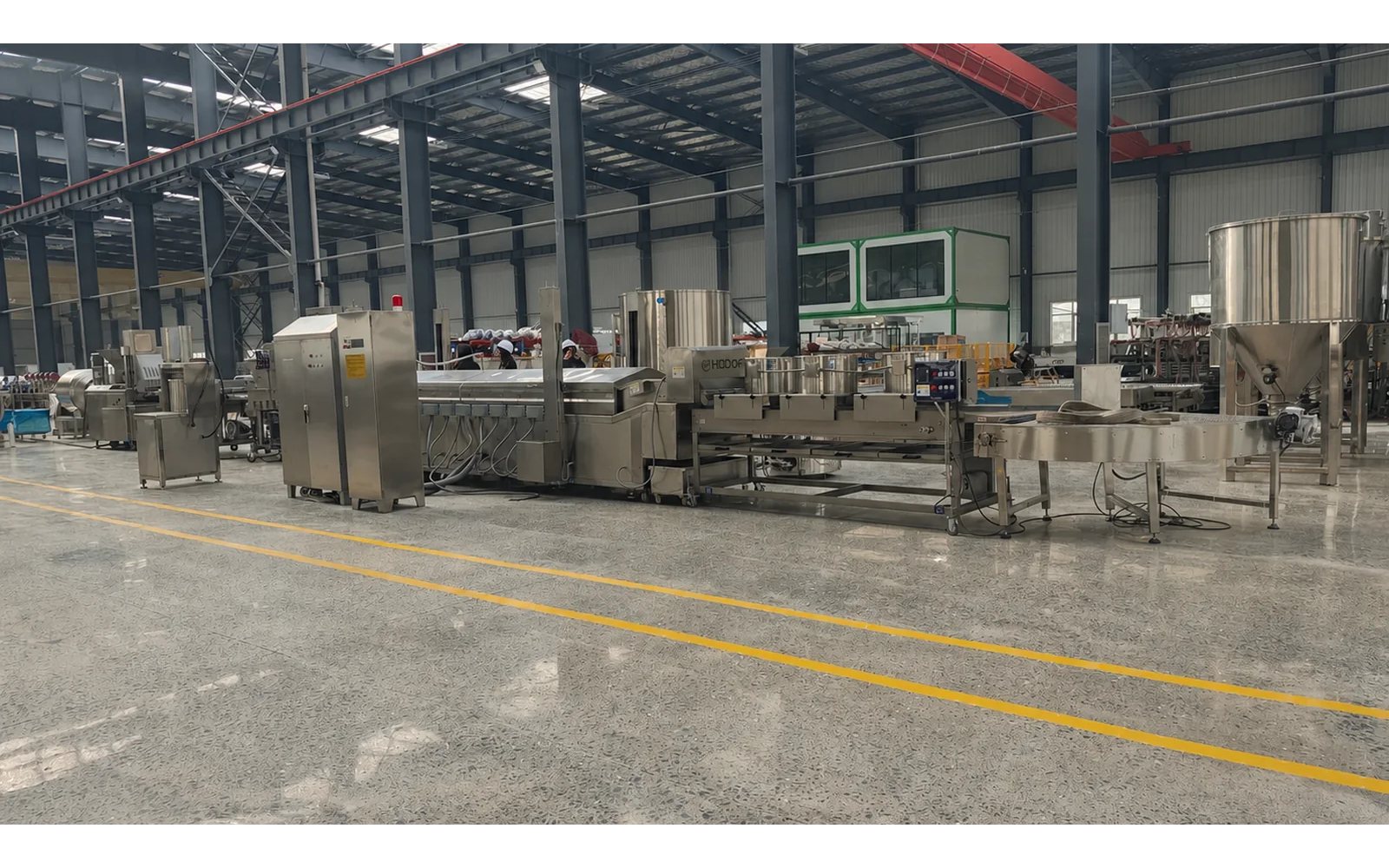
Connect cutting, conditioning and pre-frying to the freezer load.
Potato and strip specification, blanching basis, surface water, oil-side duty, cooling and frozen endpoint are reviewed together.
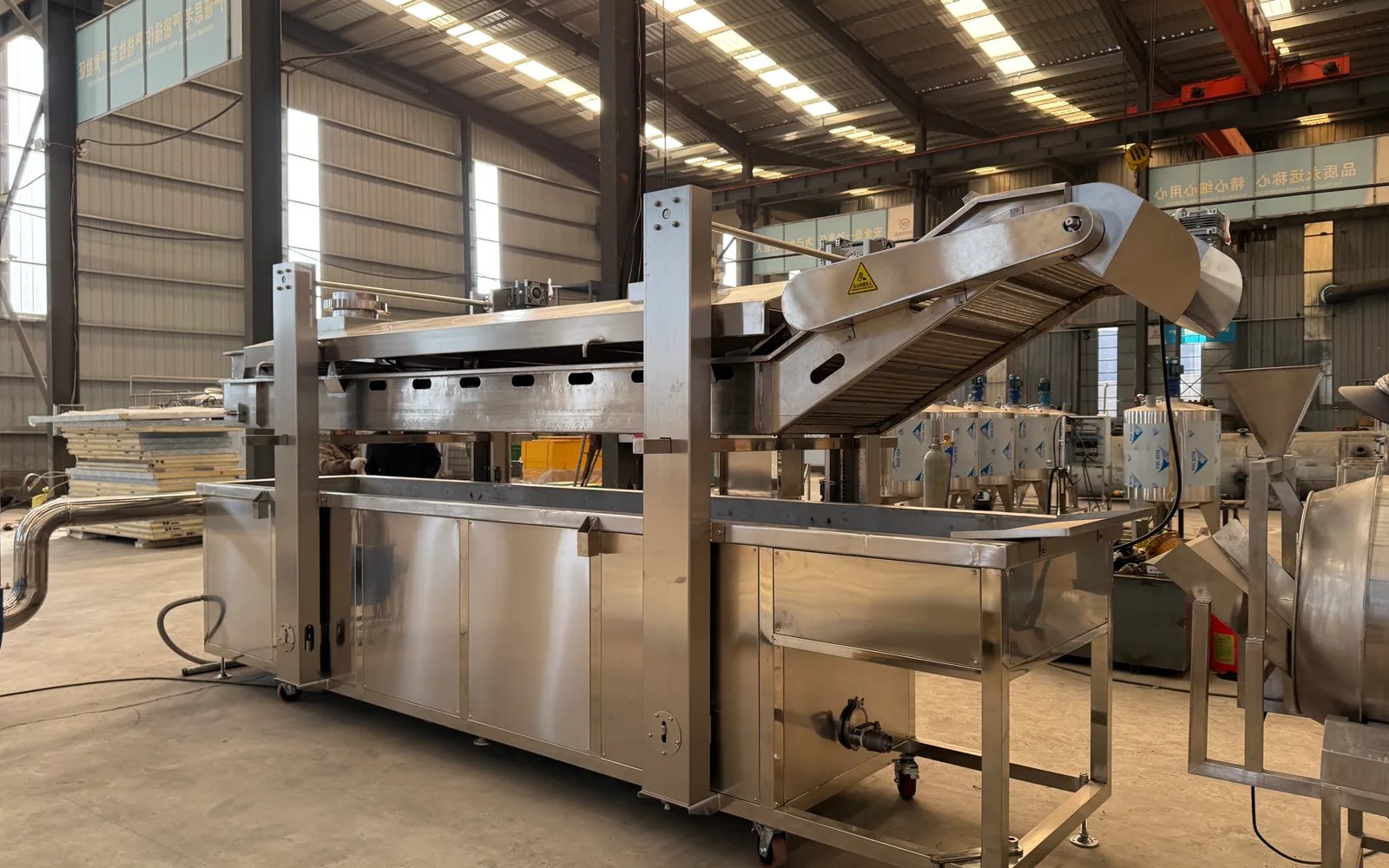
Protect the coating through frying, cooling and freezing.
Coating pickup, loss, thermal endpoint, post-fry transfer and freezer loading require product-specific trials or approved evidence.
Control blanching, cooling and surface water before IQF.
Piece geometry, feed temperature, moisture carry-over and belt distribution define the cold-side load.
Start from the product-load profile.
Provide product dimensions, recipe, incoming state, required frozen endpoint and handling limits. The process and refrigeration boundary is defined from the approved product-load and frozen-endpoint basis.
Thermal and throughput chain
Choose the warm-side condition entering freezing before anything else. The prepared food arrives at the freezer at a certain temperature, moisture and size, and the freezer's duty is defined by that condition. A hot, wet, assembled meal freezes very differently from a cooled, portioned component, and the freezer must be matched to the product that actually enters it.
Record the temperature, the moisture and the pack or tray the product arrives in, then define the frozen result you must deliver. The warm-side condition and the frozen target together set the freezing time, the airflow and the bed or rack loading, and they are the basis for every machine that follows.
Balance Every Stage to the Same Product Basis
A catalog throughput from one machine is not a guaranteed net output for the complete frozen line.
- 01Prepare consistentlyPiece geometry, loading and surface condition entering thermal treatment.Feed inspection
- 02Apply heatBlanching, cooking or pre-frying conditions tied to the approved product.Thermal record
- 03Remove heat and waterCooling and surface-water management before freezer entry.Interface temperature
- 04Freeze and transferLoading, residence, frozen target, defrost and packaging handoff.Frozen-product record
Prepare consistently
Piece geometry, loading and surface condition entering thermal treatment.
Apply heat
Blanching, cooking or pre-frying conditions tied to the approved product.
Remove heat and water
Cooling and surface-water management before freezer entry.
Freeze and transfer
Loading, residence, frozen target, defrost and packaging handoff.
Balance every stage to the same product basis, from cooking to packing. The line must cook, cool, freeze and pack at rates that match, and each stage must hand the next a product at the agreed temperature and condition. A cooker that overproduces a cooler or a freezer that overproduces a packer simply creates a queue that degrades the food.
Use the same product for every calculation. State the portion size, the tray or pack, and the target temperatures, then check each stage against those numbers. The balance is achieved when the slowest stage sets the rhythm and the other stages are sized to it, rather than each machine being bought at its own best-case rate.
Separate Equipment Supply From Site Refrigeration Scope
Each interface is recorded in the responsibility matrix before commercial scope is locked.
Approved feed basis
Product, dimensions, loading, incoming temperature and operating pattern.
Mechanical equipment
Conveyor, enclosure, airflow route, product handling and control interface.
Cold generation
Refrigerant, compressors, evaporator duty, defrost and condensate boundary.
Building and utilities
Room, insulation, floor, drainage, electrical, access and packaging route.
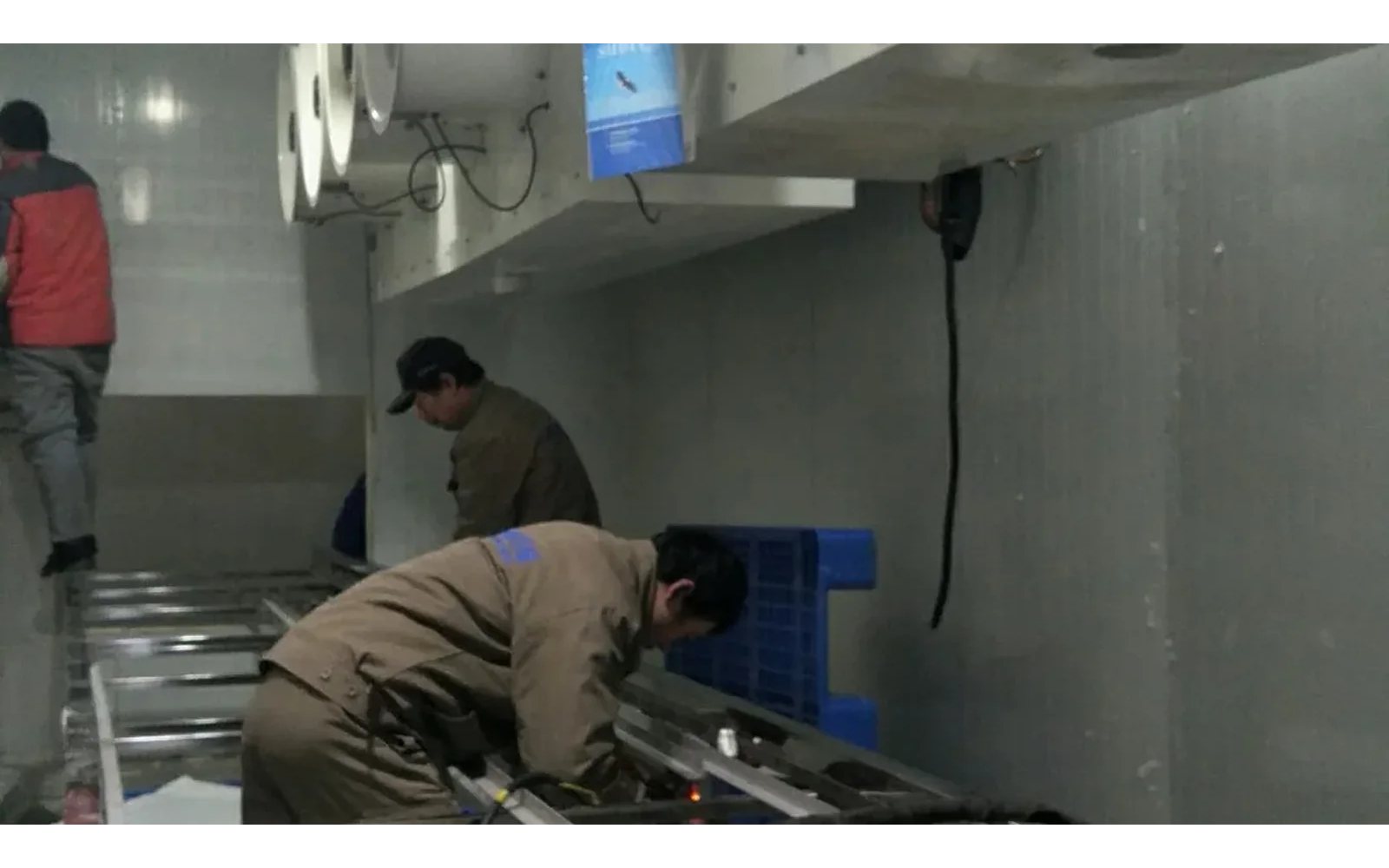
Separate the equipment supply from the site refrigeration scope, because the two are often supplied by different parties and the boundary between them causes disputes. The freezer, the refrigeration plant and the cold store each have an owner, and the interfaces between them must be written down. A freezer that is supplied without its refrigeration, or a cold store that cannot accept the freezer's output, is a project failure waiting to happen.
Write the refrigerant, the electrical and the control interfaces into the scope. Confirm where the refrigeration plant sits, who connects it, and how the freezer's controls talk to the cold store. When the boundary is written, the two scopes can be commissioned together instead of being blamed on each other.
When the boundary is written, the two scopes can be commissioned together instead of being blamed on each other.
Confirm where the refrigeration plant sits, who connects it, and how the freezer's controls talk to the cold store.
Define What Will Be Measured and Under Which Conditions
Do not convert a product category or image into an output, compliance or finished-quality claim.
| Feed record | Product identity, dimensions, temperature, moisture and loading distribution. |
|---|---|
| Operating record | Run duration, interruptions, defrost state, ambient condition and equipment settings. |
| Frozen result | Buyer-defined endpoint, sampling method, product integrity and packaging handoff. |
| Scope record | Refrigeration, utilities, controls, installation, commissioning and documentation boundaries. |
Define what will be measured and under which conditions before the line is accepted. State the product's centre temperature at discharge, the permitted temperature spread and the frozen quality you require, and agree how each will be measured. A freezer that meets a surface-temperature target but leaves the centre warm has not met the duty, and only an agreed measurement exposes that.
Then hold the measurement conditions constant between the factory and the site. The product, the load, the ambient temperature and the measurement method should be the same in both tests, so the acceptance compares two measurements of the same thing rather than two different demonstrations.
Hold the measurement conditions constant between the factory and the site, so acceptance compares two measurements of the same thing.
The product, the load and the measurement method should be the same in both tests.
Continue the Technical Review
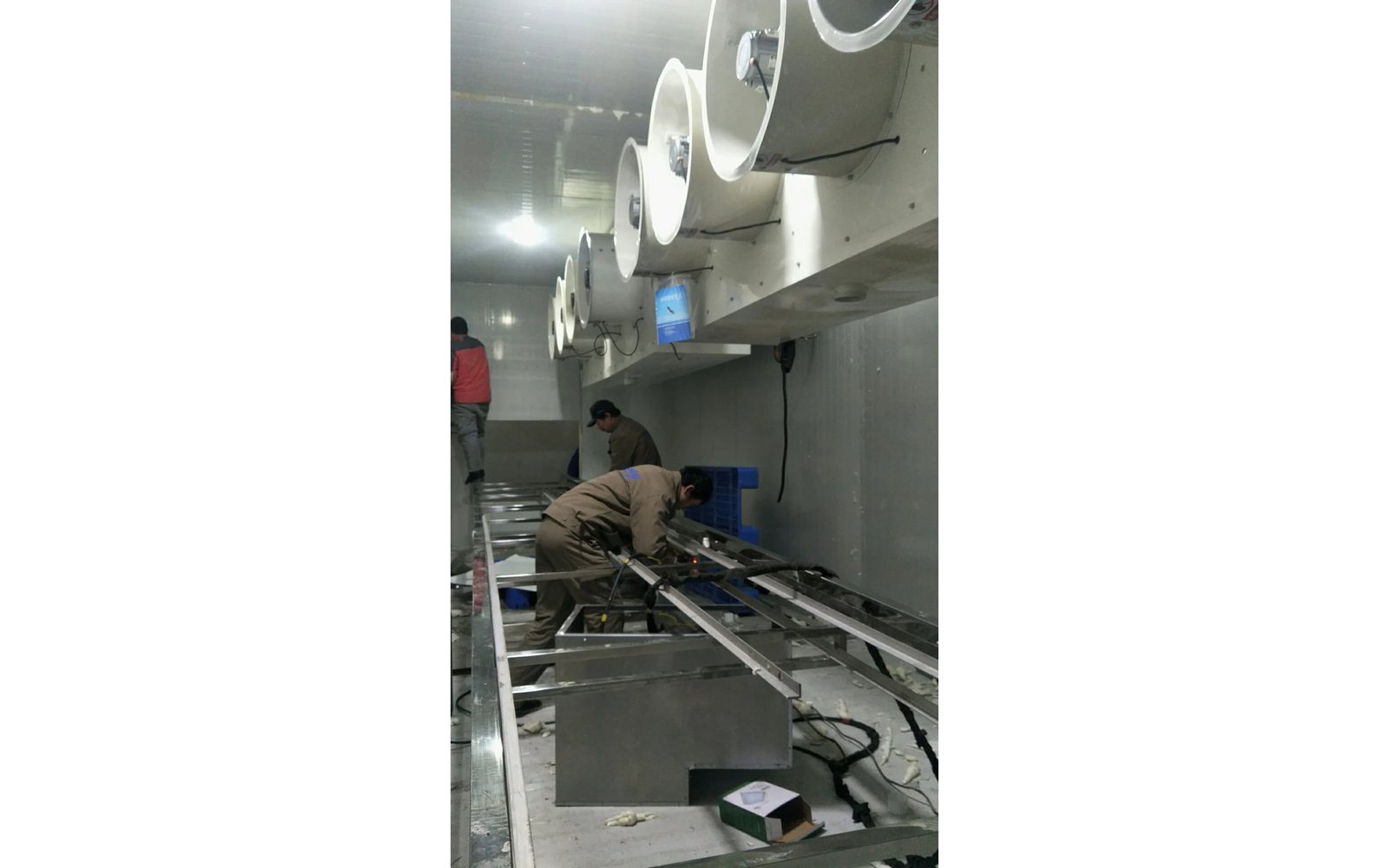
IQF Freezing Tunnel
Review thermal basis, product loading and refrigeration responsibility.
IQF Throughput Balancing
Connect warm-side feed conditions to cold-side capacity.
Quotation Risk Checklist
Check inclusions, exclusions, assumptions and acceptance boundaries.
| Feed basis | Provide product geometry, loading, incoming state and temperature |
|---|---|
| Frozen endpoint | Define the required discharge temperature, product condition and handling window |
| Refrigeration boundary | Assign refrigerant, cold generation, defrost, condensate, controls and site responsibilities |
Frequently asked questions
What controls IQF freezer selection?
How is the cold-side responsibility defined?
Why must the warm-side process be reviewed before the freezer?
Continue the technical review past the first equipment list and into the details that decide whether the line runs. Confirm the cooling and freezing capacities, the pack format, the cleaning and defrost schedule, and the changeover between products, and ask for the trial evidence that supports each claim. The first list is a starting point; the review is where the project is actually settled.
Keep the questions open until the evidence is in. A prepared-food line crosses cooking, chilling, freezing and packing, and each boundary deserves the same scrutiny as the machines. The review is complete when the buyer can explain why each machine is there and what evidence supports its selection.
Protect the Product Through the Freezing Curve
The freezing curve is a quality curve
Protect the product through the freezing curve, because how quickly the food passes through the freezing range determines its texture and shelf life. Large ice crystals damage the structure of meat, sauce and vegetables, so the freezer must move the product through the critical zone quickly enough to form small crystals. The freezing curve is a quality curve, not just a temperature reading.
Record the curve for your product and keep it with the acceptance data. Different products freeze at different rates, and the evidence that the freezer protects your product is the measured time-temperature curve through the critical range, not a single discharge temperature at the end of the run.
Large ice crystals damage the structure of meat, sauce and vegetables, so the freezer must move the product through the critical zone quickly. The evidence that it does so is the measured time-temperature curve, not a single discharge reading at the end of the run.
Different products freeze at different rates, and the curve is the evidence that the freezer protects yours.
Keep that curve with the acceptance data, because it is the quality evidence for the frozen product.
A freezer that meets a single discharge reading but freezes slowly has still damaged the texture the customer will notice.
Related pages
IQF Freezing Tunnel
Review IQF product loading, fluidized-bed arrangements, frozen endpoint, refrigeration boundary, installation evidence and acceptance scope.
Frozen French Fries Production Line
Review potato preparation, strip conditioning, pre-frying, cooling, IQF freezing, equipment references and factory interfaces as one line.
Fried Food Processing Line
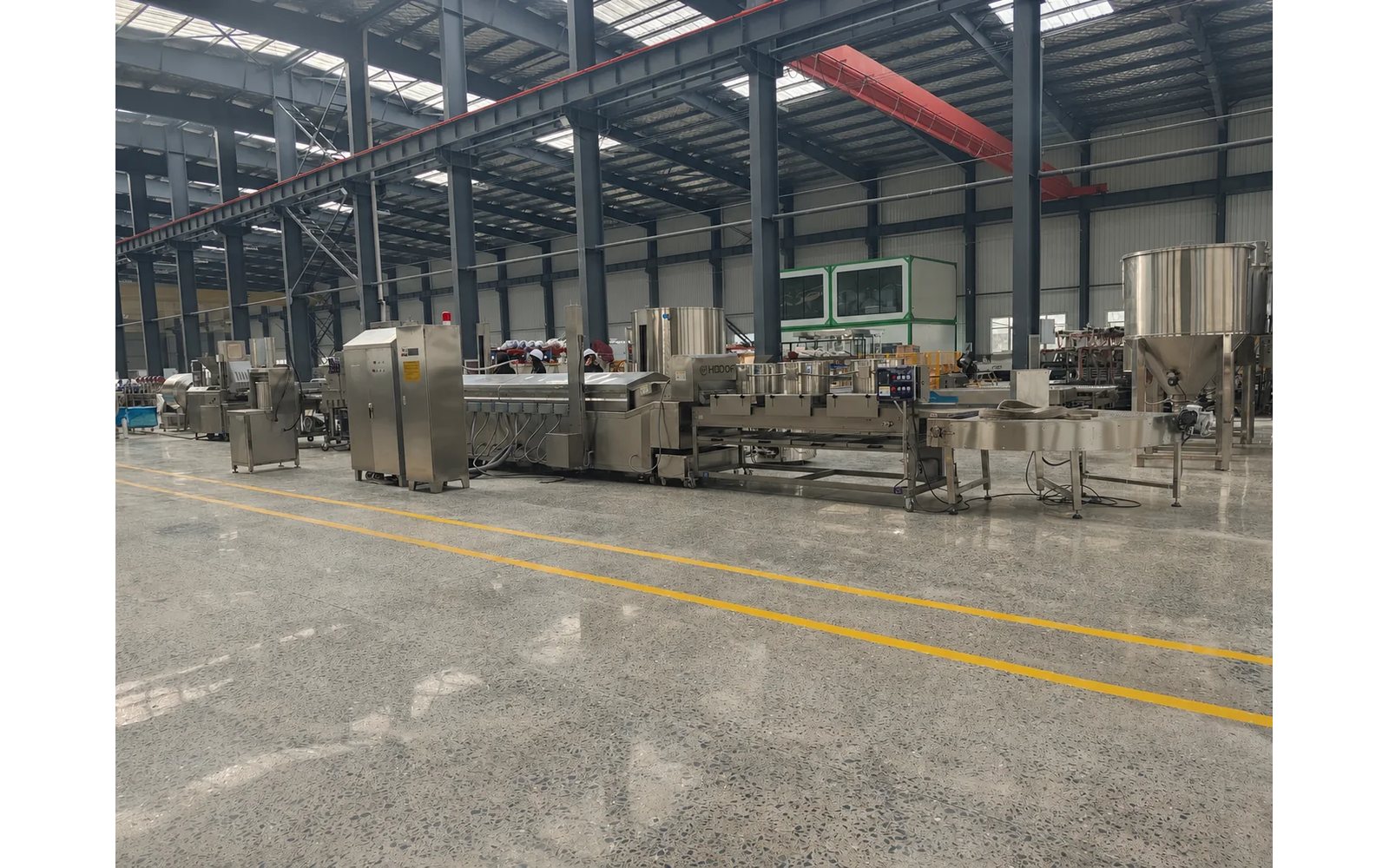
Configure preparation, frying, oil handling, cooling, seasoning and freezing around the finished product, factory and acceptance basis.
IQF Freezing Throughput Balancing
Balance IQF loading, inlet temperature, surface water, airflow, residence, refrigeration duty, defrost and downstream cold-chain handling.