
Prepared foods / Forming, coating and frying
Coated Food Frying Line
Review the process, equipment duties and project boundary from one defined basis.
Follow the Product Through Every Surface and Thermal Change
Switch stages to see the equipment duty, product evidence and interface that must be reviewed.
Create a stable geometry for coating and heating.
Product recipe, incoming temperature, shape, thickness, piece mass and feed orientation define the duty.
- Evidence: approved formed sample and dimensional check
- Interface: mix feed, compressed air and discharge alignment
- Open point: selected forming model
Prepare the surface and control loose powder.
Powder type, application method, recycle boundary, dust handling and transfer loss require definition.
- Evidence: pickup and loss measurement method
- Interface: powder supply and extraction
- Open point: tunnel or drum route
Control coverage, underside contact and recipe condition.
Viscosity, temperature, solids, recirculation, immersion or curtain route and changeover plan affect selection.
- Evidence: approved batter and coverage sample
- Interface: batter preparation and return
- Open point: dipping or curtain application
Protect adhesion through transfer into frying.
Crumb size, top and bottom coverage, bed condition, compression and recycle scope are product-specific.
- Evidence: pickup, adhesion and transfer-loss record
- Interface: crumb feed, return and dust handling
- Open point: coating sequence and recycle boundary
Balance coating stability, core result and oil-side loading.
Heating route, product loading, residence basis, oil circulation, filtration and extraction form one system scope.
- Evidence: approved product test and thermal record
- Interface: oil, heat, extraction and controls
- Open point: fryer configuration
Post-fry and cold-side handoff
Protect texture before cooling, freezing or packing.
Oil removal, cooling medium, transfer time, freezer feed or packaging temperature must be defined.
- Evidence: discharge and interface condition
- Interface: cooling, optional IQF and packing
- Open point: cold-side inclusion
Root causes, constraints and process risks
Follow the product through every surface and thermal change, because coated food changes at each stage. Record the core, the batter or breading, the coating pickup and the target finished colour and moisture. The coating protects and insulates the core while the fryer cooks it, so the coating thickness, the oil temperature and the residence time must be balanced to cook the centre without burning the surface.
Then record how the coated piece behaves in transfer. Breading sheds crumbs, wet batter sticks, and a fragile coating breaks under rough handling, so the conveyors, the fryer belt and the de-oiling stage must all be selected for the coating's fragility. The line is designed around the surface changes the product goes through, not around a nominal capacity.
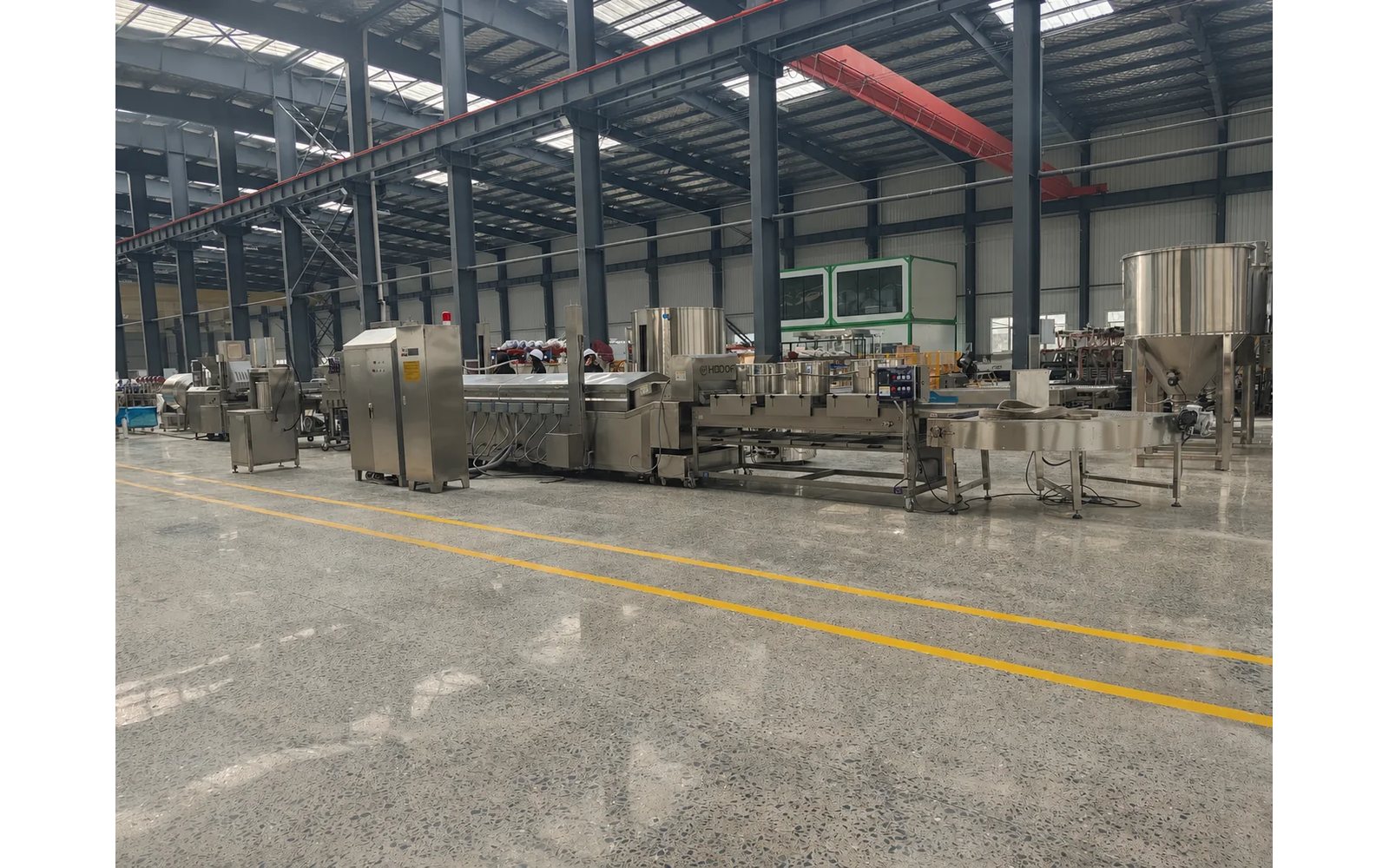
Measure Pickup, Loss and Thermal Result as a Sequence
One accepted value cannot stand in for the complete process. Each method and sampling point is agreed.
- 01GeometryPiece dimensions, mass and orientation leaving forming.Dimensional check
- 02Coating pickupRecipe, application and pickup measurement at each layer.Mass-balance method
- 03Transfer lossAdhesion and loose coating through conveyor handoffs.Loss collection basis
- 04Thermal resultBuyer-defined core, surface, color and texture criteria.Acceptance method
Geometry
Piece dimensions, mass and orientation leaving forming.
Coating pickup
Recipe, application and pickup measurement at each layer.
Transfer loss
Adhesion and loose coating through conveyor handoffs.
Thermal result
Buyer-defined core, surface, color and texture criteria.
Verified configuration logic and equipment combination
Measure pickup, loss and thermal result as one sequence rather than three separate concerns. Coating pickup changes the oil absorption and the cooking time; crumbs that fall off add to the oil load and the filtration duty; the thermal result is what the customer sees as colour and texture. When the three are measured together, a change in one is traced to its effect on the others.
Fix the coating specification before tuning the fryer. State the pickup percentage, the permitted crumb loss and the target core temperature, then use a trial to hold the coating and the frying conditions constant while the result is measured. Without a fixed coating basis, the fryer cannot be judged because the product keeps changing.
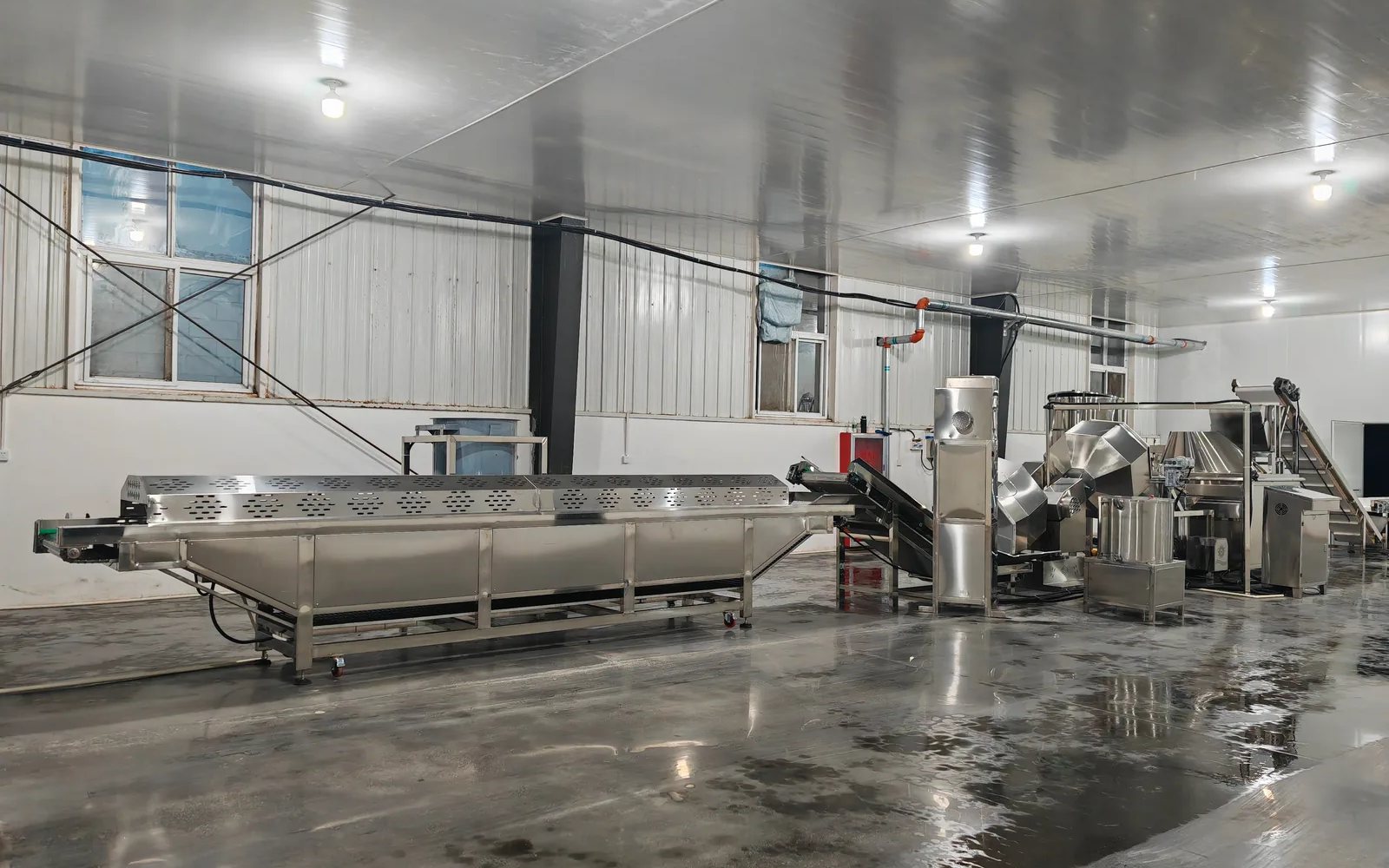
Compare Application Duty Before Belt Width
References come from the reviewed Hadof frying and coating catalog, printed pages 9-18. Reconfirm dimensions and current data before quotation.
AMF600-V / AMF600-IV / AMF400-II / AMF260-II
Published outputs approximately 800-1,600 / 500-1,000 / 200-600 / 100-300 kg/h. Belt widths 600 / 600 / 400 / 260 mm.
Dipping or curtain application
NJJ400-V / 600-V / 1000-V and SJJ400-V / 600-V / 1000-V. Published speed 4-20 m/min; belt widths 400 / 600 / 1,000 mm.
Tunnel or drum powder application
SFJ400-VI / 600-VI / 1000-VI and GJJ400-II references. Published SFJ speed 4-20 m/min; belt widths 400 / 600 / 1,000 mm.
XSX200 / XSX300 small crumb coaters
Published speed 8 m/min / 3-15 m/min, 1.1 kW, with 200 / 300 mm belt references.
Compare the coating application duty before comparing belt widths. The way coating is applied, by predusting, batter, breading or a combination, decides the pickup, the adhesion and the final texture, and it sets the equipment before the fryer is sized. A machine quoted on belt width alone tells you nothing about whether the coating will stay on through the fryer.
Then size the fryer belt for the coated piece and the required output. Convert the demand into pieces per minute and belt loading, and confirm that the coating can survive the belt, the oil flow and the de-oiling stage. The belt width follows from the coating duty and the product size, not the other way around.
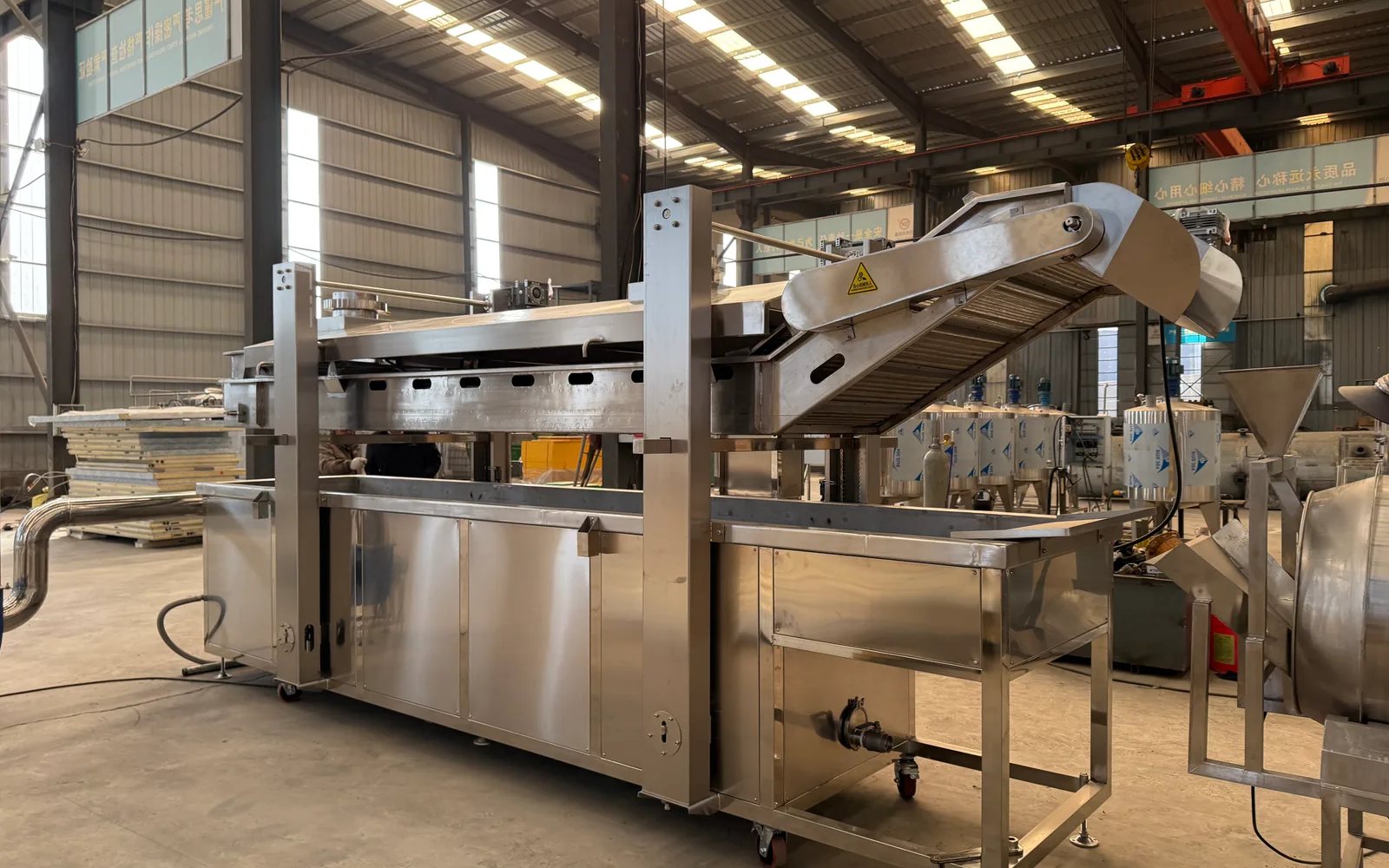
Coordinate Product, Powder, Oil and People Flows
Layout review includes operator access, material replenishment, wet and dry cleaning, extraction and downstream cold-side interfaces.
Ingredient supply
Product mix, batter, powder and crumb preparation and replenishment routes.
Wet and dry zones
Manage slurry, powder, water and oil without uncontrolled cross-flow.
Extraction and drainage
Define fryer exhaust, make-up air, wash water, drains and cleaning windows.
Downstream boundary
Cooling, optional freezing, inspection, packaging and control signals.
Coordinate the product, the powder, the oil and the people as one flow. The coated product moves through the line, but so does the breading that is applied and shed, the oil that is used and filtered, and the labour that loads, inspects and changes over the line. Each flow has its own volume and its own failure mode, and the line works when all four are planned together.
Give the crumb and oil streams a defined route. Shed crumbs must be collected and returned or removed without contaminating the oil, and the oil must be filtered continuously to keep the finished colour clean. Operators need access to the coating stations and the fryer for inspection, so the people flow is part of the layout, not an afterthought.
Each of the four flows has its own volume and failure mode, and the line works when all four are planned together.
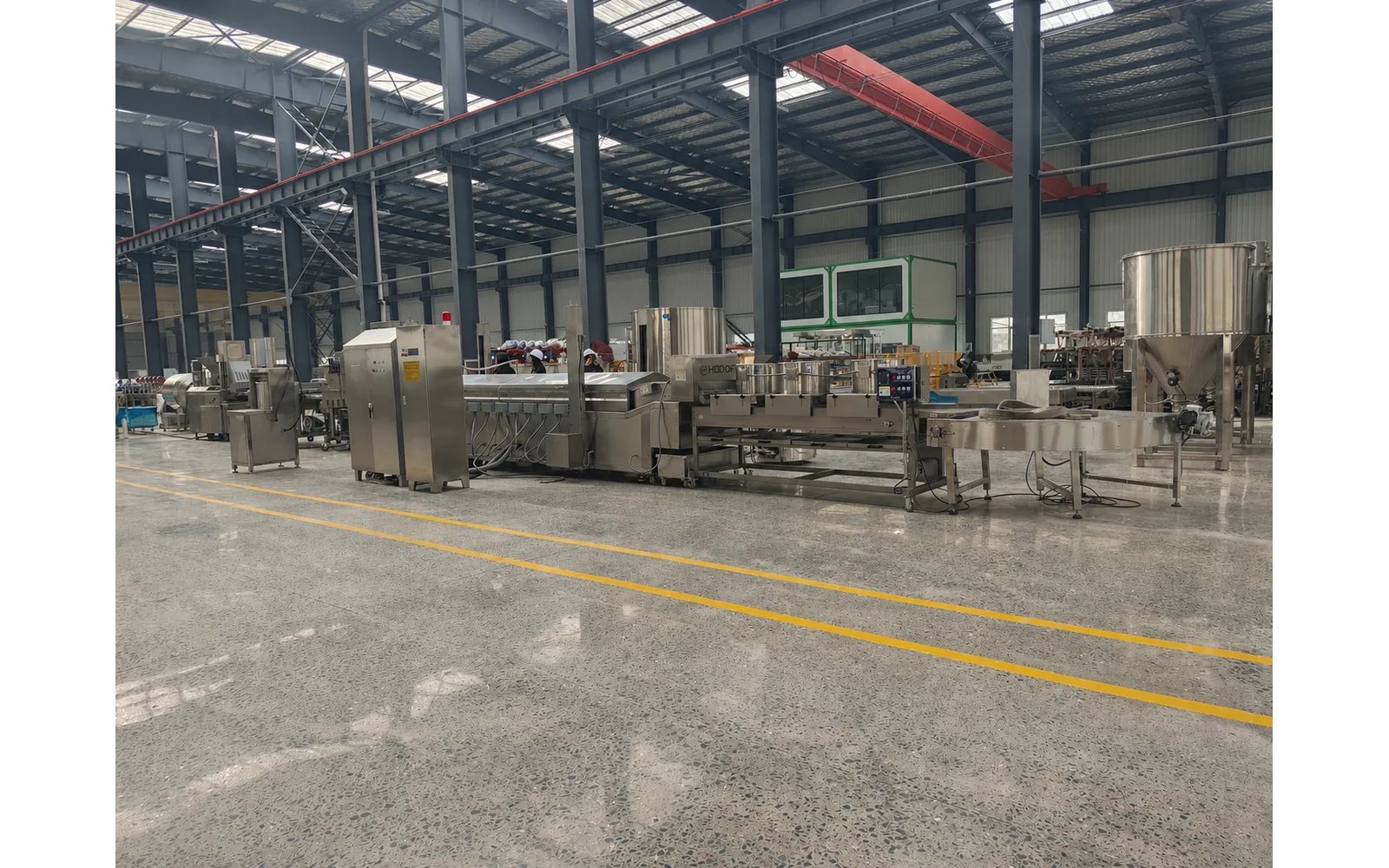
Approve Product and Test Conditions Before Scope Lock
No product result, output, hygiene or certification conclusion is inferred from the line name.
| Product and recipe | Representative product, coating materials, temperatures and approved sequence. |
|---|---|
| Measurement method | Geometry, pickup, loss, thermal result, color, texture and sampling points. |
| Operating basis | Target rate, run duration, recipe changeovers, cleaning and planned interruptions. |
| Scope boundary | Utilities, oil, extraction, cooling or freezing, installation and documentation. |
Snack Food Processing Systems
Review product-family and operating-model procurement logic.
Indonesia Chicken Nugget Frying Line
Documented project context within its documented scope.
Engineering Verification
See the evidence path from assumption to acceptance.
| Automatic forming series | AMF600-V / AMF600-IV / AMF400-II / AMF260-II |
|---|---|
| Slurry dipping series | NJJ400-V / NJJ600-V / NJJ1000-V |
| Slurry curtain series | SJJ400-V / SJJ600-V / SJJ1000-V |
| Tunnel powder series | SFJ400-VI / SFJ600-VI / SFJ1000-VI |
Frequently asked questions
Which coating equipment route fits the product?
How is coated-food line output confirmed?
Can cooling or IQF freezing be included after frying?
Approve the product and the test conditions before the scope is locked. Write down the coating recipe, the pickup, the oil temperature, the residence time and the target core temperature, and agree how the finished colour, moisture and texture will be measured. A trial without these conditions is a demonstration, not evidence.
Run the trial with the actual coating and core, at the production rate, and record the results against the written targets. Then carry the same conditions into the quotation and the acceptance test so the line is judged on the same basis it was selected. When the conditions are fixed first, the scope lock is a decision you can defend.
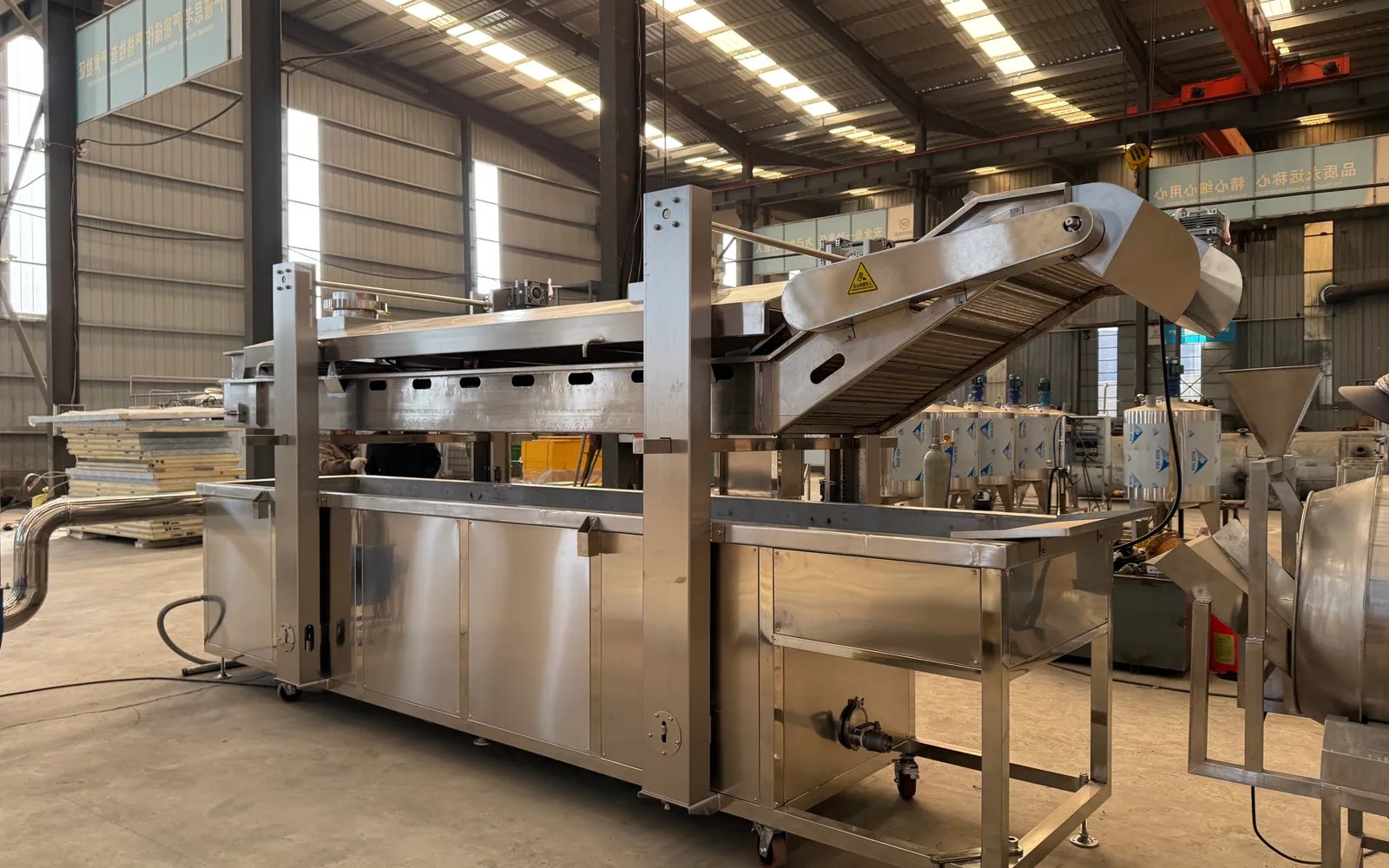
Carry the Coating Basis Into Commissioning
One coating basis from trial to site
Carry the coating basis into commissioning so the line is accepted on the same terms it was specified. Record the coating recipe, the pickup and the frying conditions, then repeat the measurement on site with the same product. Commissioning is where a line proves itself, and it can only do so if the acceptance test repeats the trial conditions.
Include the crumb and oil handling in the commissioning check. Confirm that the filtration keeps the oil clean, that the crumb route does not contaminate the product, and that the operators can run the coating stations and the fryer safely. The line is delivered when the product, the coating and the oil system all meet the written basis.
Commissioning is the moment the line proves itself, and it can only do that if the test repeats the trial conditions.
Include the crumb and oil handling in that check: the filtration must keep the oil clean, the crumb route must not contaminate the product, and the operators must be able to run the coating and frying stations safely. The line is delivered when the product, the coating and the oil system all meet the written basis.
Related pages
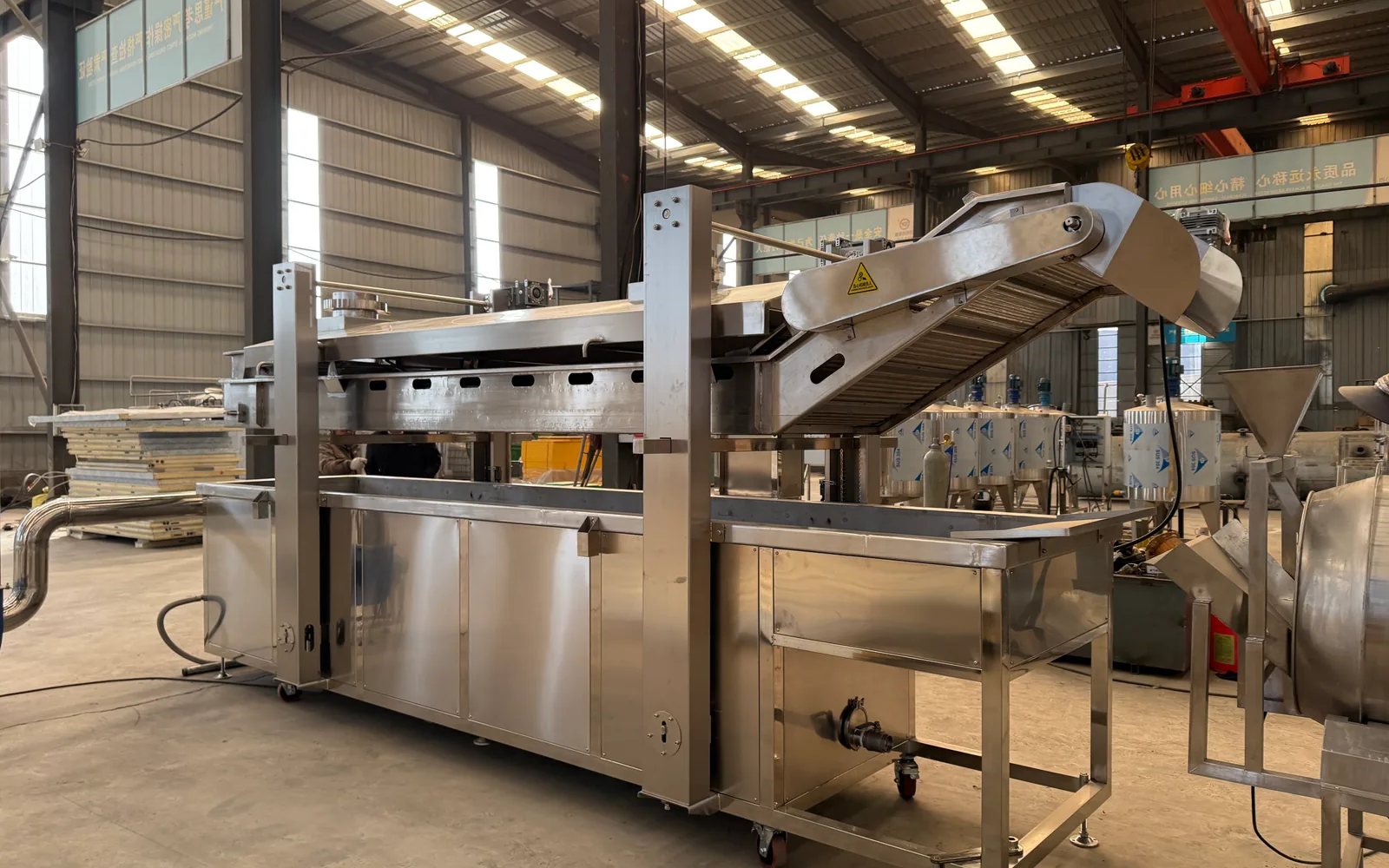
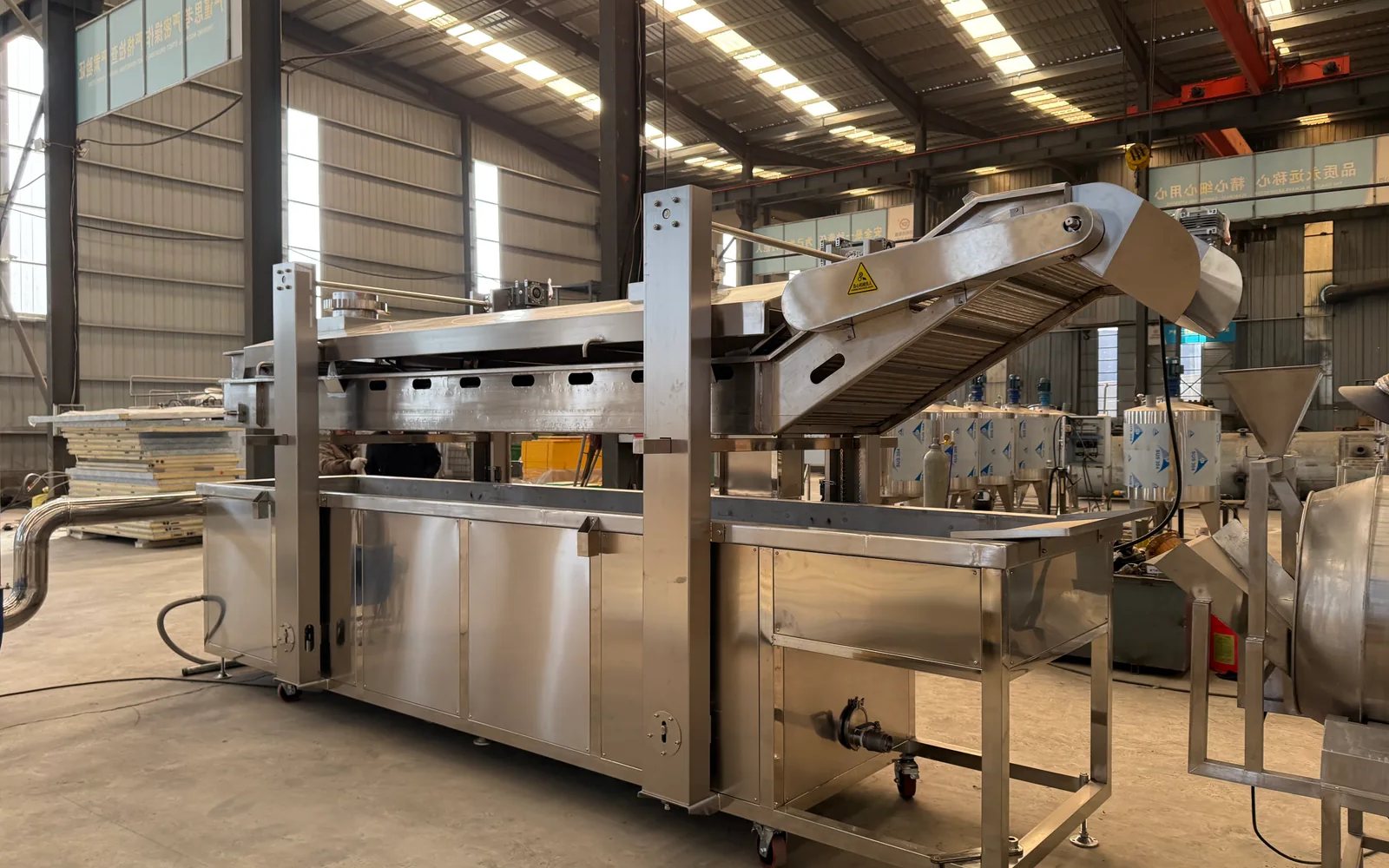
Continuous Fryer
Compare verified Hadof continuous fryer references, then review product loading, heating route, oil handling, factory interfaces and acceptance scope.
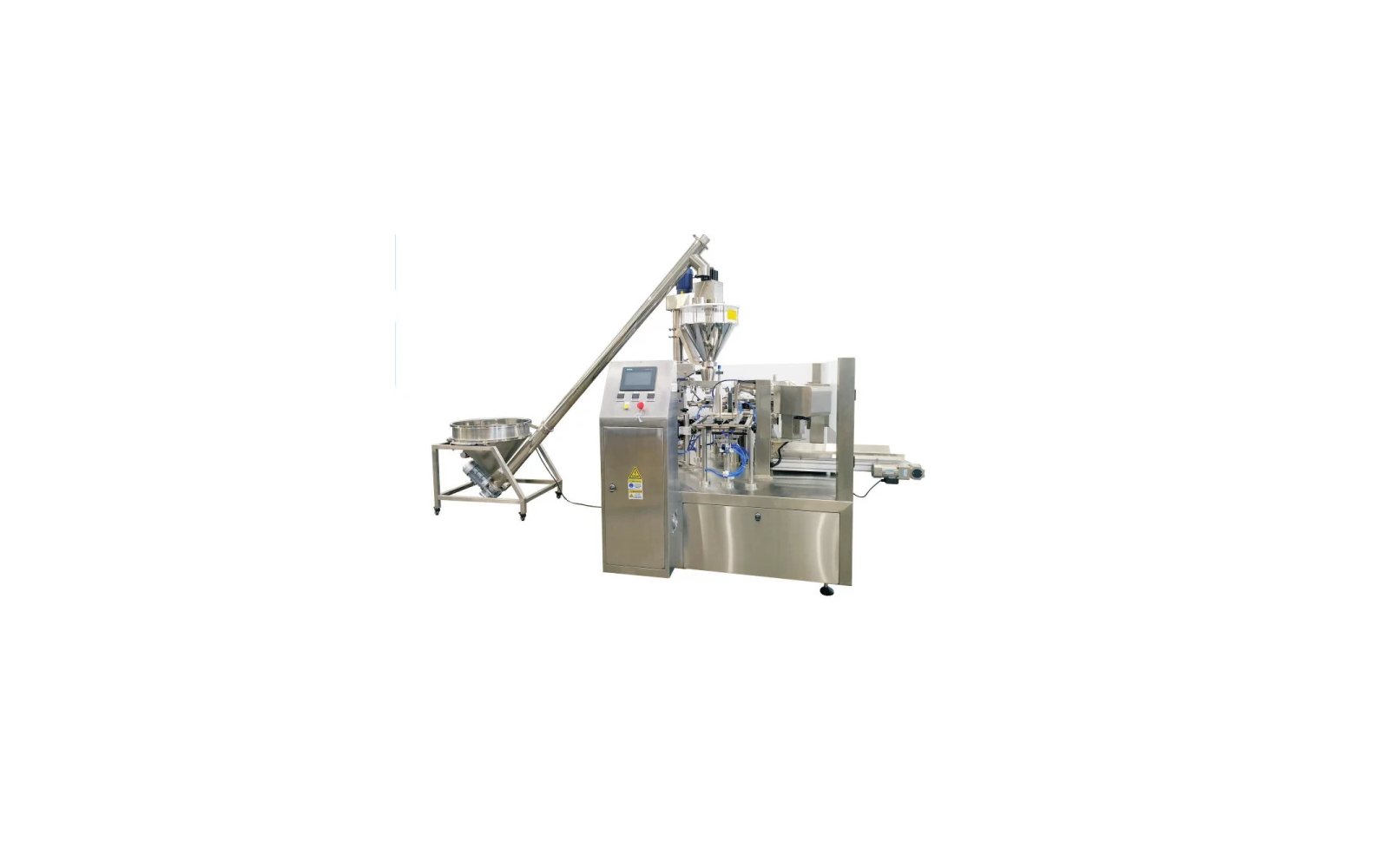
Premade Pouch Packaging Machines
Compare HDF premade pouch machines for powder and granules by bag size, dose, speed, accuracy reference, power, air and metering configuration.
Continuous Fryer Selection Engineering
Understand how product condition, loading, heating route, oil management, factory interfaces and acceptance criteria drive continuous fryer selection.
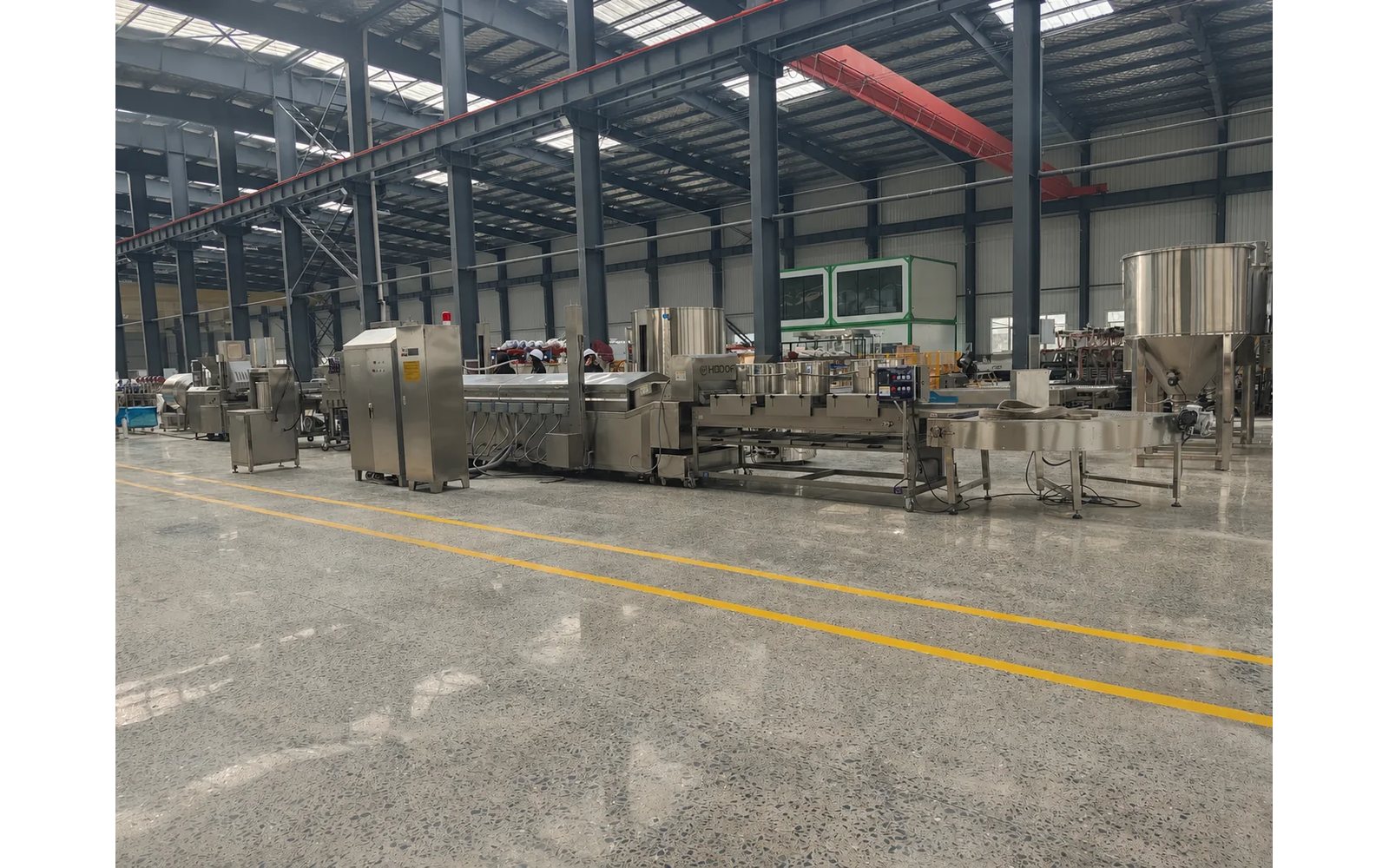
Chicken Nugget Frying Production Line
Review the verified category and explicit evidence limits of an Indonesia chicken-nugget frying production-line transaction.
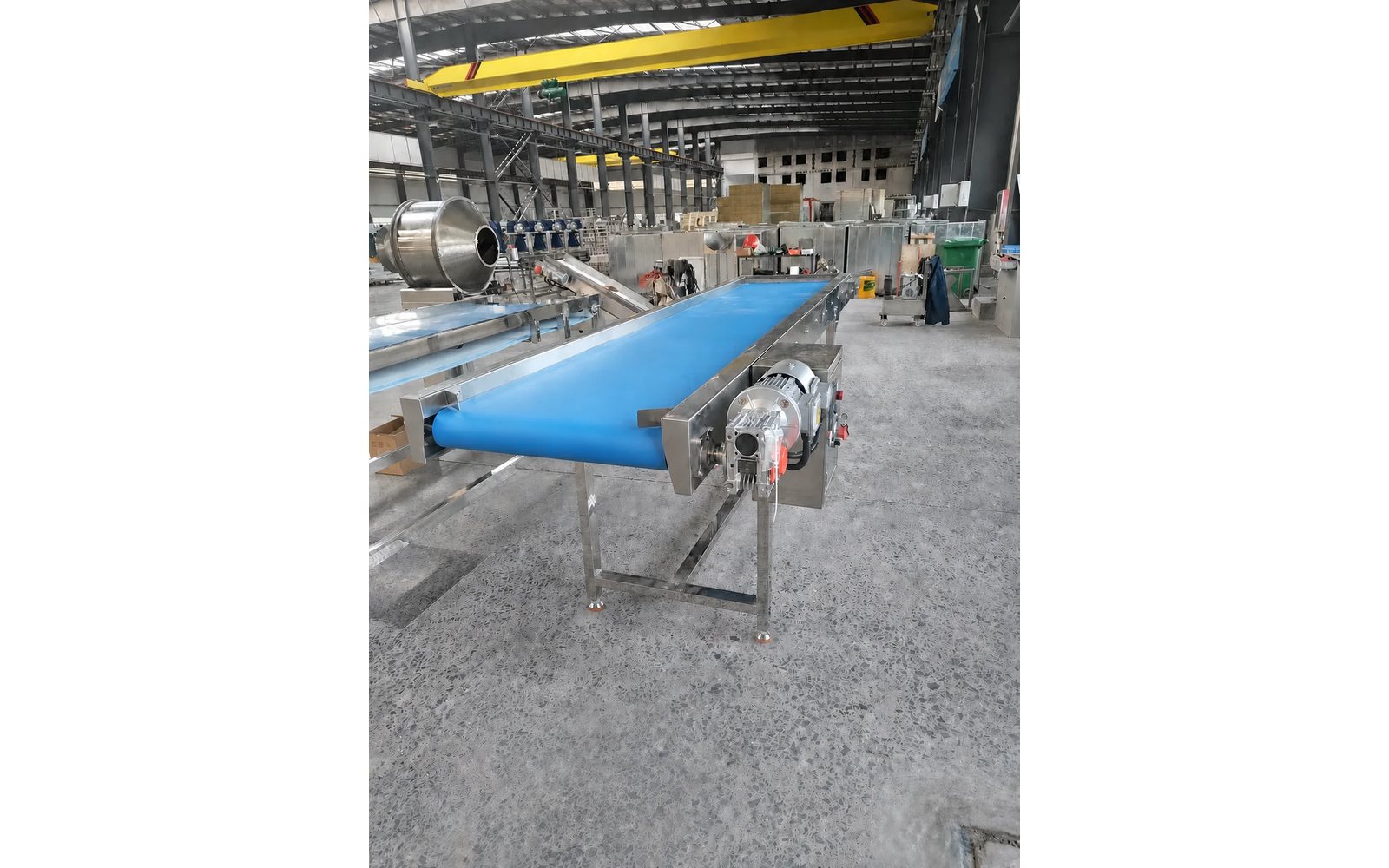
Food Processing Conveyor
Configure food conveyors by product condition, transfer geometry, loading, cleaning, controls, interface risks and project acceptance requirements.
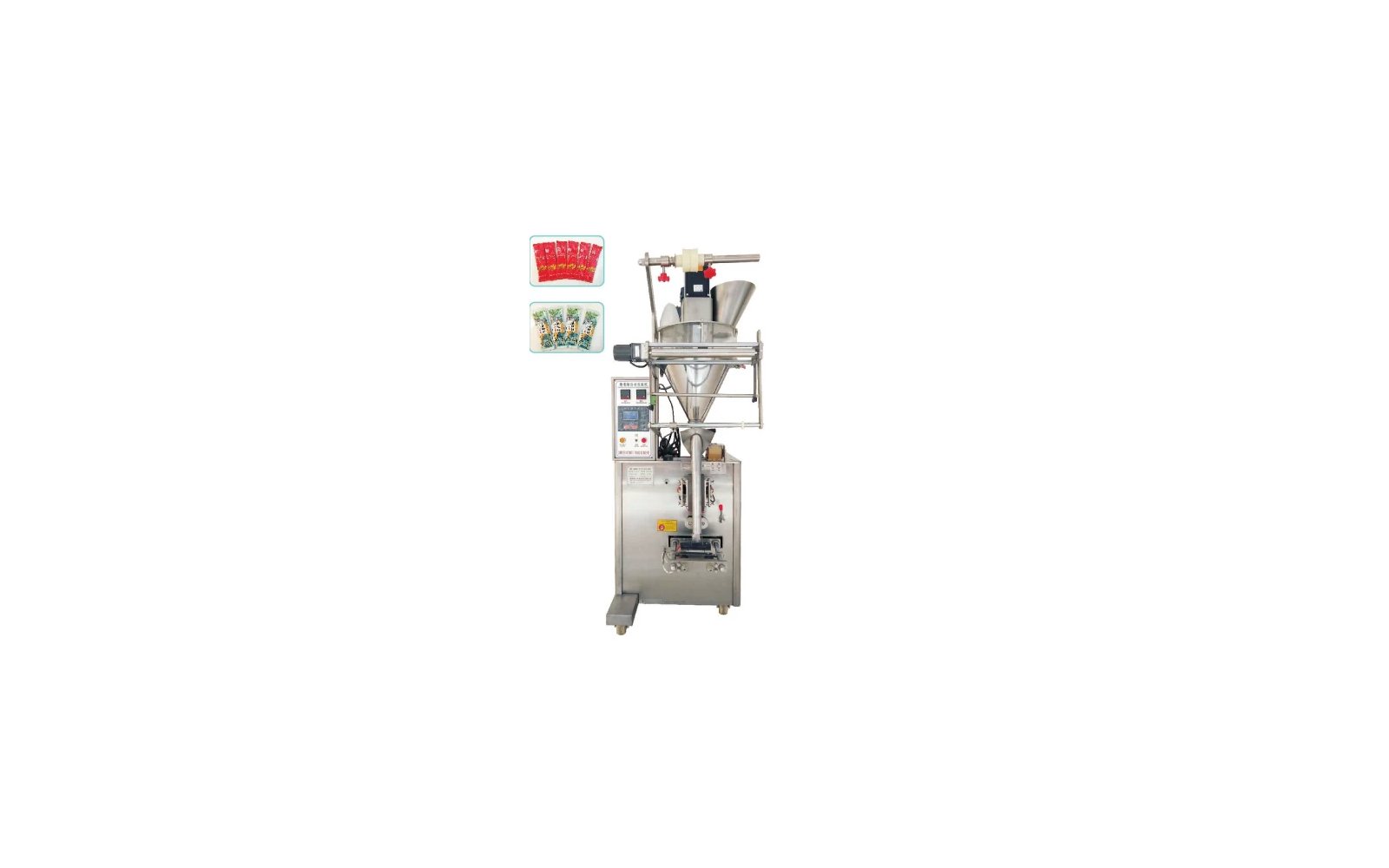
Vertical Form Fill Seal and Flow-Pack Machines
Compare HDF VFFS, stick, pillow and vacuum packaging references by bag size, speed, film width, dose, power, feeding method and dimensions.