
Post-fry control / Catalog-backed model references
Snack Food Seasoning System
Review the process, equipment duties and project boundary from one defined basis.
Choose the Production Rhythm Before the Machine
Batch and continuous seasoning solve different operating problems. Select the closest route, then confirm it against representative product and recipe trials.
Separate recipes into controlled batches.
The octagonal vessel tumbles product and seasoning, then discharges the completed batch. This route suits operations that value recipe separation, manual inspection or staged production.
Keep dosing and product flow synchronized.
The catalog describes automatic powder application, oil injection and variable-speed drum operation. The final system is balanced to the actual upstream flow and required seasoning result.
Define what arrives and what the packer must receive.
Record product temperature, residual surface oil, feed variation, required addition rate, dust control, cooling duty and acceptable packer-feed condition.
Choose the production rhythm before choosing the machine. Record the snack, its size and fragility, the output and the number of flavours the line must run. A seasoning system that doses one flavour into a steady stream of chips is simpler than one that changes flavours every hour, and the rhythm decides the dosing, the drum and the controls.
Then record the product's tolerance for damage. A crisp or a delicate puff breaks under tumbling that a harder snack survives, so the seasoning action must match the product. The rhythm and the fragility together choose the seasoning method before any model is compared.
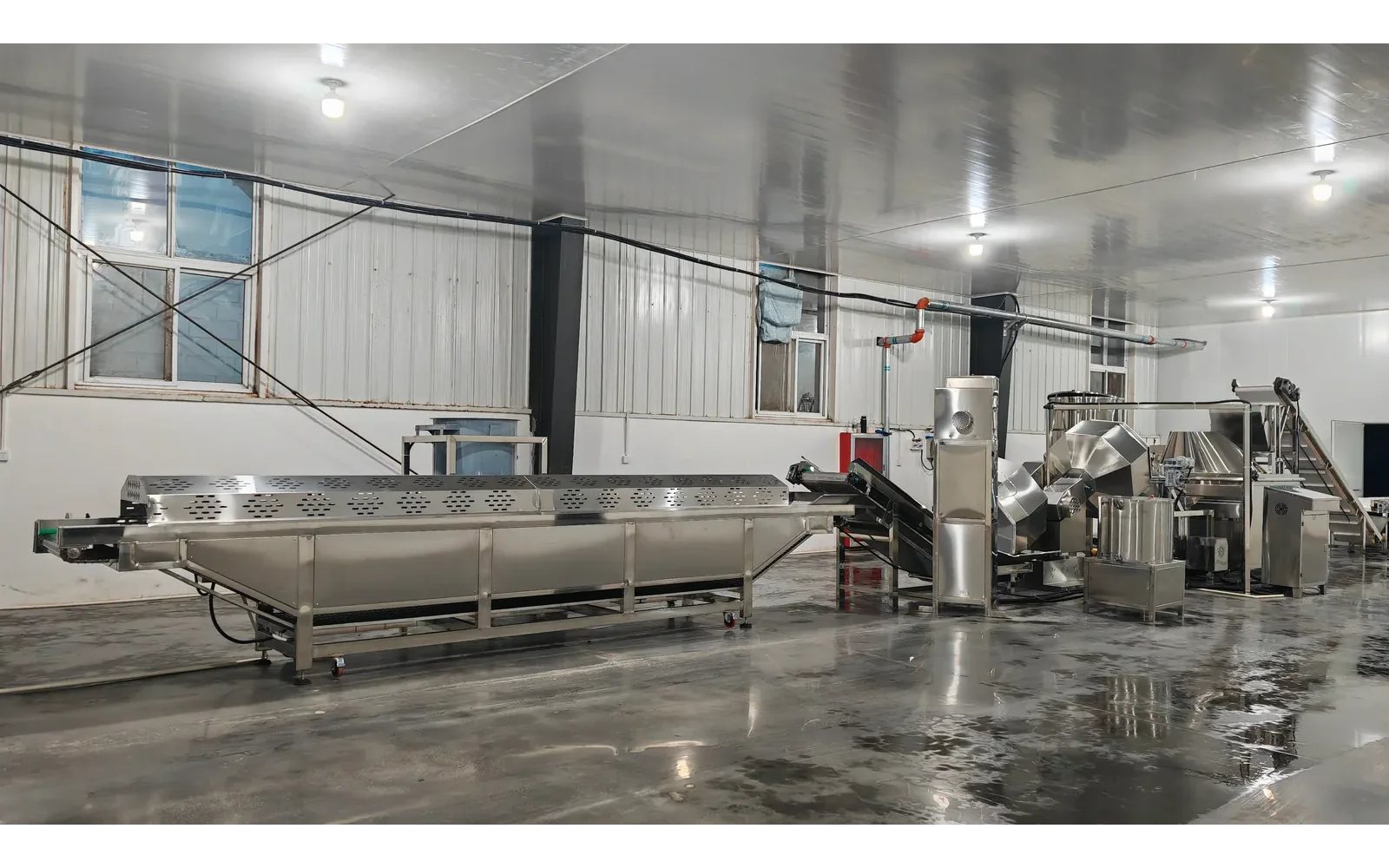
Control Addition, Contact and Discharge as One Sequence
A seasoning machine cannot correct unstable feed or an undefined recipe. Each stage needs an agreed input and a measurable result.
Condition feed
Confirm flow, temperature, surface oil and breakage entering seasoning.
Apply carrier
Define whether existing surface oil is sufficient or an oil application stage is required.
Dose powder
Set recipe, addition target, feeder range and replenishment method.
Tumble product
Balance drum motion and contact time against coverage and product damage.
Discharge to pack
Protect flow, temperature and seasoning retention through the final transfer.
Control the addition, the contact and the discharge as one sequence. The seasoning is added at a controlled rate, the product and seasoning are brought into contact for the right time, and the seasoned product is discharged without clumping or damage. Any one of the three out of step ruins the result.
Measure what leaves the drum. The seasoning pickup, the uniformity and the breakage are the outputs of the sequence, and they should be measured against the written target. A seasoning system is judged by the product it discharges, not by the speed of its drum.
A seasoning system is judged by the product it discharges, not by the speed of its drum.
Any one of the three out of step ruins the result.
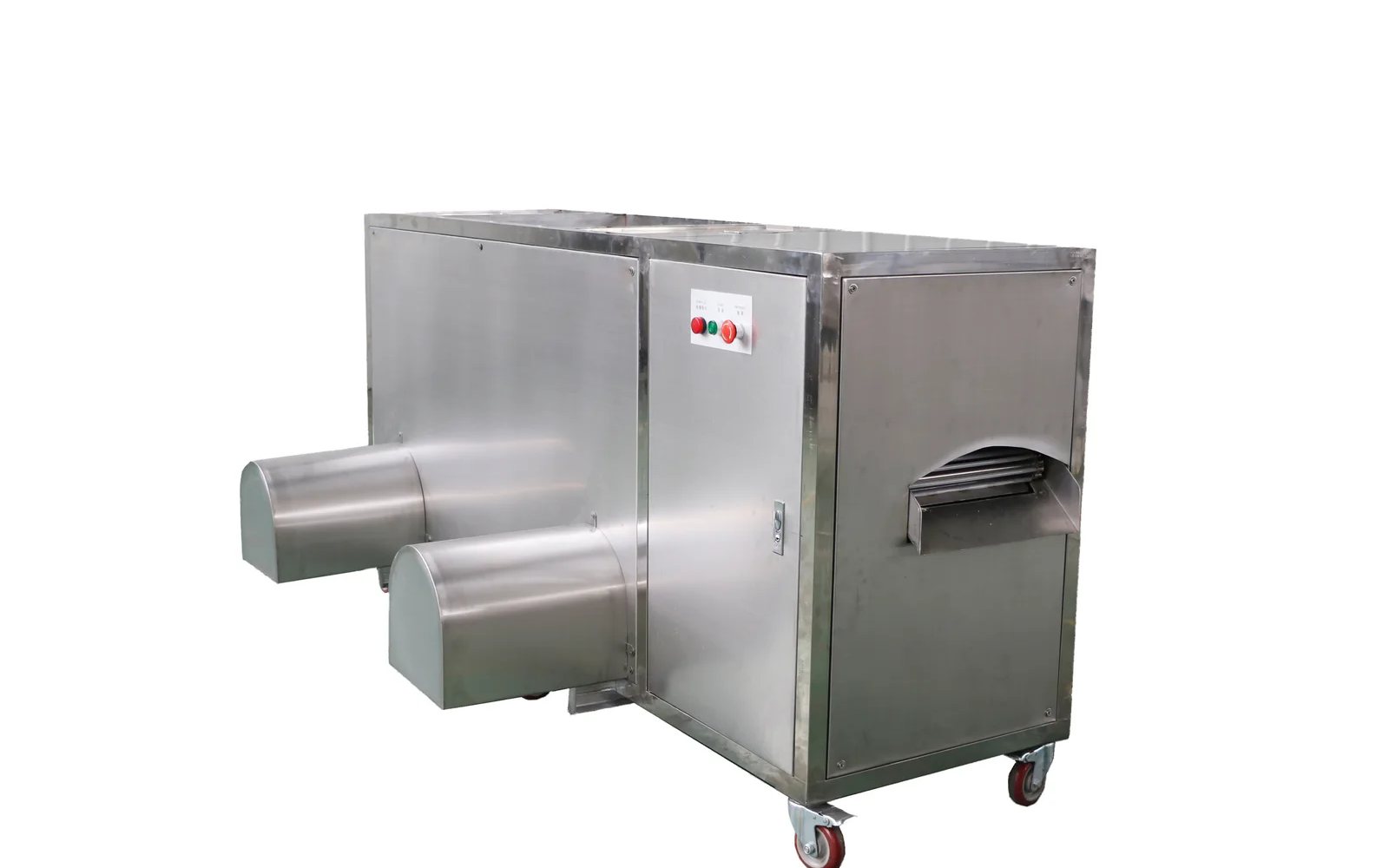
Define What Uniform Seasoning Means
The acceptance method should reflect the finished product, not only whether the drum rotates.
- 01Addition accuracyTarget powder and oil addition, sampling interval and allowable variation.Agree a measurement method
- 02CoverageVisible distribution, flavor target and underside or recessed-surface expectations.Approve a product sample
- 03Product integrityBroken pieces, fines generation and handling damage through discharge.Set an allowable limit
- 04ChangeoverRecipe recovery, allergen boundary, cleaning access and restart condition.Review the cleaning method
Addition accuracy
Target powder and oil addition, sampling interval and allowable variation.
Coverage
Visible distribution, flavor target and underside or recessed-surface expectations.
Product integrity
Broken pieces, fines generation and handling damage through discharge.
Changeover
Recipe recovery, allergen boundary, cleaning access and restart condition.
Catalog-backed model families
Define what uniform seasoning means before tuning the system. State the target pickup, the permitted variation and how it will be measured, because a drum that seasons evenly in a demonstration may not hold that uniformity across a shift. The definition is what the system is tuned and accepted against.
Then measure the seasoning distribution on the product, not just the amount added. A sample of seasoned product weighed and tested across the batch shows whether the coating is even, while a total dosing figure hides the product that got too little or too much. The measurement, not the setting, is the result.
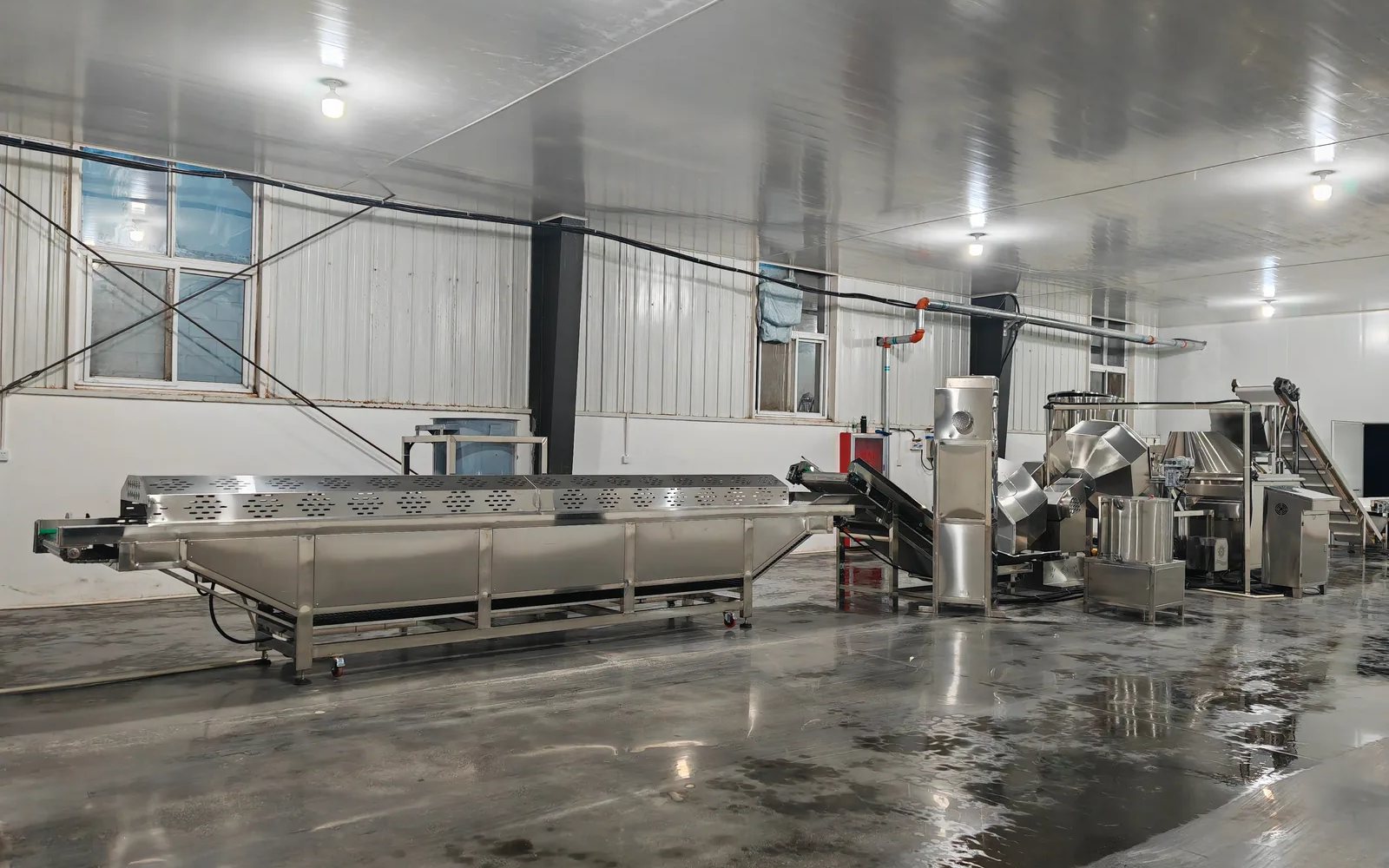
Compare Model Duties Against the Product and Line Flow
References below are transcribed from the reviewed Hadof main catalog, printed pages 45-48. They are catalog inputs, not a guarantee of net line output for every product.
Batch seasoning references
HDF-800, HDF-1000, HBDJ-2 and HBDJ-4
Published input references progress from 300 kg/h to 1,000-2,000 kg/h. HDF-800 and HDF-1000 use 0.75 kW; the double-head HBDJ-2 is listed at 2.05 kW and the four-head HBDJ-4 at 3.75 kW.
| HDF-800 | 300 kg/h; 1000 x 800 x 1300 mm; 130 kg. |
|---|---|
| HDF-1000 | 500 kg/h; 1100 x 1000 x 1300 mm; 150 kg. |
| HBDJ-2 | Double head; 800-1000 kg/h; 2400 x 1100 x 1800 mm; 380 kg. |
| HBDJ-4 | Four head; 1000-2000 kg/h; 3400 x 3400 x 1800 mm; 582 kg. |
Continuous seasoning references
HDF-2400 and HDF-3000
The HDF-2400 is published at 1,000 kg/h and 2.1 kW; the HDF-3000 at 1,500 kg/h and 2.5 kW. The catalog describes stainless-steel construction, variable-speed drum operation and automatic powder and oil application functions.
| HDF-2400 | 1000 kg/h; 4000 x 800 x 1500 mm; 300 kg. |
|---|---|
| HDF-3000 | 1500 kg/h; 4600 x 800 x 1500 mm; 380 kg. |
| Selection boundary | Actual product flow, recipe, drum loading, addition rate and discharge result require current confirmation. |
| Configuration boundary | Dosing, oil application, controls, dust collection and conveyors are confirmed in the project scope. |
Factory and line integration
Compare the models against the product and the line flow, not against a drum diameter. Each model's drum size, speed and dosing method must be matched to the snack's fragility, the output and the number of flavours. A larger drum does not season better; it must still contact every piece with the right amount of seasoning.
Normalise the comparison on one product basis. State the snack, the output, the target pickup and the changeover pattern, and ask each supplier how their system reaches that result. The comparison is then about the seasoning duty, not about which catalog photograph looks right.
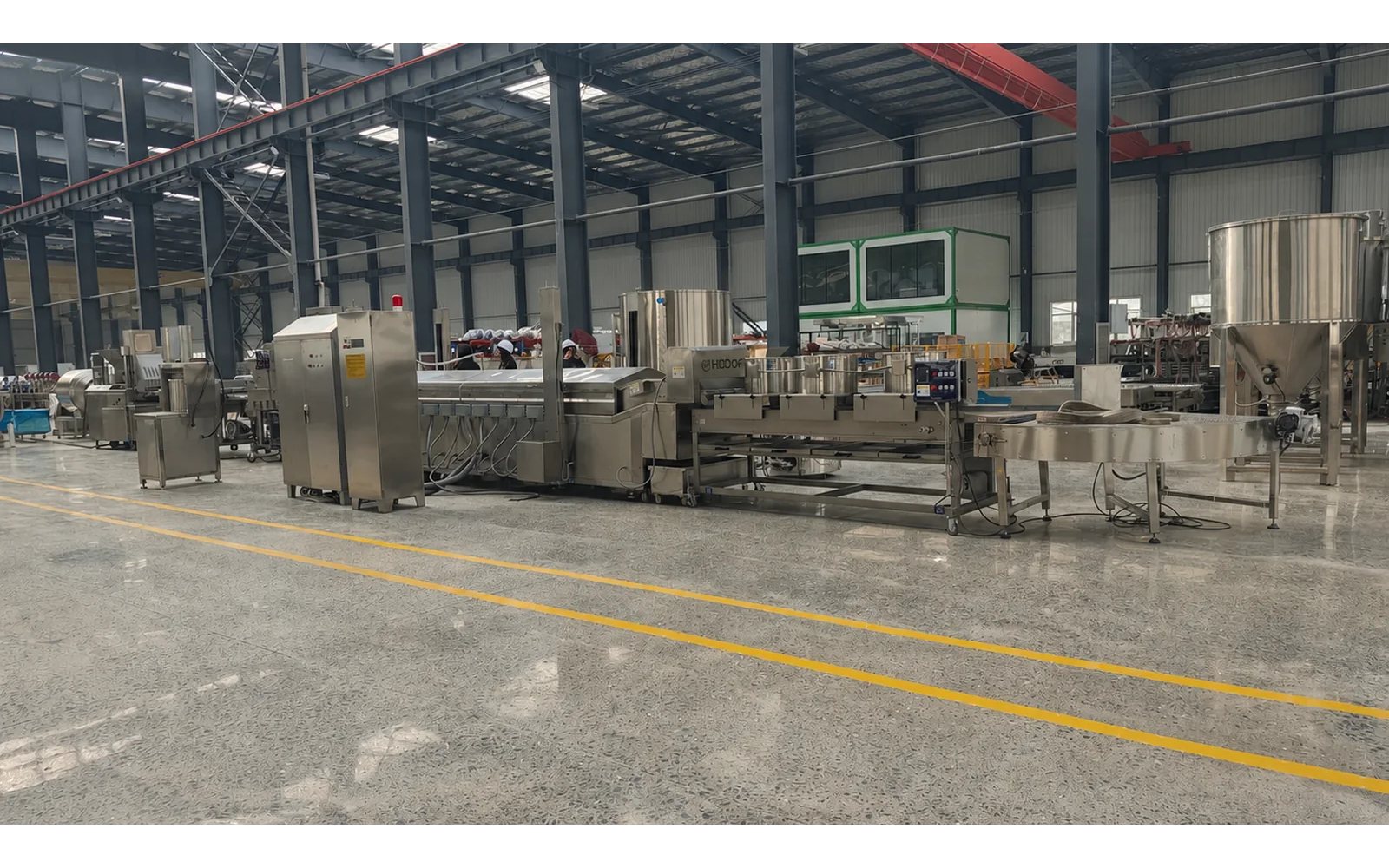
Close the Gaps Around the Seasoning Machine
The configuration logic and equipment combination follow the upstream product condition, recipe handling, cleaning duty and packing handoff. Record every responsibility before the equipment list is approved.
Upstream condition
De-oiling or cooling discharge, product temperature, feed rate, surge behavior and elevation.
Recipe handling
Powder storage, refill route, oil preparation, operator access and batch traceability.
Hygiene boundary
Contact-part access, dry or wet cleaning method, drainage, allergen changeover and dust control.
Packing handoff
Discharge elevation, transfer length, cooling condition, buffer and packer feed requirement.
Close the gaps around the seasoning machine, because the machine alone does not season a snack. The feed must deliver a steady stream, the seasoning must be metered accurately, and the discharge must hand the product to packing without breaking or clumping. The gaps between these stages are where the system fails.
Confirm the interfaces explicitly. Check the feed rate and elevation, the seasoning dosing accuracy and the discharge condition, and test them with the actual product. A seasoning system that is bolted onto a line without these interfaces is a machine, not a solution.
A system bolted onto a line without those interfaces is a machine, not a solution.
Confirm the feed rate, the dosing accuracy and the discharge condition with the actual product.
Approve the Product Result and the Operating Window
Use representative product and seasoning. Record the test duration, feed condition, recipe, settings, sampling method and finished result.
| Coverage result | Buyer-approved visual and sensory basis with a defined sample size. |
|---|---|
| Addition result | Powder and oil measurement method, target and allowable variation. |
| Integrity result | Broken product and fines before and after seasoning. |
| Operating result | Stable feed, discharge, controls, cleaning access and restart condition. |
Snack Food Processing Systems
Review product routes, risk points and factory responsibilities.
Potato Chips Production Line
Follow preparation, frying, seasoning and packing as one process.
Food Processing Conveyor
Define product transfer, elevation and packer handoff.
| Octagonal seasoning references | HDF-800 / HDF-1000 / HBDJ-2 / HBDJ-4 |
|---|---|
| Published octagonal input range | 300-2000 kg/h |
| Roller seasoning references | HDF-2400 / HDF-3000 |
| Published roller input range | 1000-1500 kg/h |
| Published roller power range | 2.1-2.5 kW |
| Net line output basis | Balance against the approved product, recipe, dosing and operating trial |
Frequently asked questions
When should a buyer choose batch instead of continuous seasoning?
Do the catalog input figures guarantee net line output?
Can the system apply both powder and oil?
What information is needed for a seasoning trial?
Approve the product result and the operating window before the order. Write the target pickup, the uniformity and the breakage limit, and agree the output and the changeover time the system must hold. These are the terms the system is accepted against, and they should be fixed before the quotation is signed.
Run a trial with the actual snack and seasoning, and record the results against the written terms. Then carry the same terms into commissioning and acceptance. The operating window is as important as the product result: a system that seasons well but cannot change flavours quickly enough is the wrong system for the line.
Related pages
Continuous Fryer
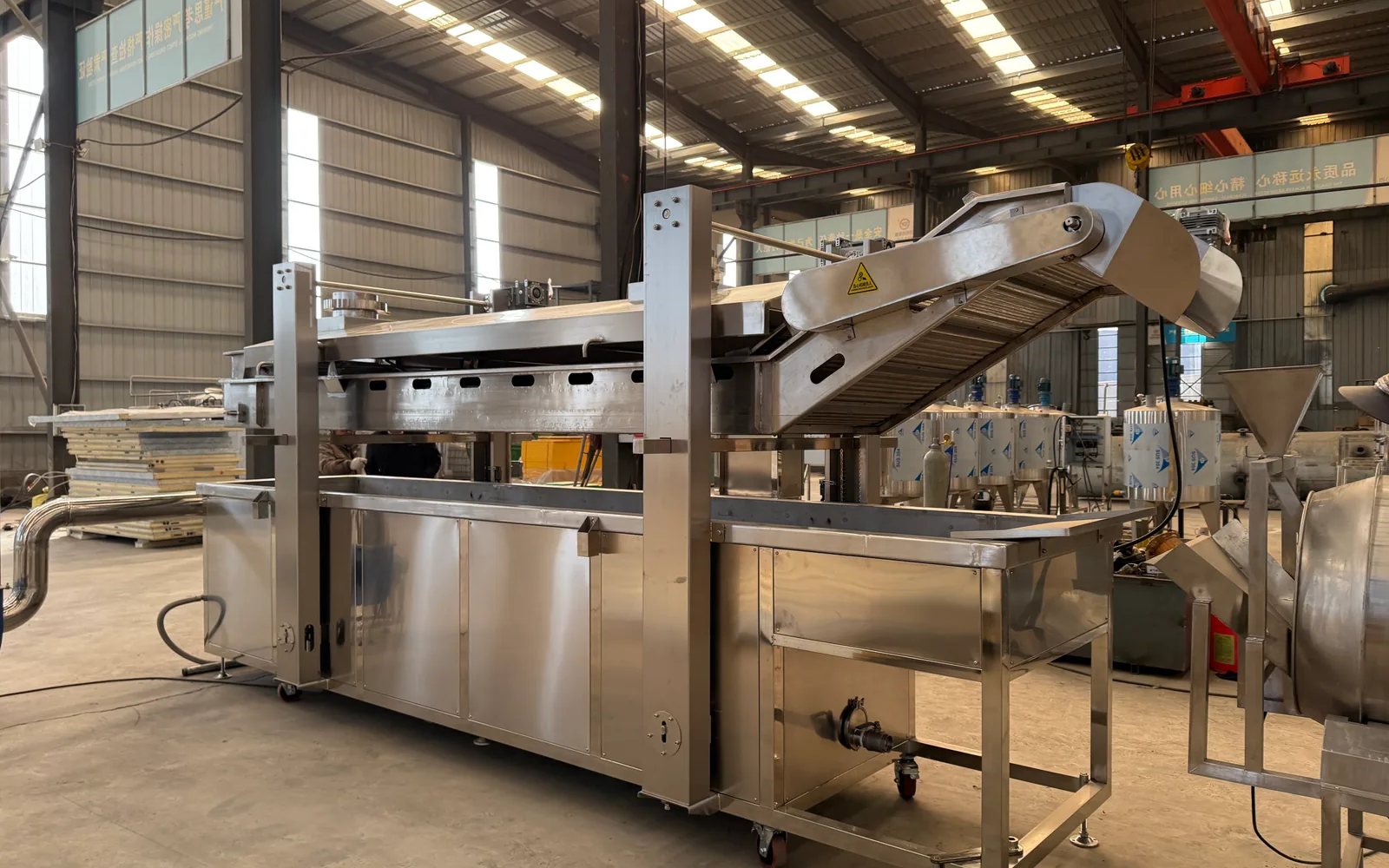
Compare verified Hadof continuous fryer references, then review product loading, heating route, oil handling, factory interfaces and acceptance scope.
Food Processing Conveyor
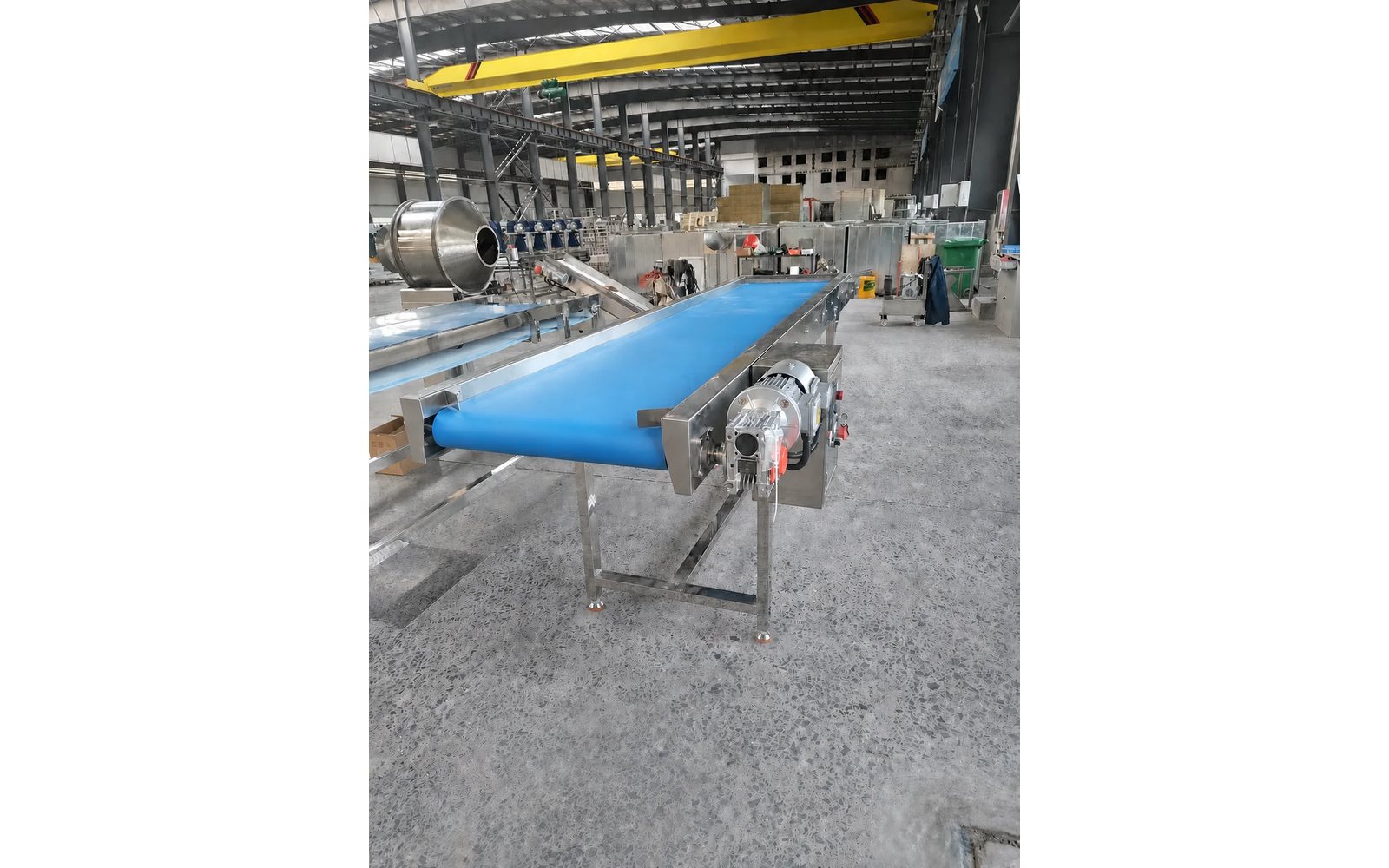
Configure food conveyors by product condition, transfer geometry, loading, cleaning, controls, interface risks and project acceptance requirements.
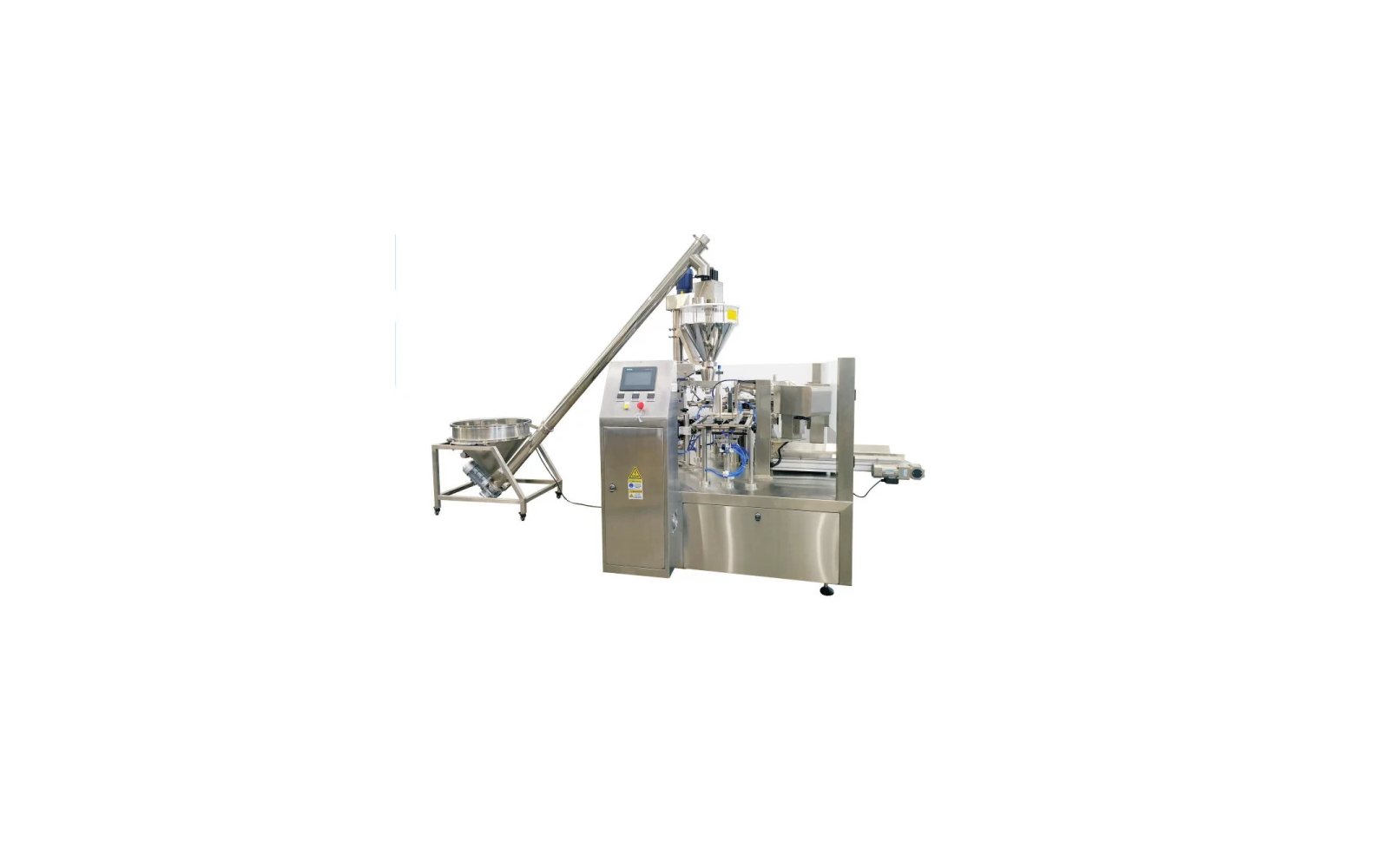
Premade Pouch Packaging Machines
Compare HDF premade pouch machines for powder and granules by bag size, dose, speed, accuracy reference, power, air and metering configuration.
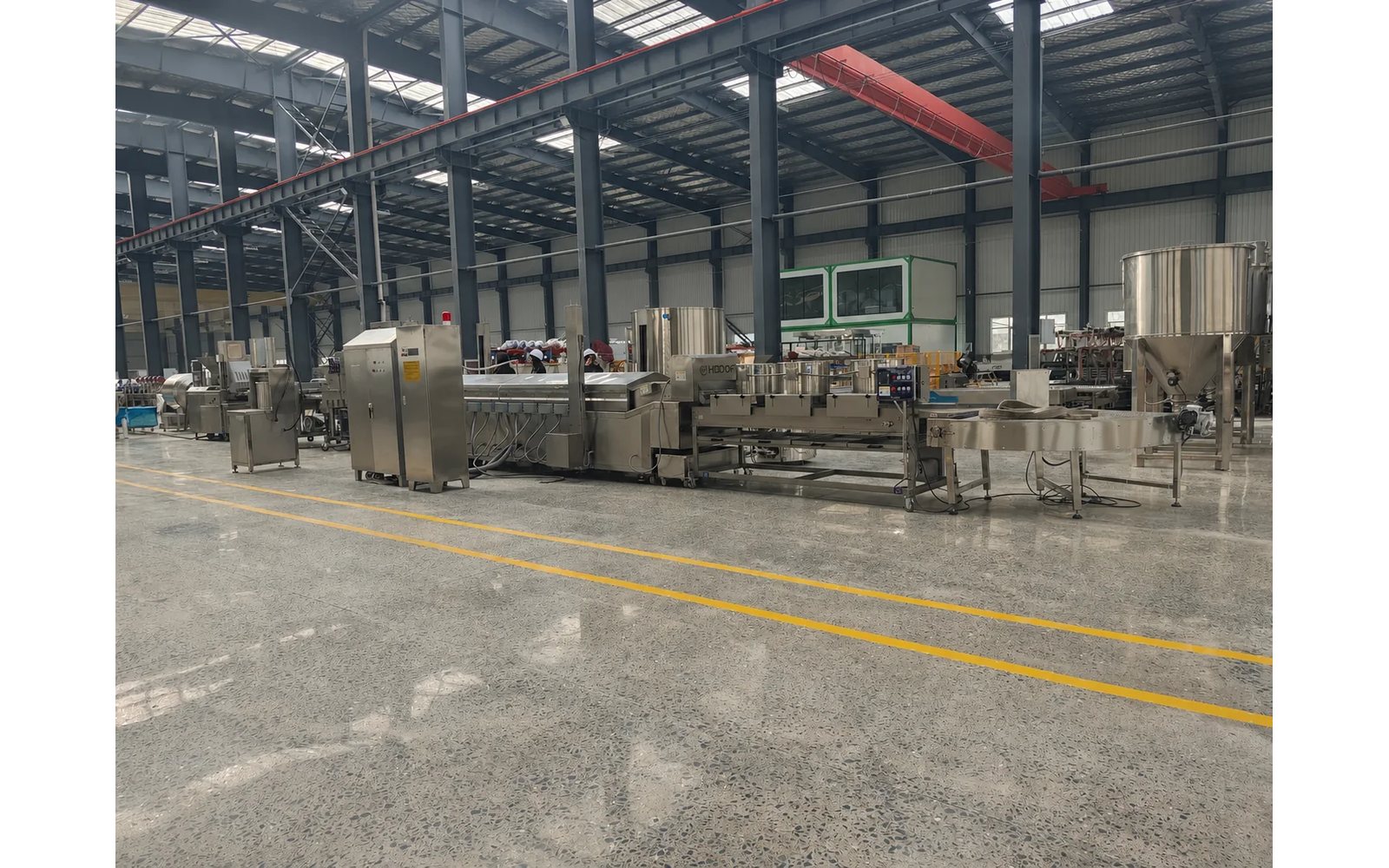
Potato Snack Line Stability Review
Trace potato chip variation across raw material, slicing, surface condition, frying, oil handling, finishing, testing and acceptance records.
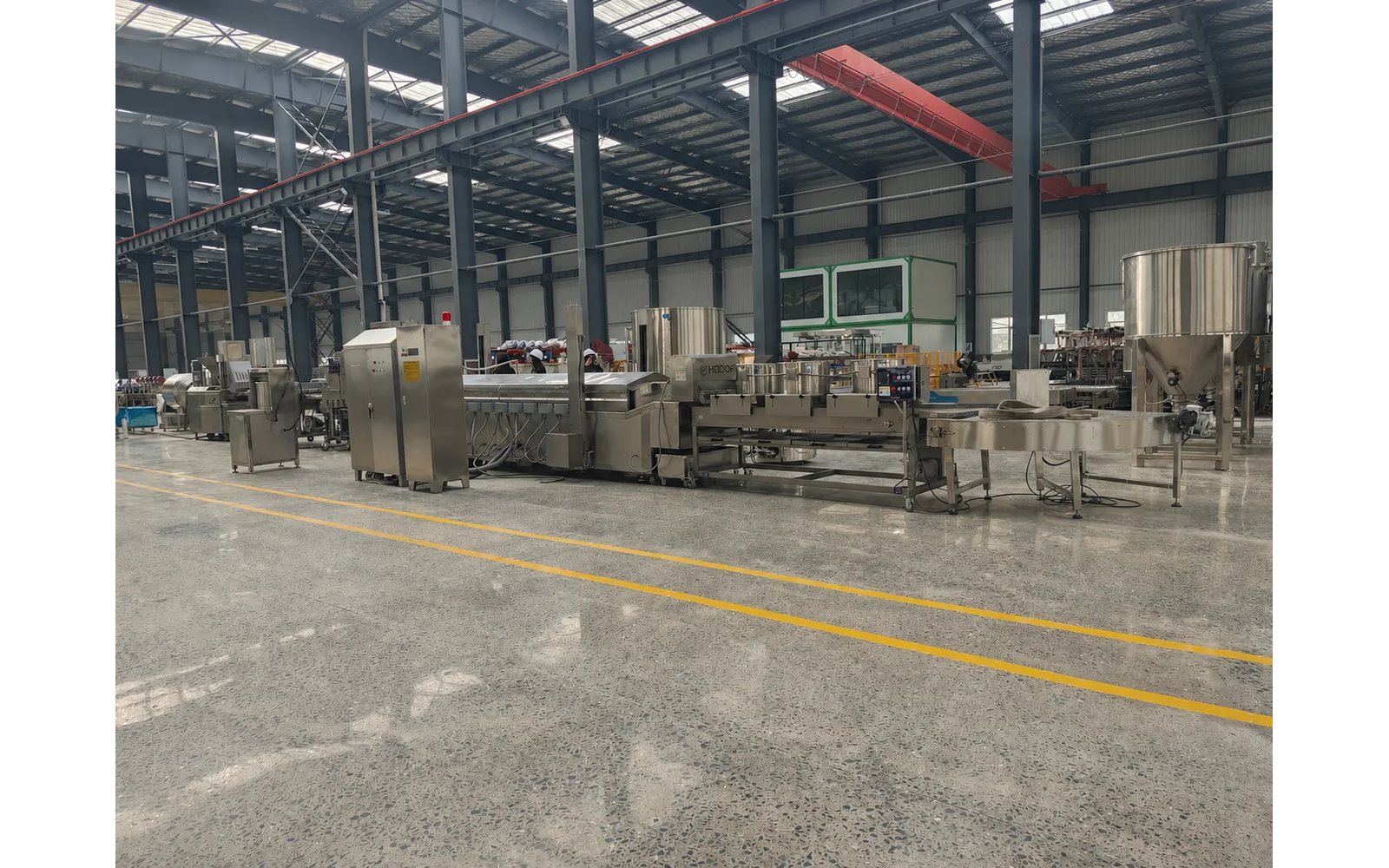
Snack Food Processing Systems
Review snack food forming, coating, frying, cooling, seasoning and packing duties from product criteria through factory and acceptance boundaries.
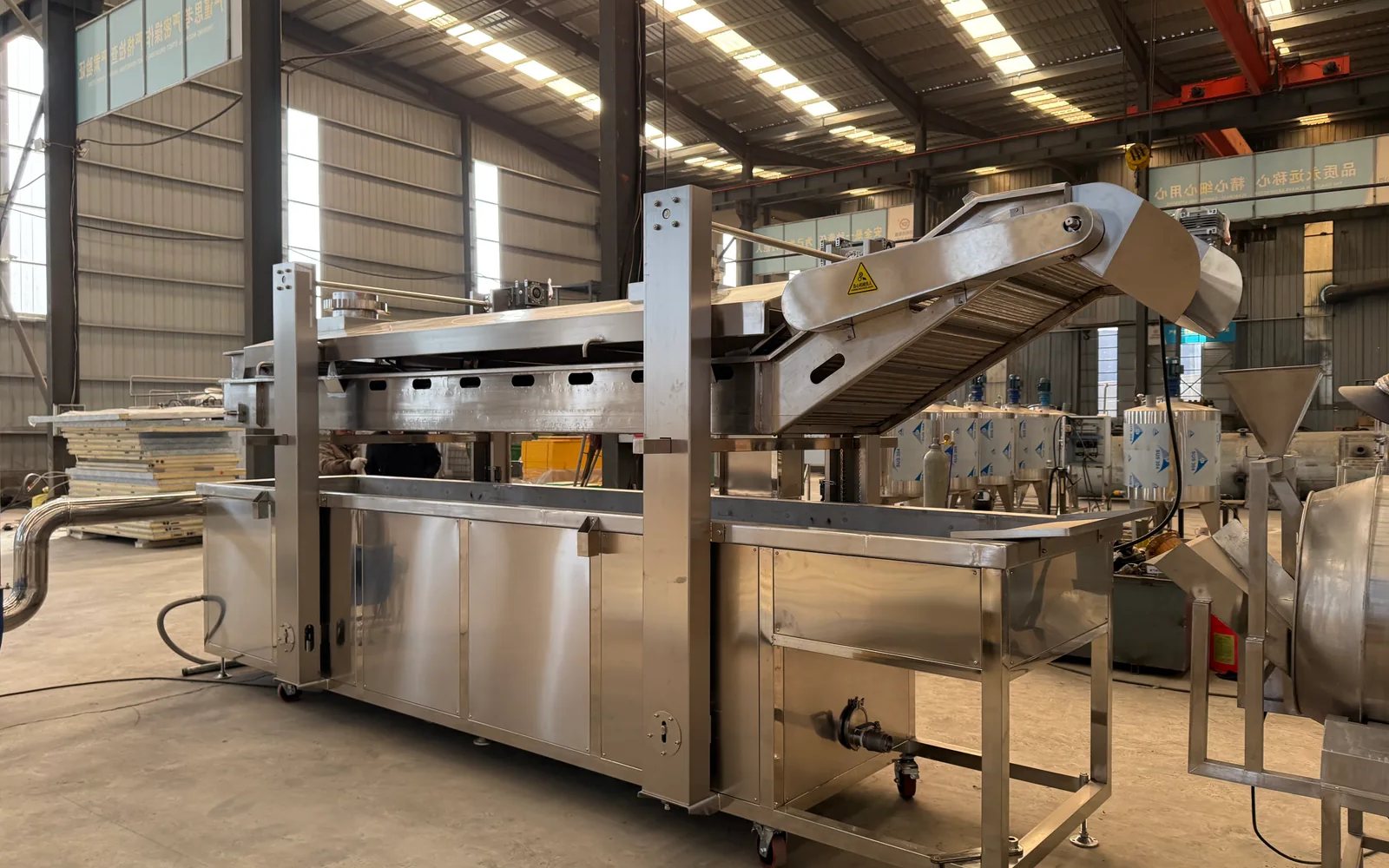
Indonesia Food Processing Market
Documented Indonesia food processing demand: packaging, noodle and rice lines, snacks and palm oil with Halal and LCT requirements.