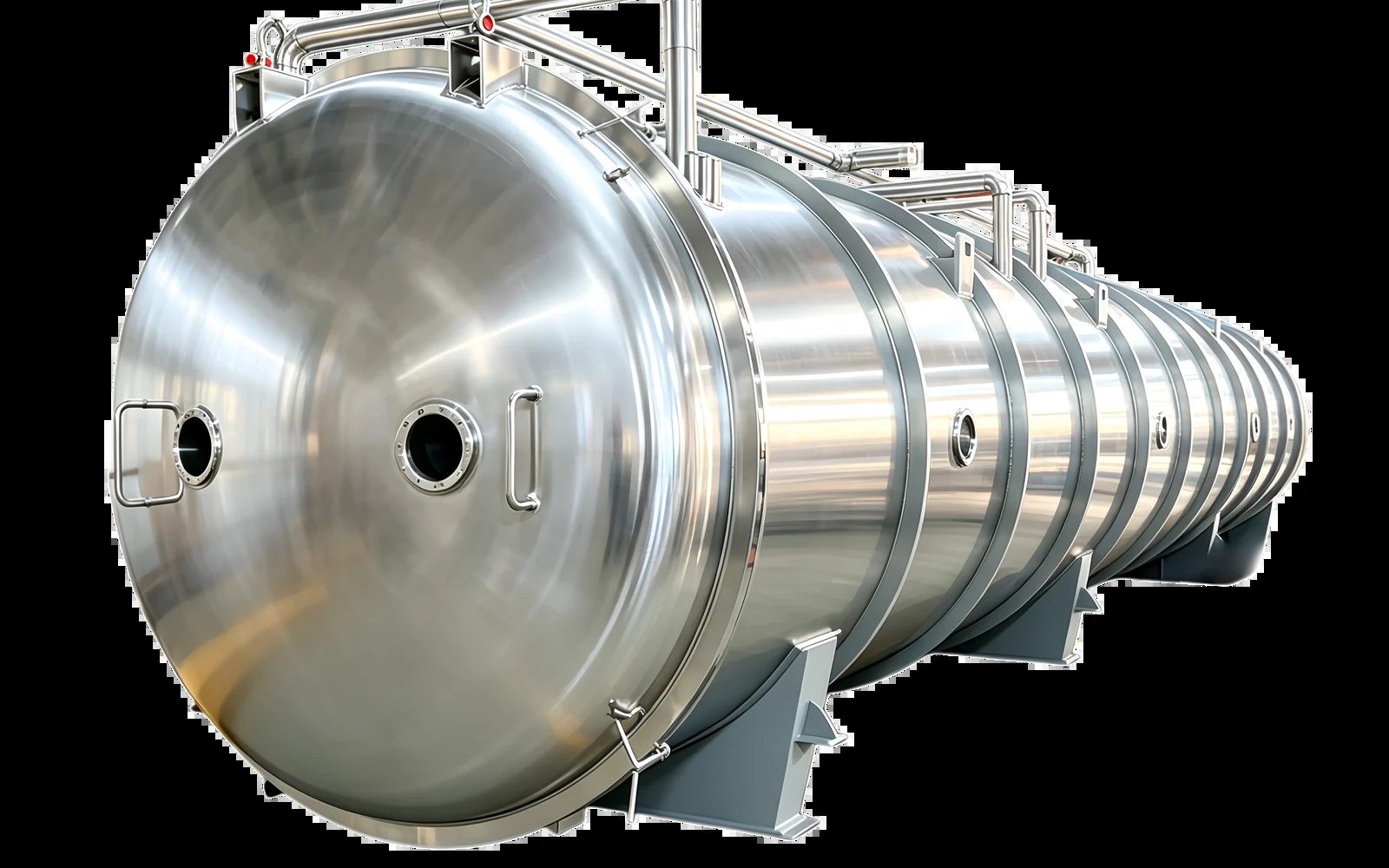
SSFD-100 Food Freeze Dryer
Review the process, equipment duties and project boundary from one defined basis.
- 100 m²Published drying area
- 260 kWPublished installed power
- ≥2,000 kg/batchMaximum water-capture reference
Read the SSFD-100 as a Documented Starting Configuration
The values below are taken from the reviewed model file. They support comparison and technical review; the current quotation controls final materials, components, options, utilities, documentation and supply boundary.
Application and suitability boundary
Read the SSFD-100 as a documented starting configuration rather than a finished answer. Its published shelf area, tray count and condenser rating describe a reference load that must be reconciled with your product before any output is promised. The model name tells you the platform; it does not yet tell you what the machine will do with your food, your fill depth and your moisture target.
Begin by recording the product, the load weight and depth, the freezing point and the final moisture you must reach. Those four facts are the basis against which the shelf area, the condenser and the vacuum package are checked, and they are what turns the catalog row into an operating duty for the machine.
Treat the published figures as review references, not as a performance promise for your product. The SSFD-100 platform is confirmed only when the load, the cycle and the utilities are reconciled against one written basis, and that basis is what follows the machine through the rest of the project.
Engineer rack movement and utilities before the chamber is released
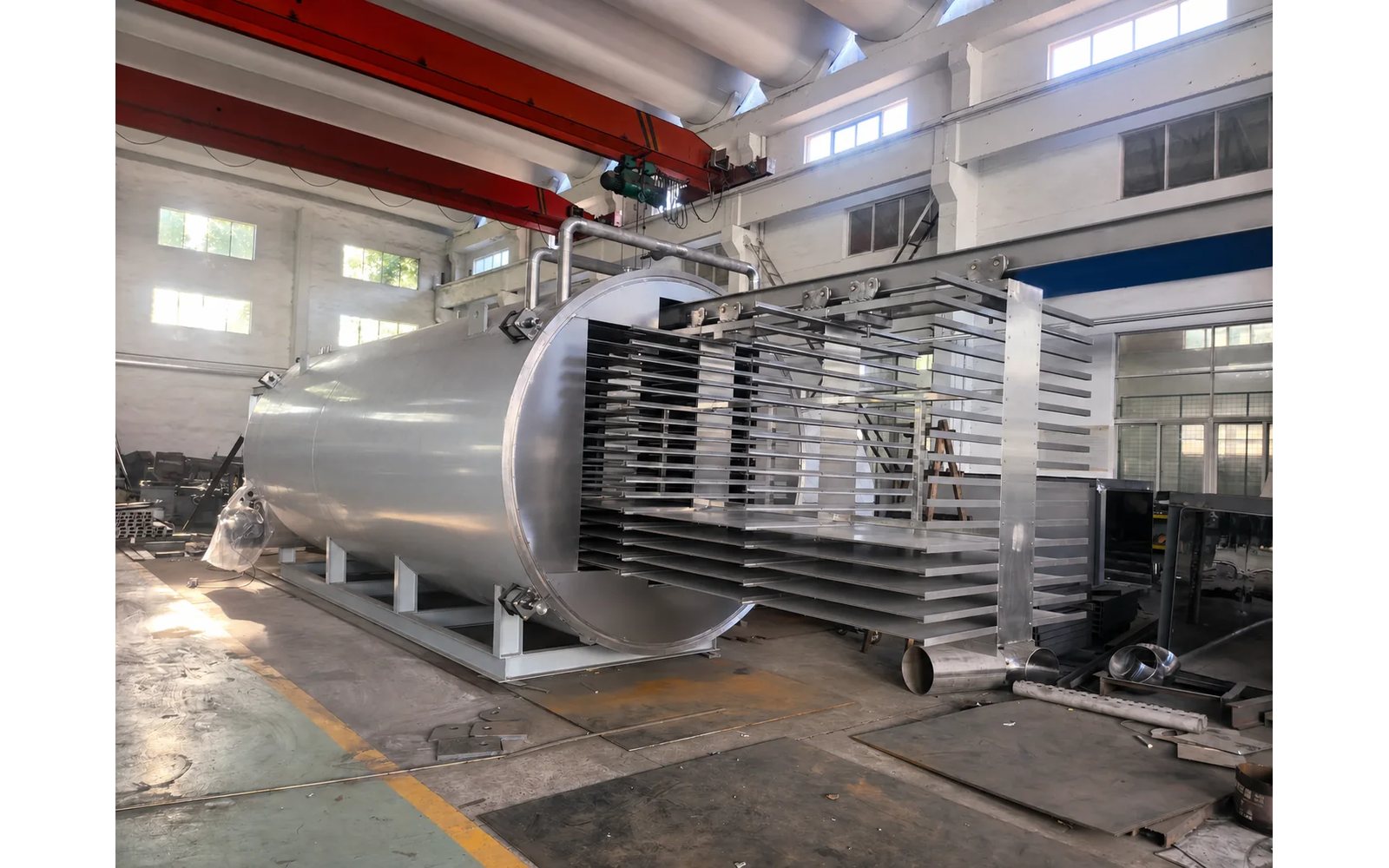
The SSFD-100 class is a plant-integration decision. The buyer needs a declared product campaign, external or internal freezing plan, rack count, loading and unloading windows, cooling-water design, electrical distribution, building access and moisture-controlled packaging handoff.
Campaign definition
Model normal and difficult products, batch frequency, turnaround, defrost and sanitation time.
Rack logistics
Coordinate loading rooms, pre-freezer, travel path, chamber interface, unloading and cleaned-rack return.
Water-cooled plant
Define heat rejection, supply and return conditions, treatment, redundancy and ownership of pumps and piping.
Selection logic and parameter consequences
For the SSFD-100, engineer the rack movement and the utilities before the chamber is released for fabrication. A machine of this scale loads whole racks of trays, so the rack transport, the door opening and the loading dock must be designed together. The chamber can only be released once the racks can actually reach it and move through it.
Confirm the utilities at the same time and at the real duty. The vacuum pump set, the refrigeration plant and the control system must hold the chamber through a full load, and the electrical and water services must be sized for that peak rather than for the machine idling. Releasing the chamber before the utilities are settled is how expensive rework begins.
Confirm the rack handling and the utilities before fabrication is released. At this scale the chamber is only part of a rack transport and plant system, and the most expensive mistakes come from releasing the chamber while the racks or the services are still unresolved.
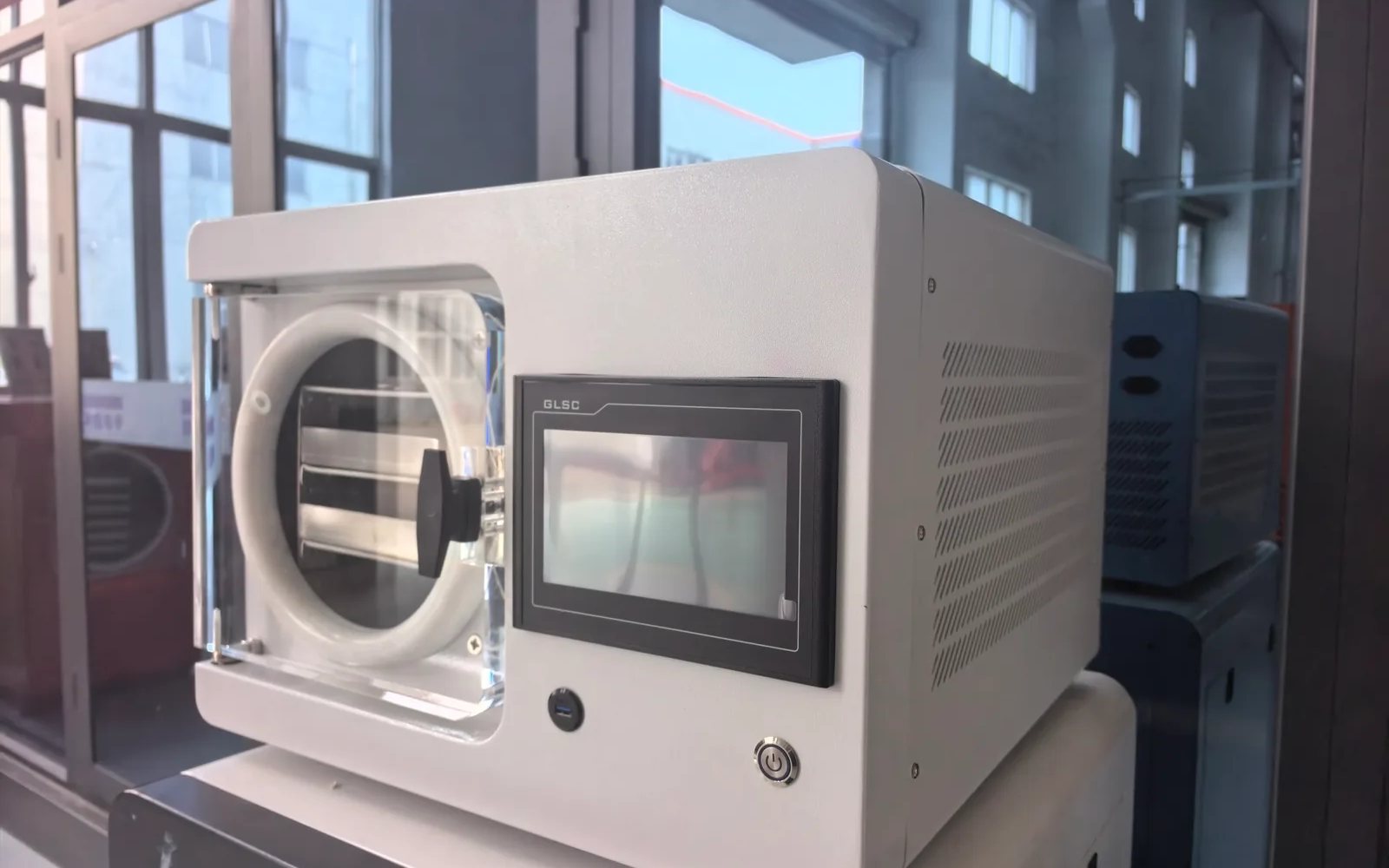
Connect the SSFD-100 to the Complete Food Route
Changing piece size, fill depth, initial water, freezing history or batch loading changes heat transfer, vapor release and condenser demand. The freeze dryer must therefore be selected with upstream preparation and downstream protective packaging.
- 01PrepareControl recipe and geometry
- 02LoadSet mass and tray depth
- 03FreezeReach the approved frozen state
- 04EvacuateEstablish the pressure condition
- 05SublimeBalance heat and vapor flow
- 06FinishVerify the dry endpoint
- 07ProtectLimit moisture pickup
Configuration and customization boundary
Connect the SSFD-100 to the complete food route, not just to the room it stands in. The dryer is fed by a preparation stage and feeds a packing stage, and all three must share the same batch rhythm. If the freeze dryer finishes a batch faster than the packing line can seal the dried product, the product waits and takes up moisture, so the packing rate is part of the dryer's real output.
Map the handoffs explicitly: how prepared product reaches the trays, how the dried product leaves the chamber, and where it is inspected and packed. The dryer's duty is only complete when the product is sealed and stable, so the route around the machine is specified with the same care as the chamber itself.
Document the handoffs on both sides so the dryer is commissioned as part of the route, not as a machine that later needs to be forced into it.
Freeze the System Scope, Not Only the Model Name
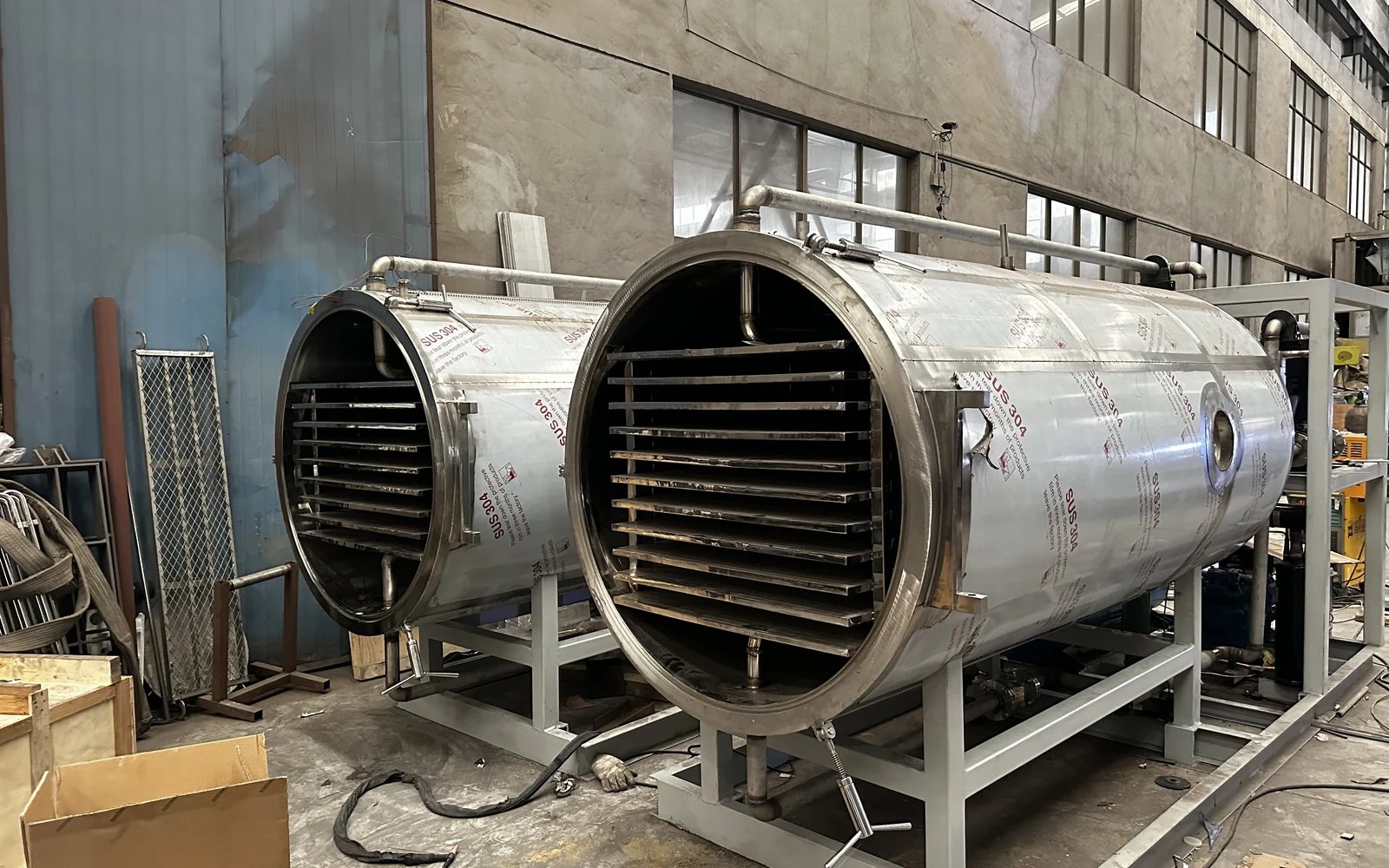
The selected technical package should contain a room and equipment layout, foundation and loading data, rack and tray schedule, refrigeration and vacuum architecture, cooling-water schedule, controls and records, factory test plan and site acceptance boundary.
| Process equipment | Chamber and shelves, condenser, refrigeration, vacuum, heat-transfer circulation, defrost and controls |
|---|---|
| Product handling | Trays, racks, loading method, pre-freezing transfer, unloading and cleaning route |
| Factory interfaces | Electrical supply, cooling, drainage, compressed air where required, room condition and data connections |
| Project boundary | Buyer and supplier work, installation, commissioning, training, spare parts, documentation and acceptance |
Freeze the system scope before you freeze the product. The SSFD-100 is part of a system that includes the vacuum pump, the refrigeration circuit, the shelves, the controls and the utilities, and each of those is a scope item that can be included or excluded. A quotation for the machine alone is not comparable with a quotation for a running system, so the boundaries must be written down.
Confirm what is inside the scope: the vacuum pump and its oil or maintenance plan, the refrigeration charge and condenser, the tray sets, the control package and the commissioning. Then confirm what is outside it, such as the power and water supply, the floor and drainage, and the packing equipment. The model name is only the centre of the decision; the system scope is the decision.
Release the Layout From Real Access and Utility Data
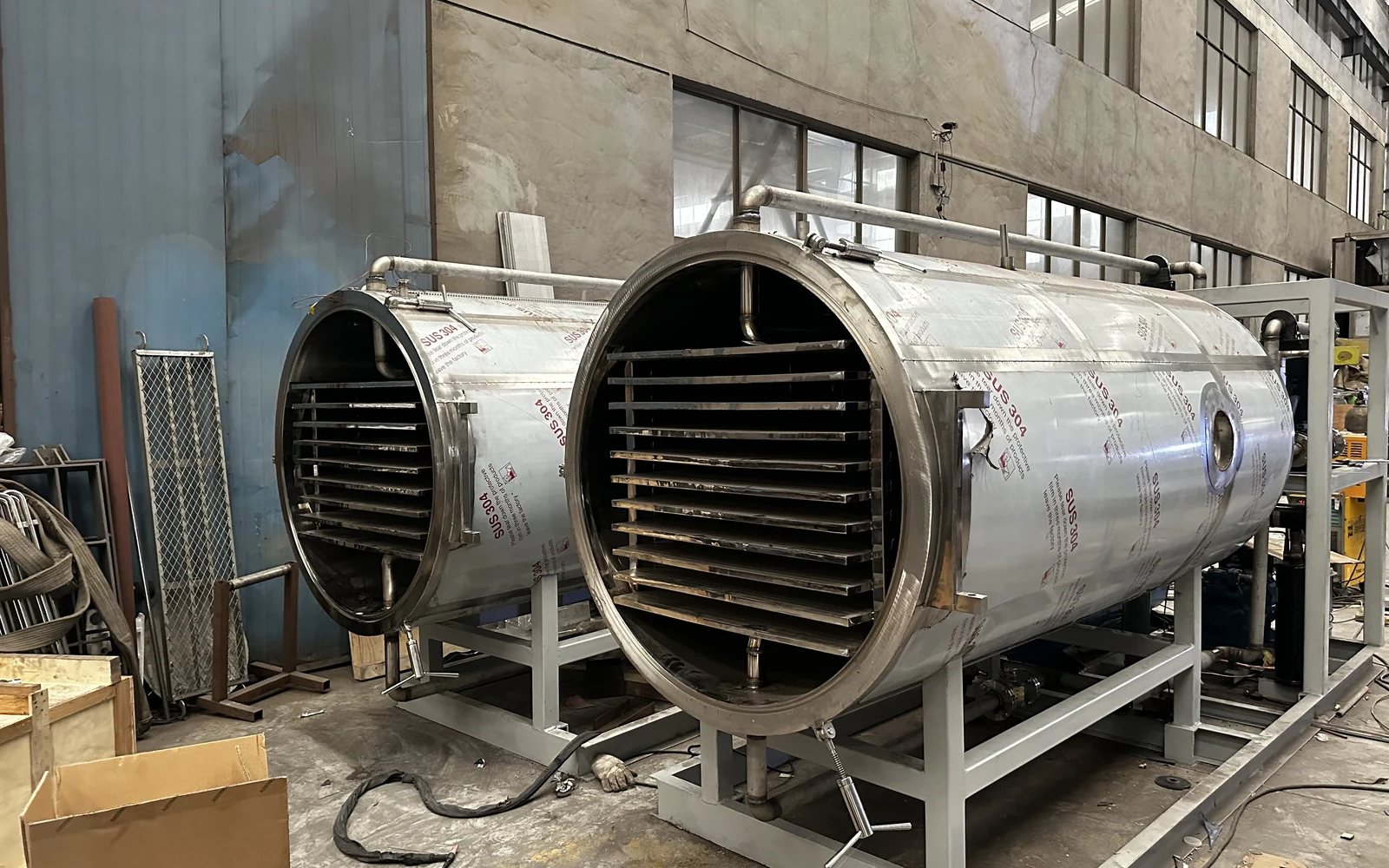
The published envelope is a planning reference. Final drawings must include operating clearance, door and rack movement, component removal, piping, cable routes, drainage, cleaning access and the delivery path into the building.
Make the machine installable and serviceable.
Check doorway, corridor, floor loading, lifting, foundation, operating side and future removal of pumps, compressors or chamber components.
Use simultaneous project loads.
Confirm voltage and frequency, connected and operating demand, cooling medium, design temperatures, flow, pressure, water quality and heat rejection.
Protect product before and after the cycle.
Define clean and dirty traffic, tray washing, drainage, allergen control, frozen transfer and the humidity-controlled packaging handoff.
Quality, evidence and acceptance
Release the SSFD-100 layout from real access and utility data, not from a brochure footprint. Measure the door, the corridor and the ceiling clearance on the route into the room, and leave working space around the machine for loading, cleaning and service. A freeze dryer that fits on paper can be impossible to bring into the building or to maintain once it is there.
Confirm the utilities at the same time: the electrical supply and its capacity, the cooling water or air requirements, the vacuum pump exhaust and any drainage. If the utility data is assumed rather than measured, commissioning stalls on the first day while the missing service is found, so the layout and the utilities are released together.
Approve One Test Basis Before FAT or Site Verification
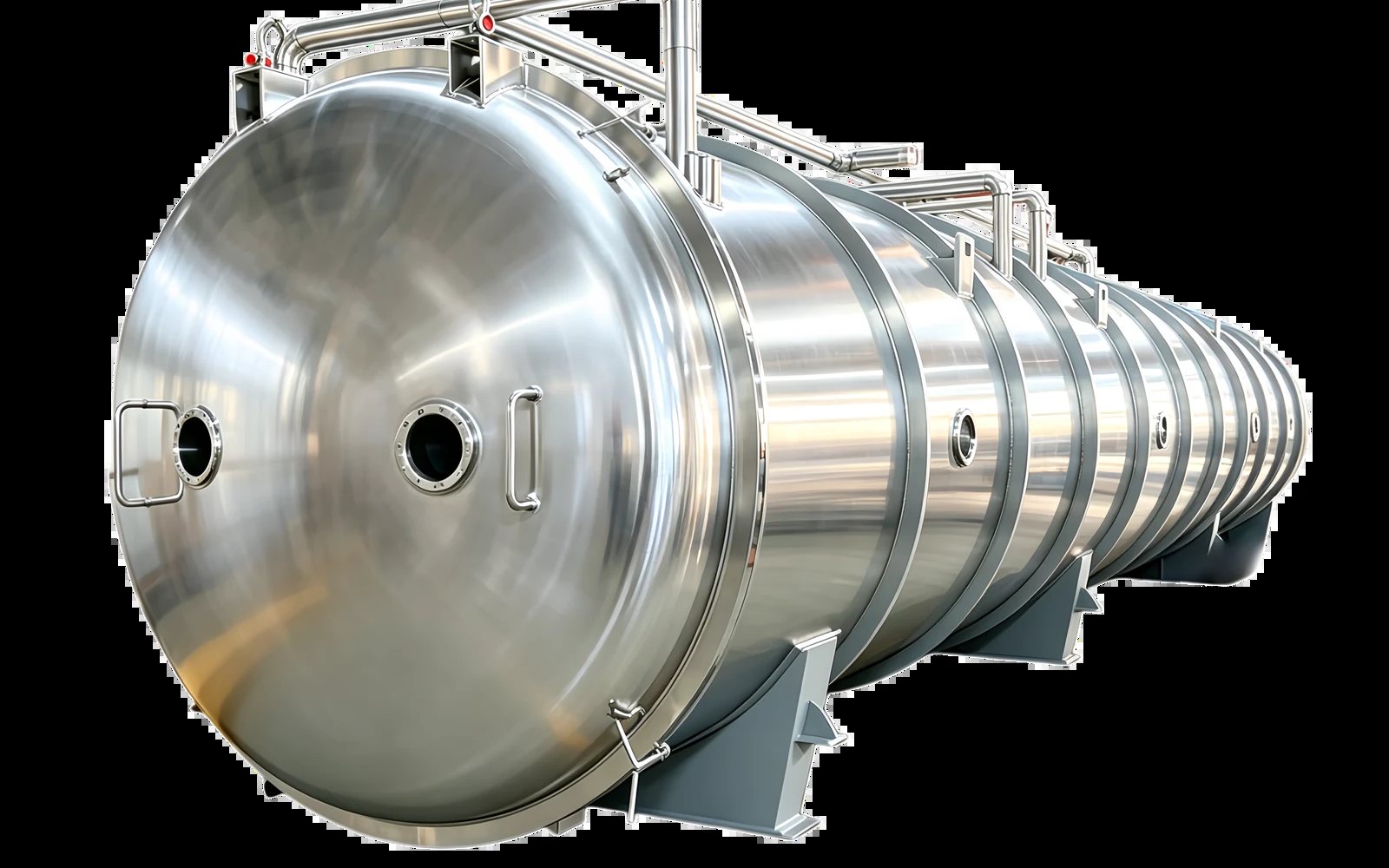
A defensible acceptance record names the product, preparation, loading, frozen state, recipe, measurement points, endpoint method, utilities, test duration, responsibilities and limits of the available factory setup.
Document review
Approve the model configuration, materials, component schedule, drawings, utility list, controls, alarms and responsibility matrix.
Factory test basis
Define no-load checks, vacuum and temperature records, available product or substitute, sampling, deviations and sign-off.
Site acceptance
Confirm installation, utilities, safety, operator training, representative-product run and the agreed finished-product criteria.
Operating record
Retain recipes, curves, batch loading, endpoint results, maintenance actions and changes that affect repeatability.
Technical and commercial record
Approve one test basis before the factory acceptance test or the site verification, and keep that basis through both. State the product, the load weight, the shelf temperature, the chamber pressure and the final moisture target, and agree how the cycle data will be recorded and judged. A test without a written basis produces a demonstration, not evidence.
Run the same cycle at the factory and at the site, and compare the two records. The product temperature and chamber pressure curves should match, and any difference should be explained by the site conditions that were already agreed. When the test basis is fixed in advance, acceptance becomes a comparison of records rather than an argument about expectations.
Carry the SSFD-100 Basis Into the Quotation
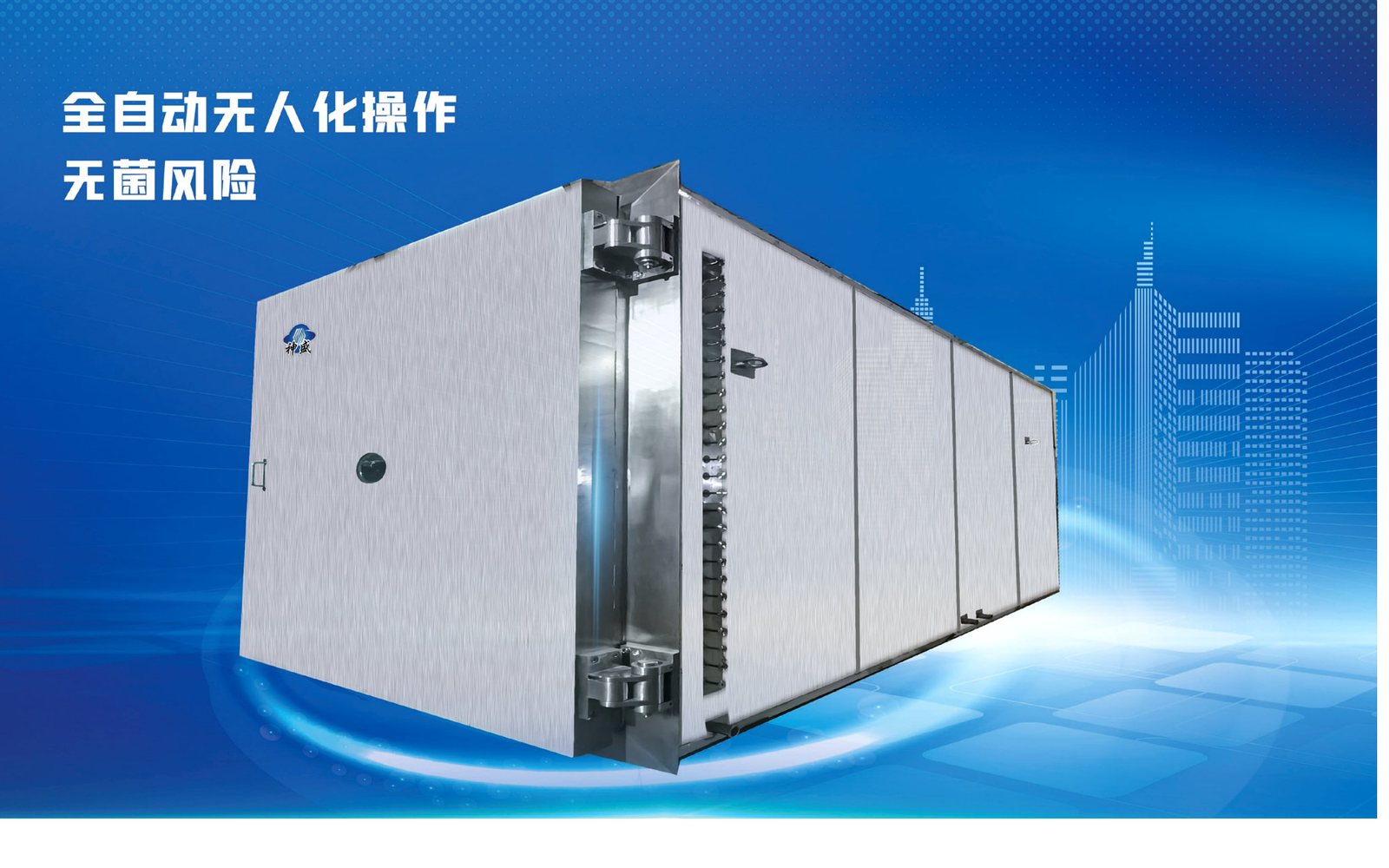
Price, delivery, installation support, commissioning, after-sales support, warranty, certification documents and optional equipment are confirmed for the selected configuration. No portfolio-wide CE statement is made for this freeze-dryer family.
| Published drying area | 100 m² |
|---|---|
| Published installed power | 260 kW |
| Maximum water-capture reference | ≥2,000 kg/batch not product output |
| Architecture reference | Integrated or split; water-cooled reference |
| Additional model detail | 17+1 shelf layers; approximately 13,500 × 2,500 × 3,200 mm |
| Project output basis | Calculate from the approved food, tray loading, freezing route, cycle, endpoint and operating schedule |
Frequently asked questions
What does the SSFD-100 100 m² drying-area figure mean?
Does the ≥2,000 kg/batch water-capture reference equal food batch capacity?
Which inputs are required to review the SSFD-100?
How is the final configuration and quotation confirmed?
Which certification documents are supplied?
Carry the SSFD-100 basis into the quotation so the document you sign describes the machine you tested. Include the product, the load, the cycle, the shelf area, the condenser and the utilities that were agreed, and exclude nothing that was assumed during the review. A quotation that omits the vacuum pump or the refrigeration boundary is cheaper on paper and more expensive on site.
When the same basis travels from the trial through the quotation to the acceptance test, the buyer can hold the supplier to a written duty instead of a remembered conversation. That continuity is what separates a defensible purchase from a catalog order that drifts as soon as the first question is asked.