
Procurement context and known constraints
Vegetable Washing, Drying and Sorting Line
Review the process, equipment duties and project boundary from one defined basis.
The recorded purchase joins washing, surface-water removal and manual inspection.
Procurement context and known constraints
The Hadof transaction sheet identifies a food-company buyer in Guatemala and records the company owner as the decision role.
The source verifies what was purchased.
| Procurement goal | Connect repeated bubble washing with air drying and a final manual conditioning or sorting position. |
|---|---|
| Recorded constraint | No product-specific operating requirement is included in the project record. |
| Comparable-project risk | Different crops, soil loads and fragility limits can change washing action, residence, water management and transfer design. |
| Required buyer input | Provide the crop, incoming condition, required wash result, output, water basis, utilities and downstream handoff. |
This example is useful because it shows a buyer connecting three duties that are usually bought separately. The recorded purchase joins two washing stages, an air-drying line and a sorting table into one route, and the value of the reference is the connection, not any single machine. For a current buyer, the lesson is to think about the route the product must follow before naming the equipment.
What the record does not contain matters as much as what it does. The transaction sheet verifies the items and their nominal lengths, but it does not document wash intensity, water recirculation, the product's soil load or the acceptance result. A buyer who copies the list without re-establishing those conditions has copied a purchase, not a solution.
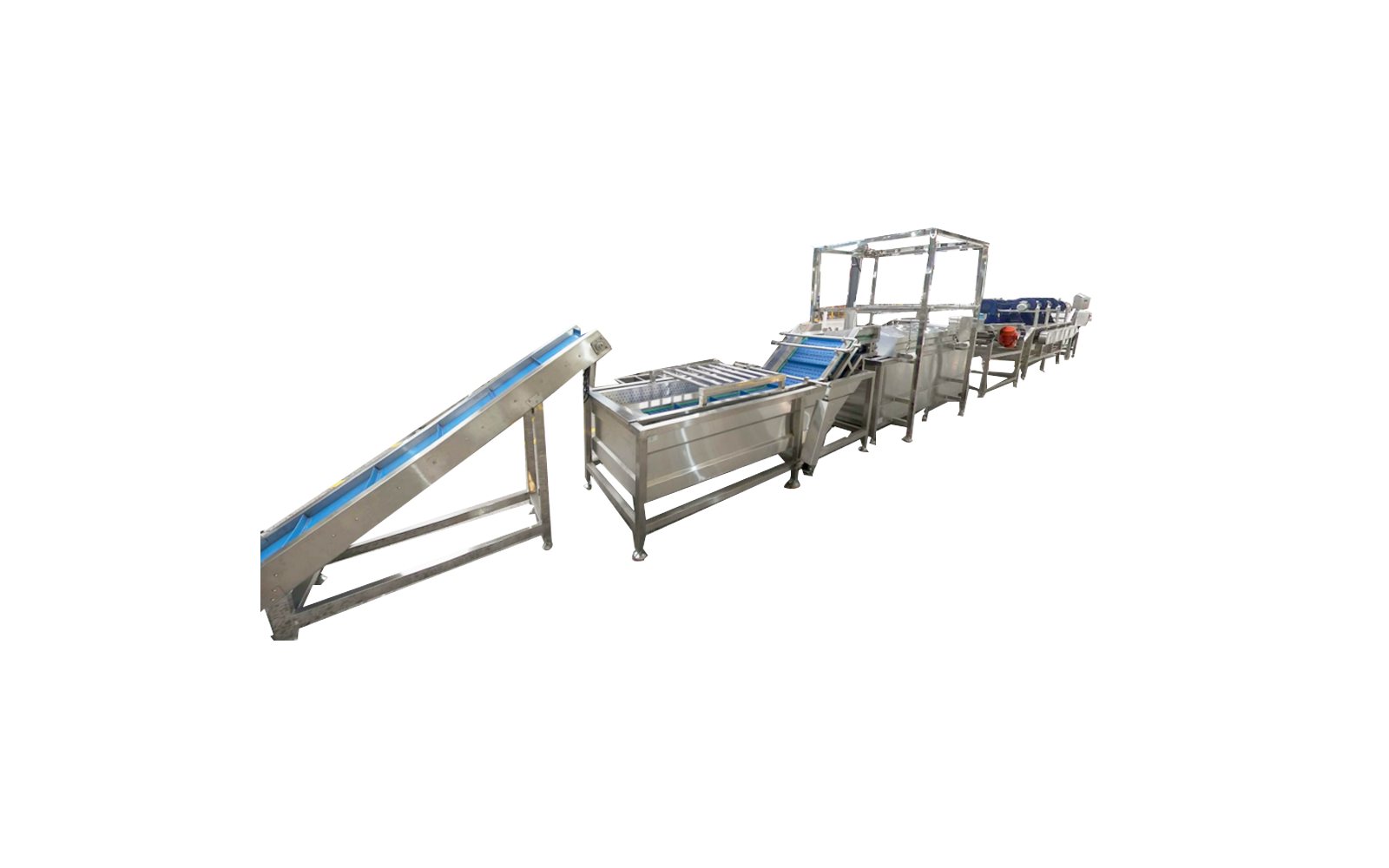
Four recorded units cover three connected duties.
Verified purchased scope
Quantities and nominal equipment lengths below come from source record HDF105. No model number or capacity is inferred.
First bubble wash
One recorded 2.5 m bubble washer.
Second bubble wash
One additional recorded 2.5 m bubble washer.
Air-drying line
One recorded 3 m air-drying line.
Condition and sort
One recorded 3 m conditioning and sorting table.
The four units map onto three connected duties: two bubble washers provide staged washing, the air-drying line removes surface water, and the sorting table provides manual inspection. Reading the units as duties, rather than as four separate items, is what makes the reference useful for a new project. Each duty has a place in the route and a condition it hands to the next.
For a current buyer, the exercise is to ask whether three duties are enough for the product in question. A leafy crop may need a gentler wash and more drying, while a root crop may need soil removal and a heavier wash action. The four units are a starting configuration, and the duties must be re-validated against the product that will actually run.
Re-validate each duty against the product that will actually run, because a leafy crop and a root crop need different washing and drying actions.
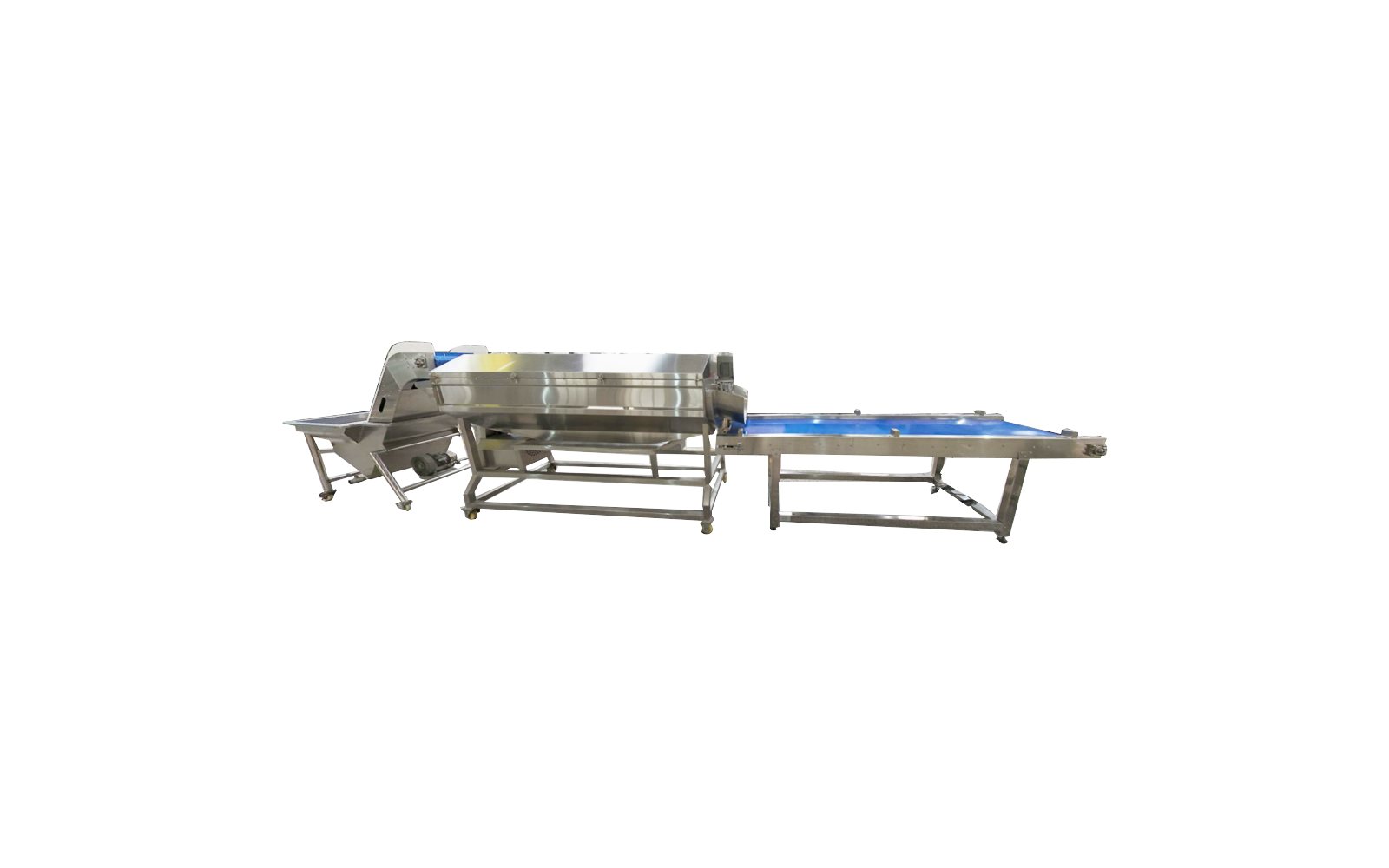
The sequence is visible; the original selection rationale is not.
Supported configuration relationship
The purchased items establish a functional route from two wash duties to surface-water removal and manual inspection. The transaction source does not document wash intensity, recirculation, sanitation, blower duty or acceptance criteria.
| Wash-to-wash handoff | Define what the first stage must remove and what condition enters the second stage. |
|---|---|
| Wash-to-dry handoff | Define allowable carry-over water, product distribution and damage limits. |
| Dry-to-sort handoff | Define inspection defects, operator access, reject handling and downstream feed condition. |
| Factory boundary | Assign water supply, filtration or discharge, drainage, electrical loads, cleaning access and line controls. |
The sequence of the purchase is visible in the record, but the reasoning behind it is not. We can see that the buyer placed washing before drying and drying before inspection, which is a sound order, but we cannot see why those lengths, mechanisms and capacities were chosen. The reference should therefore be read as a sequence, not as a set of validated decisions.
This distinction protects a current buyer from over-trusting the example. The original buyer may have chosen the equipment for a particular vegetable, a particular soil load or a particular downstream process, and none of that is recorded. The sequence is a useful starting point; the rationale must be rebuilt from the new buyer's own product and factory.
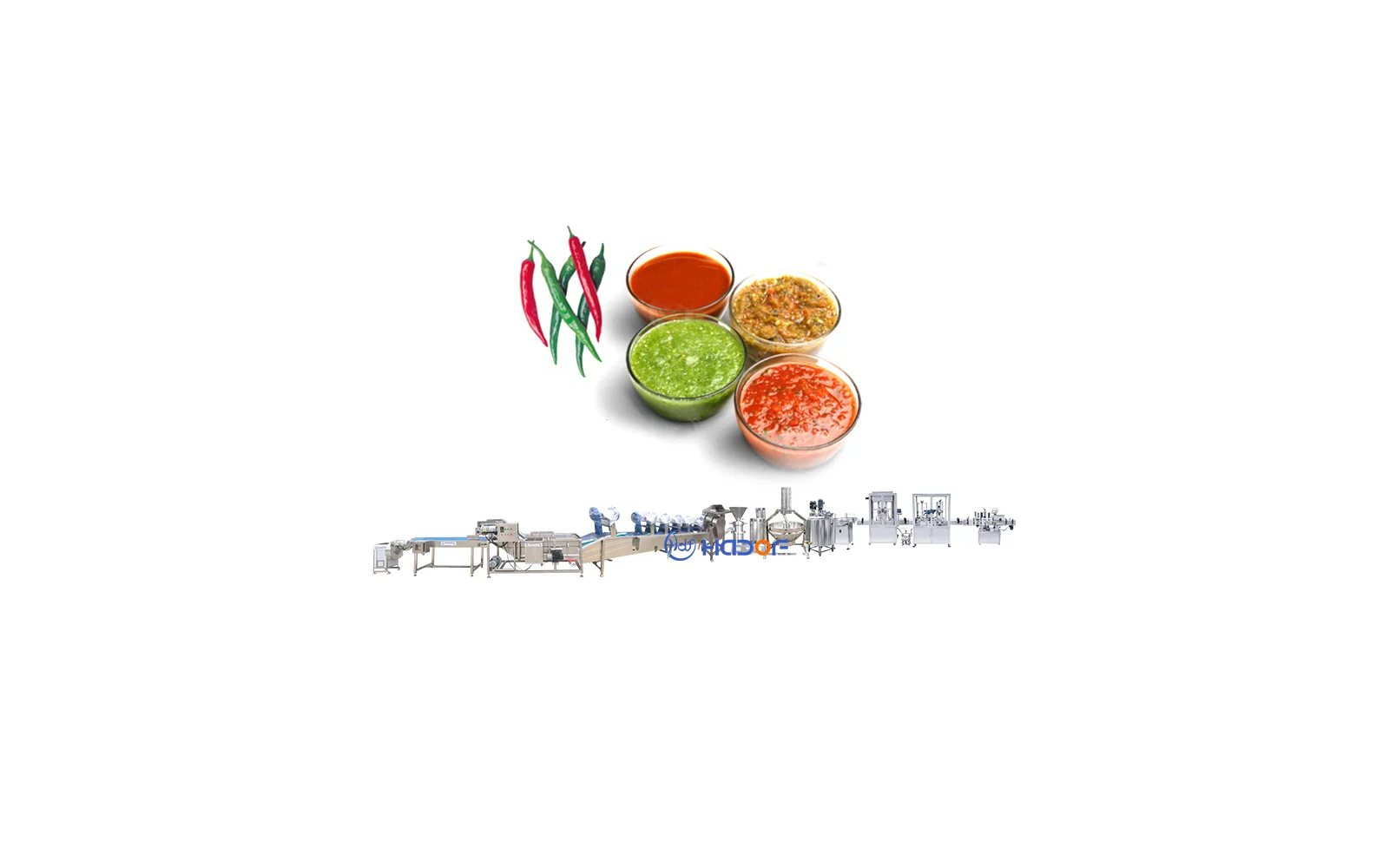
Use This Example to Compare Equipment Duties and Buyer Decisions
Project scope at a glance
The available project record covers the purchased scope. Manufacturing, acceptance, installation and production results are not included.
Food-company project
The project was prepared for a food-processing buyer in Guatemala.
Equipment identified
Two washers, one drying line and one conditioning table are individually listed.
Line duties to compare
Product loading, wash sequence, moisture removal and inspection remain the main technical review points.
Confirm the operating basis
Define product, output, utilities, acceptance and delivery responsibilities for a comparable project.
Use the example to compare equipment duties and buyer decisions, not to copy a machine list. The reference shows what one buyer combined and in what order, and it invites a current buyer to ask the same questions: what must be removed, what must be dried and what must be inspected. Those questions are the decisions the equipment list is built around.
When comparing suppliers, hold the duties constant and let the configurations vary. Two suppliers may meet the same washing, drying and inspection duties with different mechanisms and different prices, and the reference helps you ask for the duty rather than for the exact four items. The comparison is then about engineering, not about matching a shopping list.
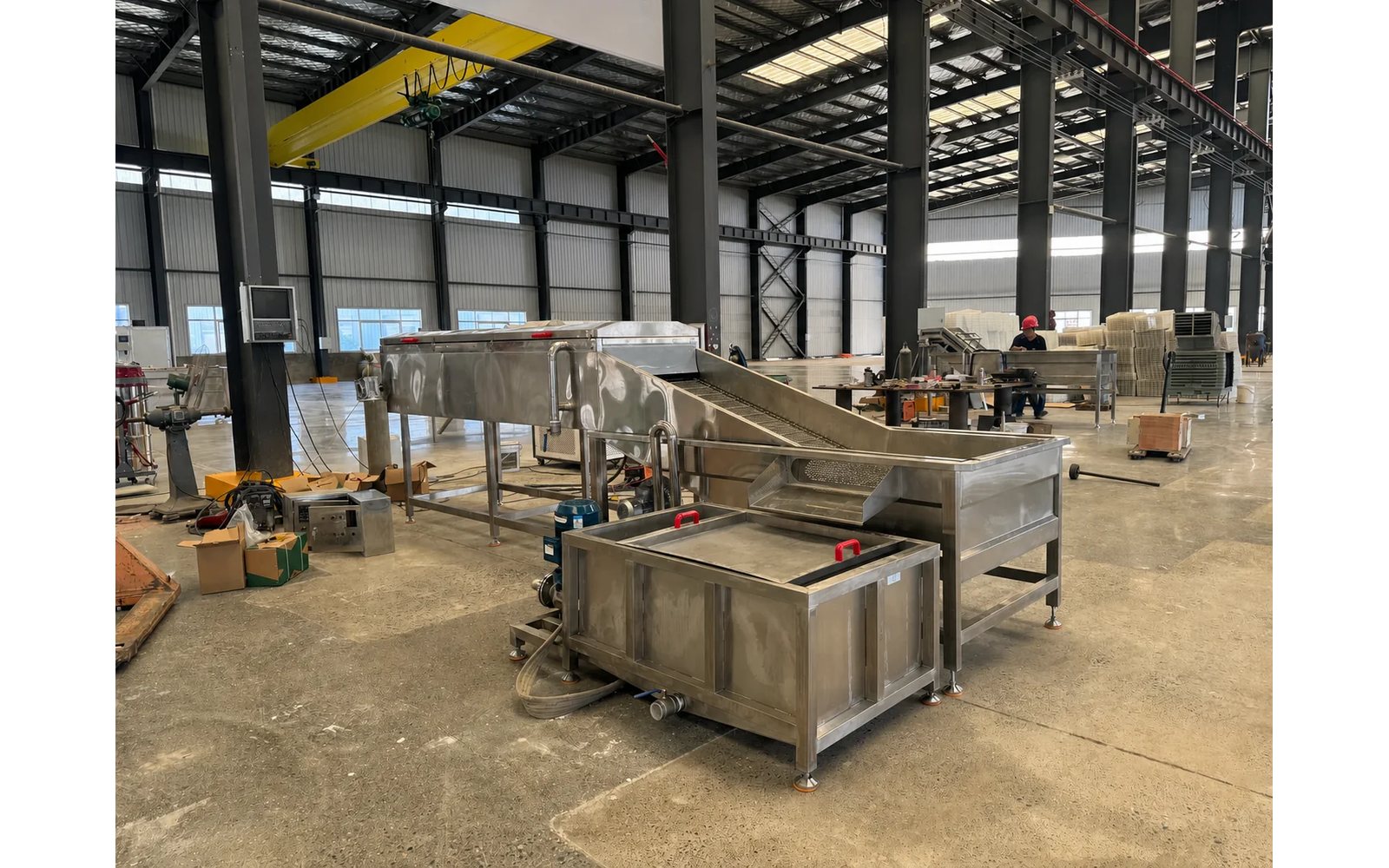
The verifiable result is a recorded four-unit purchase.
Project scope and next decision
The project record includes destination, buyer type, decision role, equipment quantities and nominal lengths.
The verifiable result is a recorded four-unit purchase, and that is the whole extent of the public claim. The record supports the items, the quantities and the nominal lengths, and it does not extend to manufacturing quality, installation, throughput or the buyer's production results. Keeping the claim inside the evidence is what makes the reference trustworthy.
For a buyer, that discipline is a model to copy. Before trusting any reference, ask what the source actually verifies and what is being inferred. A reference that stays inside its evidence is useful; a reference that expands into unrecorded performance is marketing. The four-unit purchase is a fact, and everything beyond it is an assumption the new buyer must test.
A reference that stays inside its evidence is useful; one that expands into unrecorded performance is marketing. The four-unit purchase is a fact, and everything beyond it is an assumption the new buyer must test on their own crop.
Before trusting any reference, ask what the source actually verifies and what is being inferred, and test the inference on your own crop.
Keep the claim inside the evidence, and the reference remains useful.
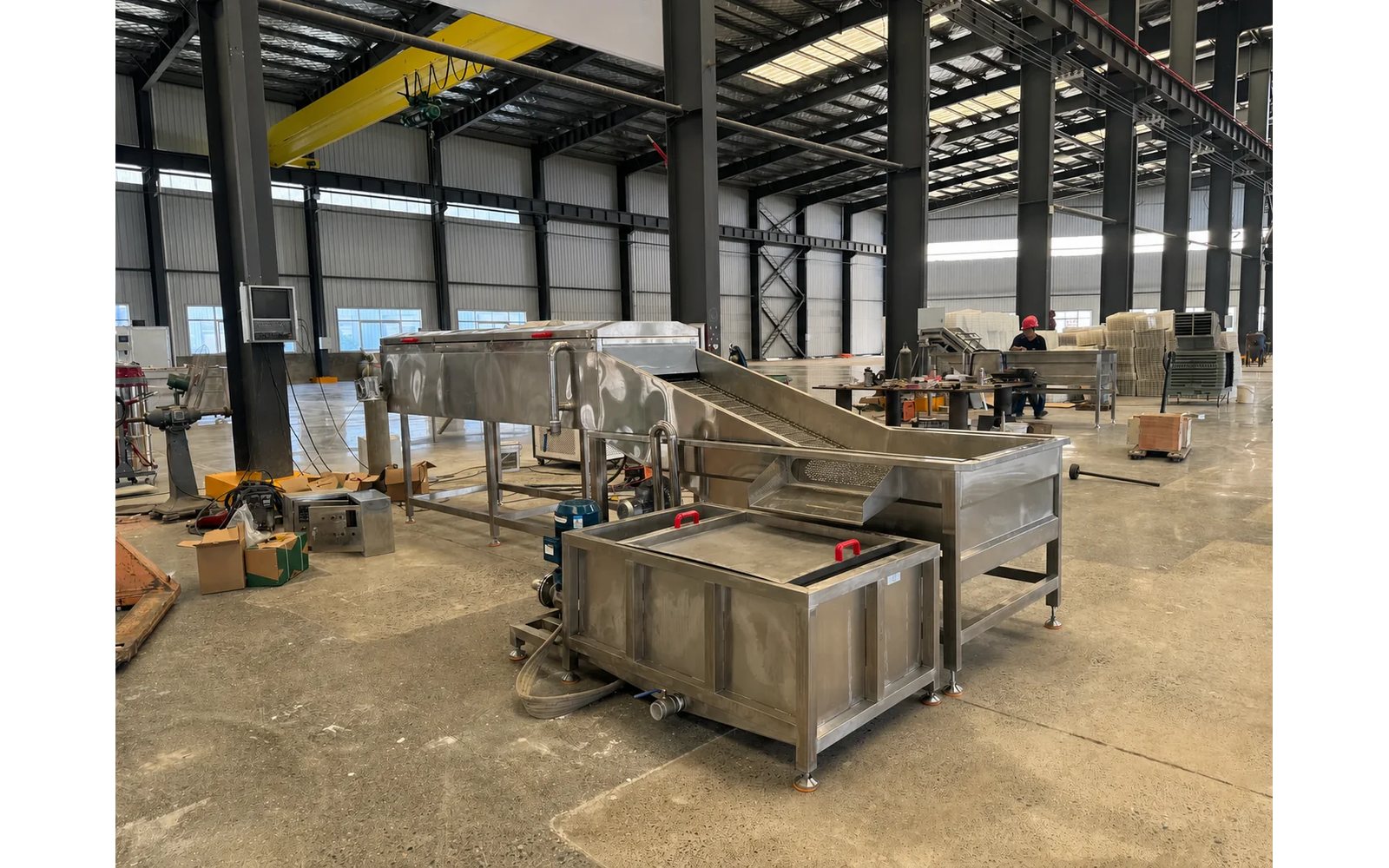
Use the reference scope to ask better questions, not to copy a configuration.
Transferable lessons for a comparable project
Define Crop Behavior
Record variety, dimensions, soil load, fragility and incoming temperature.
Define Every Handoff
Agree the condition entering and leaving washing, drying and inspection.
Prepare Factory Inputs
Add output, schedule, water, drainage, room dimensions and downstream responsibility.
| Destination | Guatemala |
|---|---|
| Recorded bubble washers | 2 units |
| Nominal washer length | 2.5 m each |
| Recorded air-drying line | 1 x 3 m |
| Recorded conditioning and sorting table | 1 x 3 m |
Frequently asked questions
What does the Guatemala transaction record verify?
Does this project example prove a throughput or washing result?
Why are two washing stages shown?
What should a buyer provide for a similar vegetable line?
The right use of the reference scope is to ask better questions, not to copy the configuration. A buyer who sees two washes, a drying line and a sorting table should ask what those duties must achieve for their own crop, what water and waste systems they need, and how the line hands off to the next process. Those questions are where the real project is settled.
Then convert the questions into a written brief. State the crop, the soil load, the required cleanliness and surface moisture, and the output, and send that brief to suppliers. The reference gives you the shape of a workable route; the brief turns that shape into a specification that can be quoted, tested and accepted.
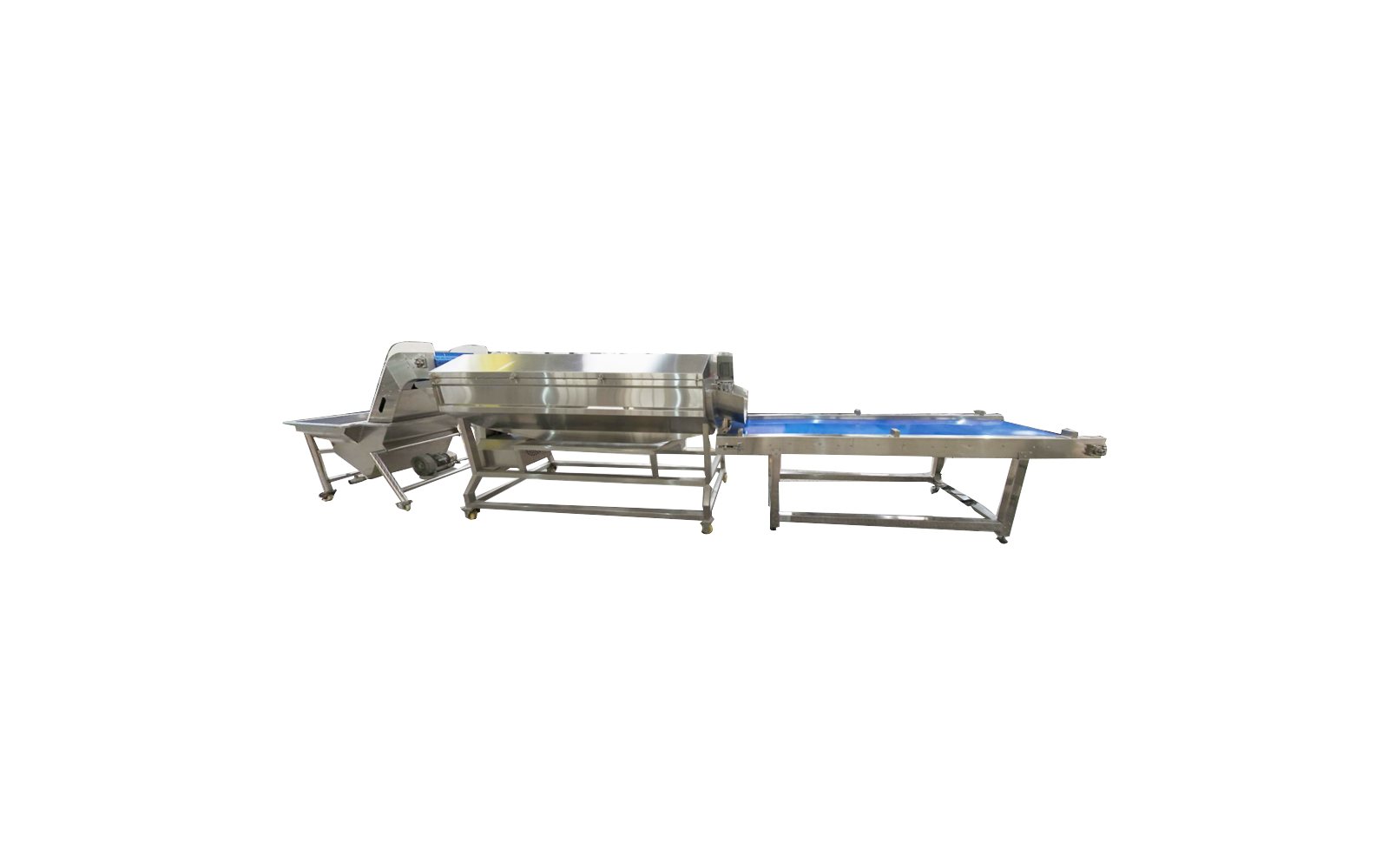
Related pages
Vegetable Processing Line
Configure root, leafy or mixed vegetable preparation around product risks, washing and cutting duties, water, factory interfaces and acceptance.
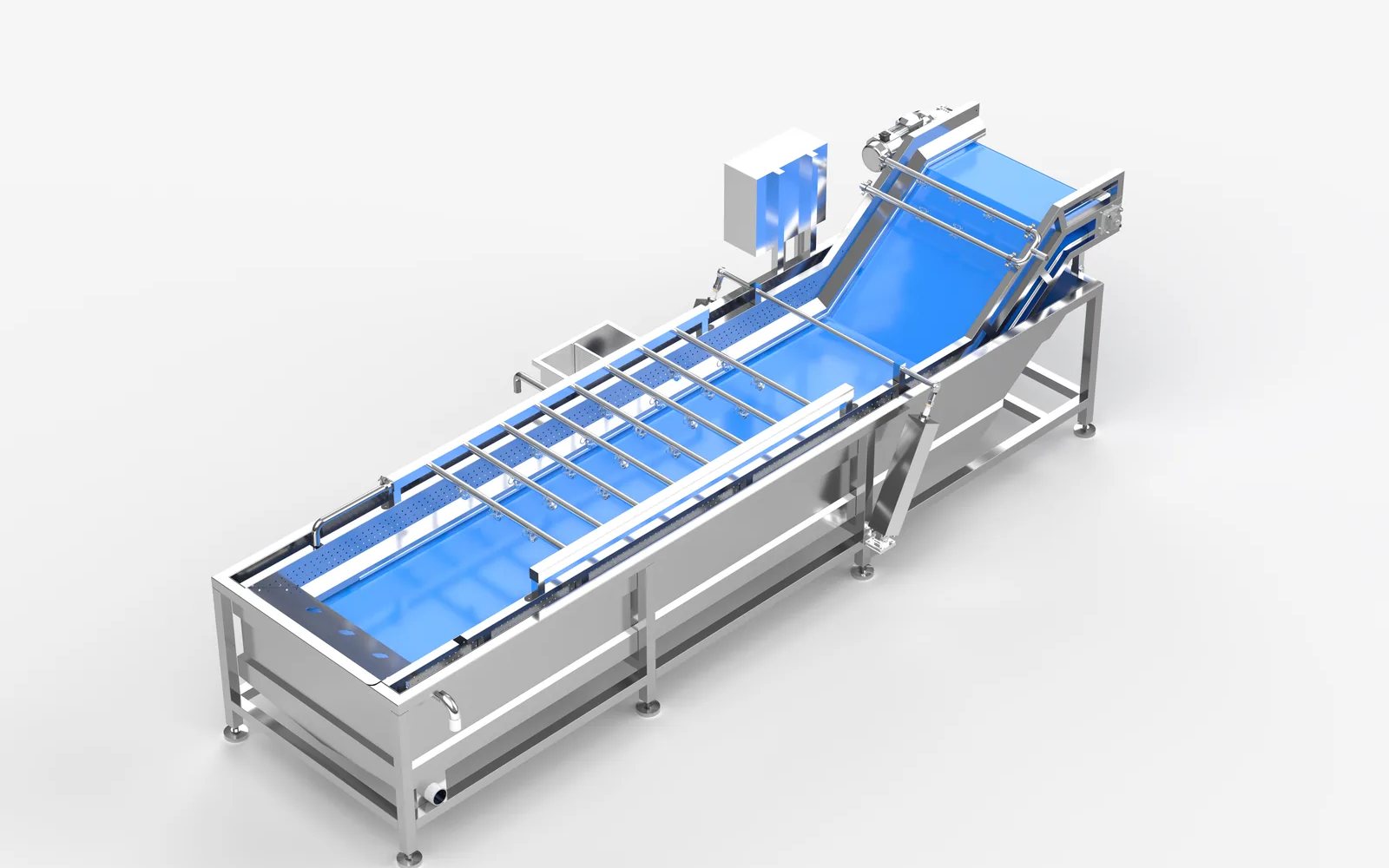
Vegetable Washing Equipment
Compare verified Hadof washer references, washing mechanisms, product risks, line interfaces, test evidence and project configuration inputs.
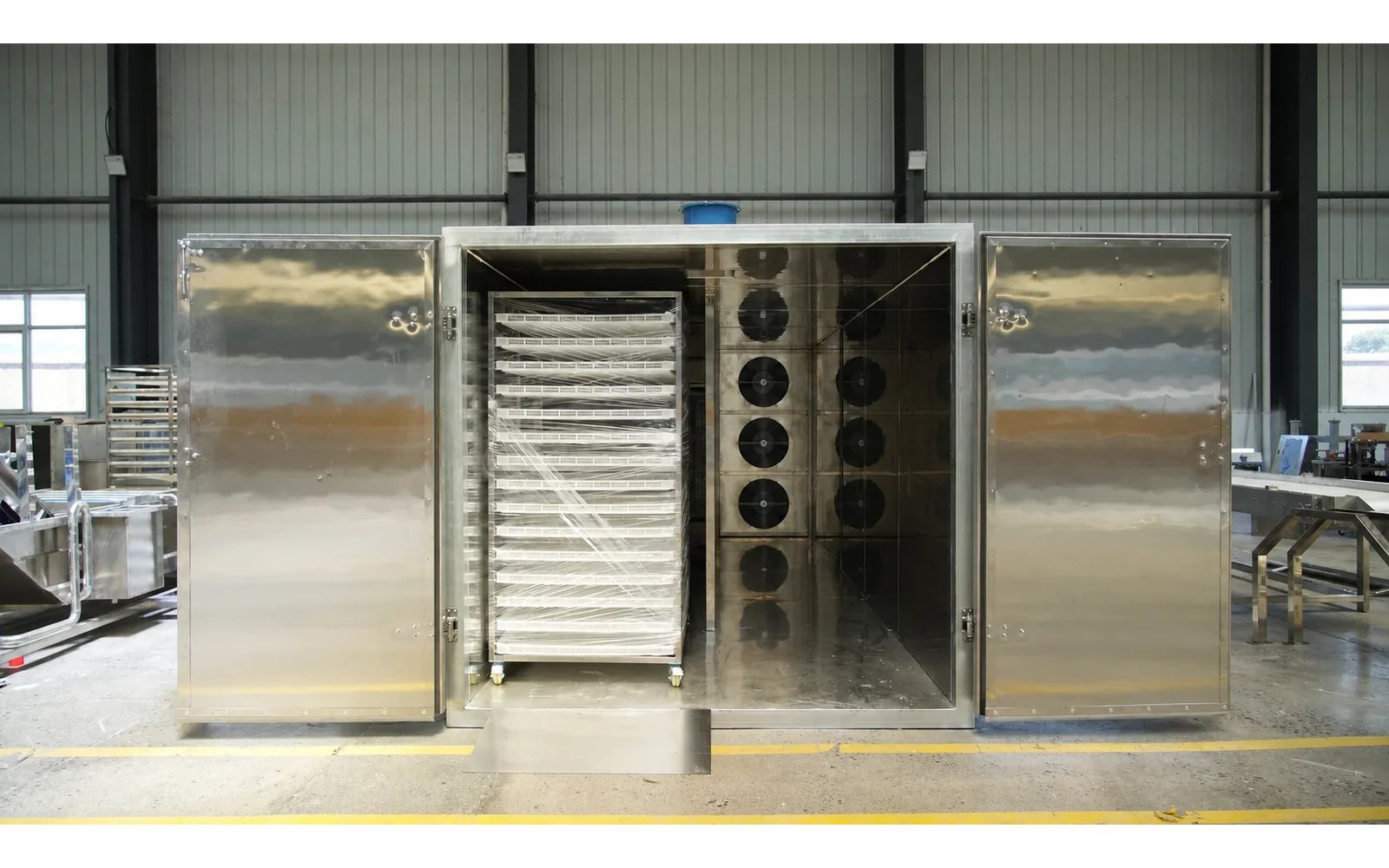
Food Drying Chamber
Review food drying chamber suitability, water-removal duty, tray loading, airflow, heat source, batch rhythm, testing and delivery boundaries.