
Vegetable Line Batch Optimization
Review the process, equipment duties and project boundary from one defined basis.
Why Does a Vegetable Line Miss Its Planned Rhythm?
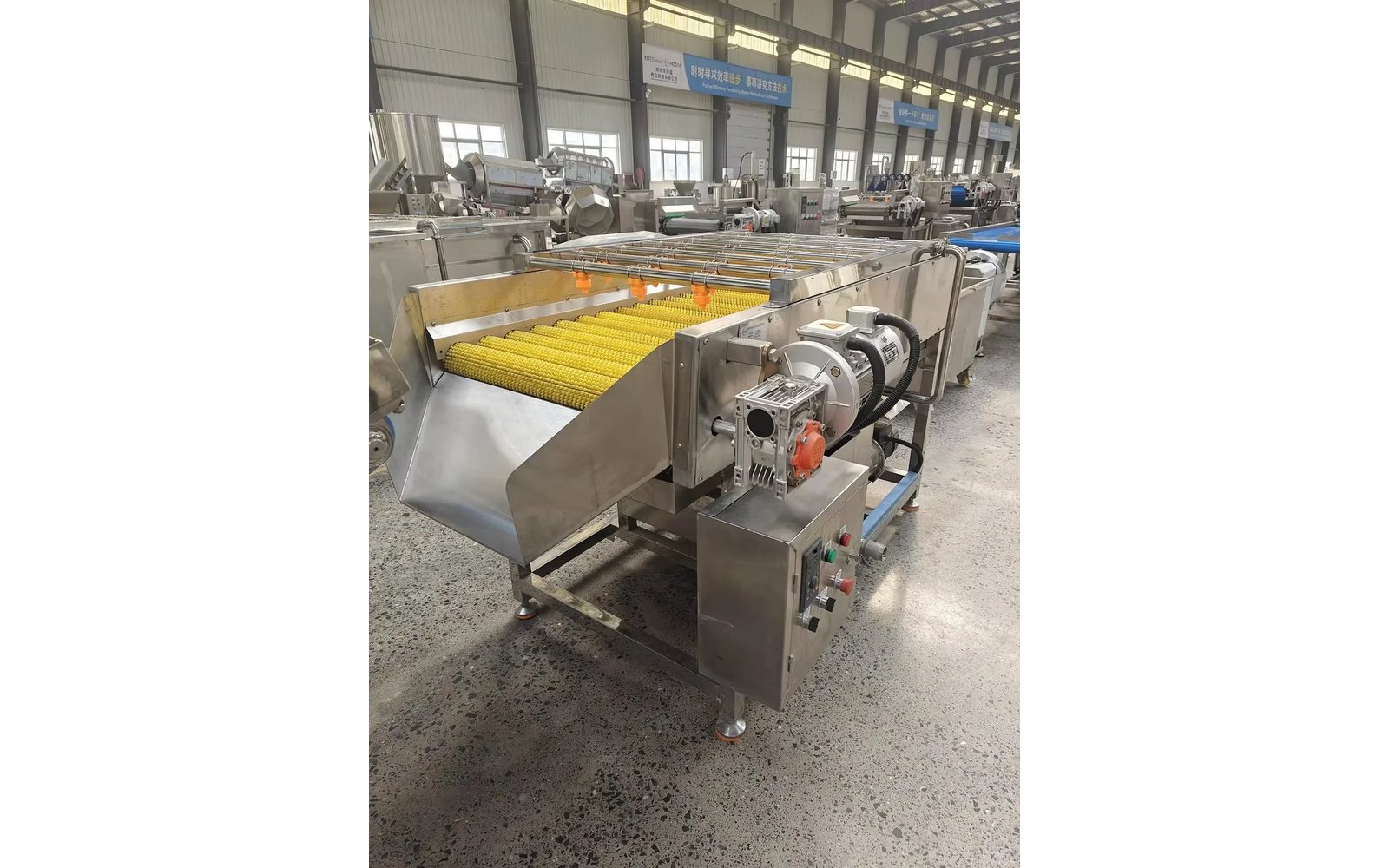
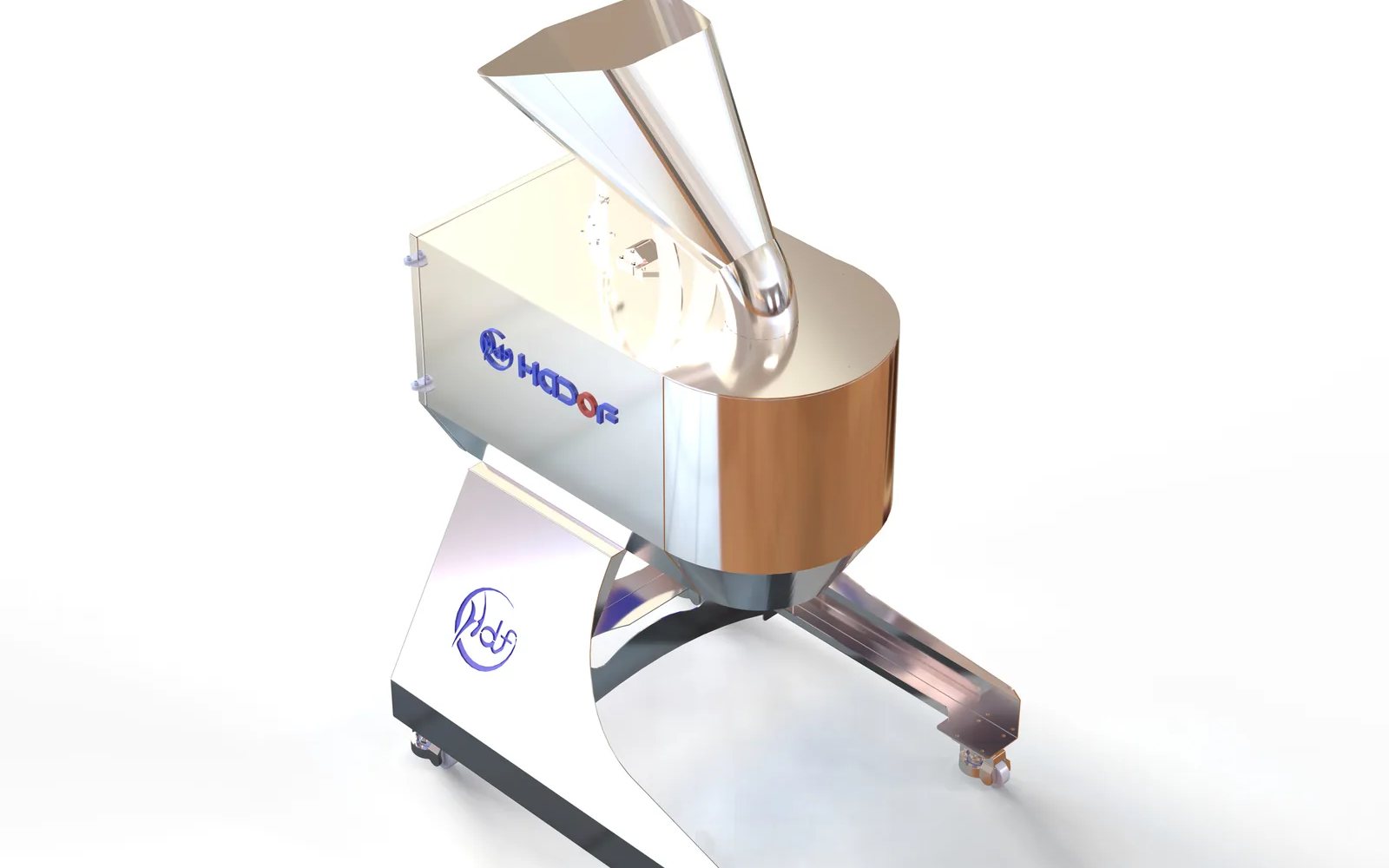
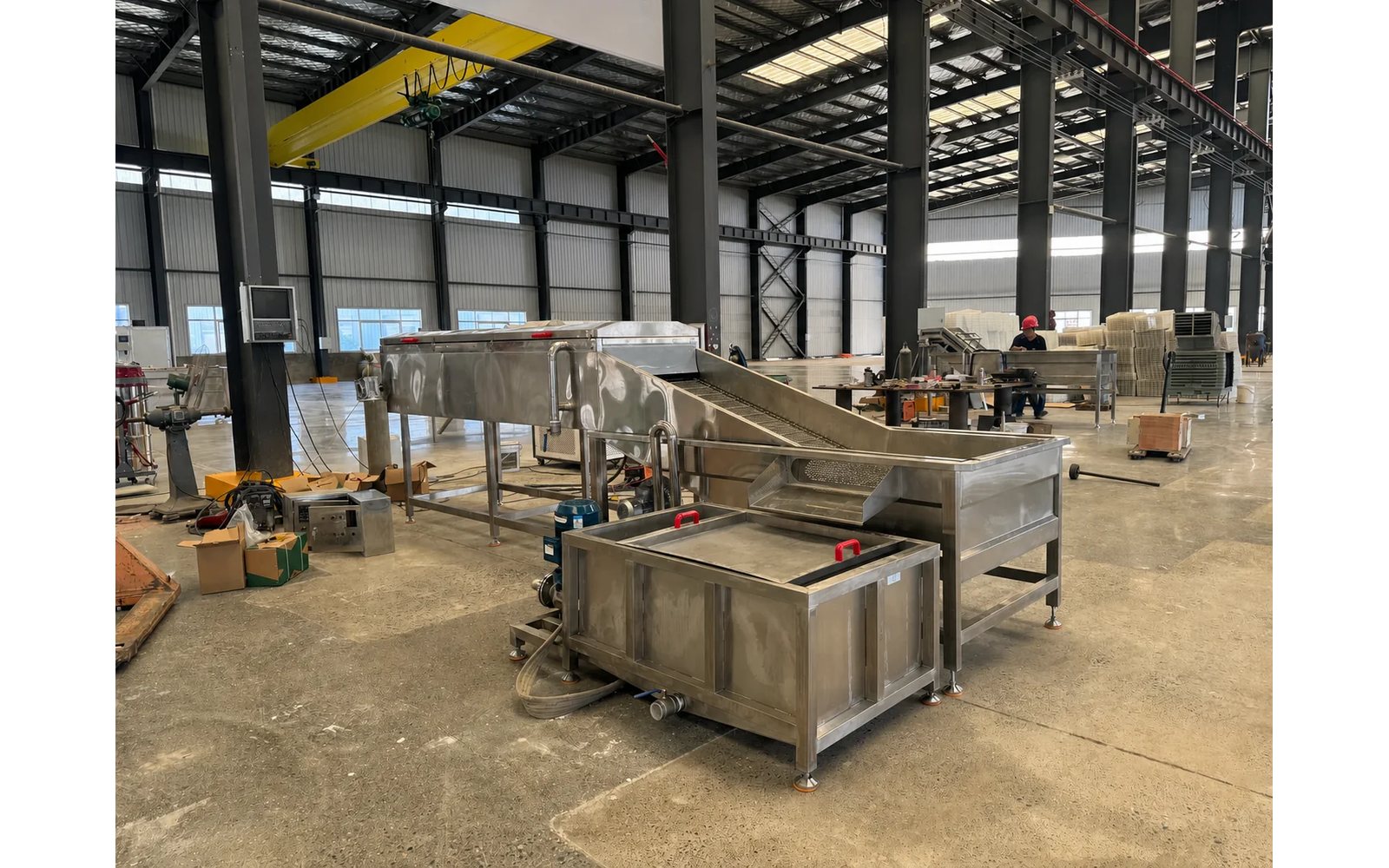
The answer cannot be taken from nominal machine output alone. The reviewed evidence basis combines Hadof model values for washing and cutting duties with Hadof workshop photographs used only to examine equipment families, access and interfaces.
Incoming variation changes the duty
Crop size, soil attachment, buoyancy, firmness and trim state affect washing contact, cutter loading and transfer behavior before a machine setting is changed.
Batch rhythm exposes hidden queues
A washer, inspection table or cutter can appear adequate in isolation while changeovers, manual loading and discharge accumulation reduce the usable line rate.
The next stage defines the handoff
The required surface water, cut distribution, orientation and buffer condition must be defined by the blanching, cooking, drying, freezing or packing duty that follows.
Required inputs and route diagnosis
A vegetable line misses its planned rhythm for a specific reason, and the reason is usually a constraint, not a general slowness. The planned rhythm assumes a steady feed, a fixed changeover and a product that matches the design, while the real line sees crop variation, surge loading and cleaning time that the plan ignored. Finding the missed rhythm means finding the constraint.
Measure the actual rhythm against the plan before changing anything. Record the throughput at each stage and the time lost to changeover, cleaning and stops, and identify where the line waits. The gap between the plan and the measurement is the diagnosis, and it points to the stage that must be fixed rather than to a general call for more speed.
Diagnose the Constraint by Product Family
Use representative material and one declared operating window. The selection input must include both normal variation and the most difficult product expected during the production season.
Separate soil-removal duty from product-damage risk.
Control flotation, entanglement and surface-water carryover.
Define tool changes and feed preparation as production time.
Make conveyor duty part of the production calculation.
Parameter consequences and wrong-selection risks
Diagnose the constraint by product family, because a line that handles several vegetables has a different constraint for each one. A root crop may bind the washing stage, a leafy crop the drying stage, and a fragile crop the cutting stage. The constraint is a property of the product family, not of the line in general.
Run the diagnosis for each family separately and record the results. The fix that relieves the constraint for one family may do nothing for another, and optimising the line means optimising it family by family. The product family is the unit of diagnosis.
Run the diagnosis for each family separately, because the fix that relieves one constraint may do nothing for another.
The constraint is a property of the product family, not of the line in general, and optimising the line means optimising it family by family.
Trace Every Input to a Measurable Line Effect
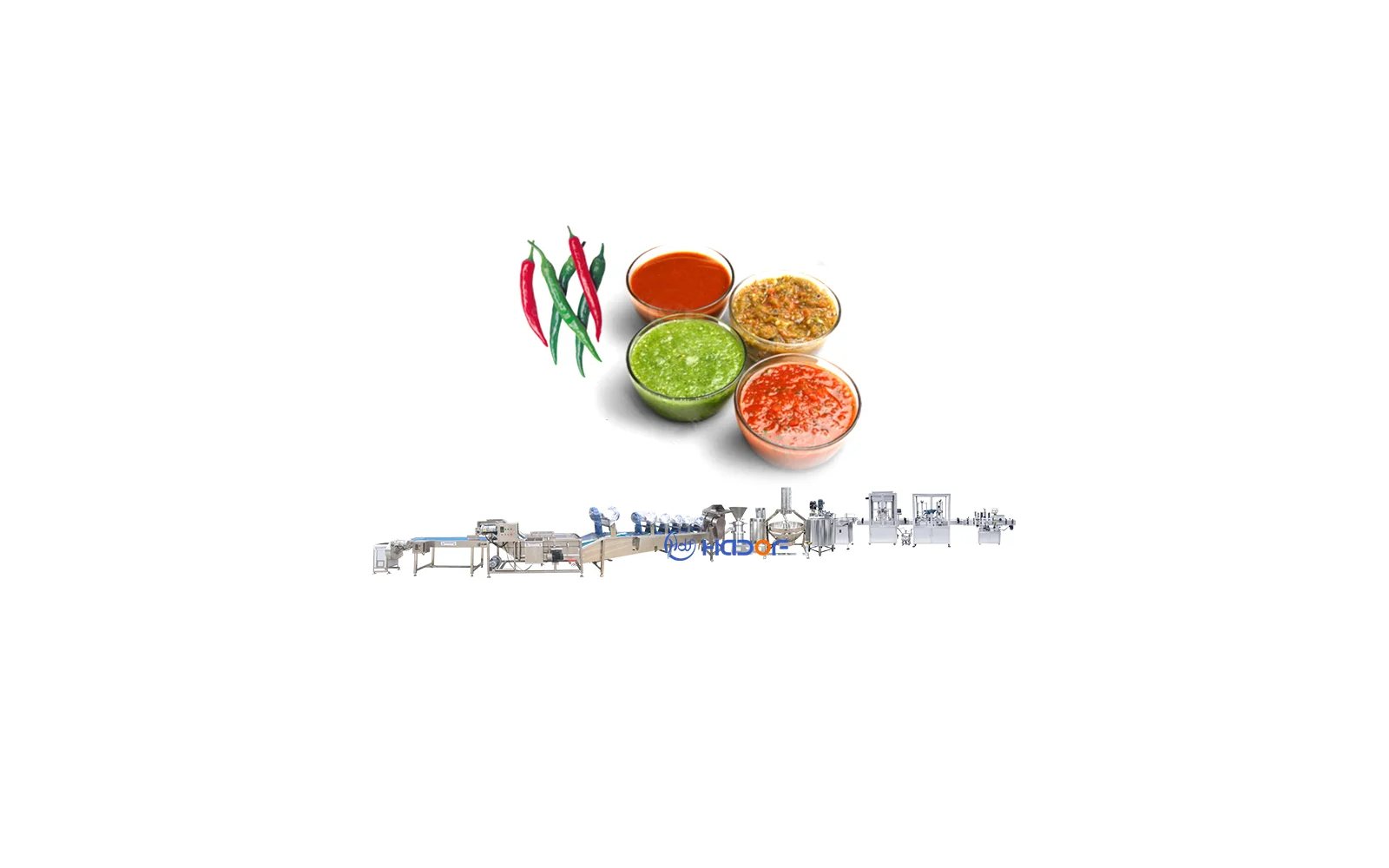
A parameter matters because it changes product handling, stage loading or acceptance. Record that consequence before selecting a larger machine or adding another stage.
- 01CharacterizeMeasure product variation
- 02LoadDefine feed pattern and peak
- 03TransformWash or cut to an agreed result
- 04InspectMeasure loss and distribution
- 05TransferProtect condition and rhythm
- 06BalanceMatch the slowest approved duty
Trace every input to a measurable line effect before accepting an explanation. Soil load, size variation, surface moisture and feed rate are the inputs, and throughput, yield and stops are the effects. The line is understood when each input is connected to the effect it produces, and the data shows which input matters most.
Keep the measurements at the same points and in the same units across runs. The trace is what turns an opinion about the line into a causal picture, and it is the basis for choosing which change to make. An input that cannot be traced to an effect is not yet understood.
Keep the measurements at the same points and in the same units, so the trace connects each input to the effect it produces.
An input that cannot be traced to an effect is not yet understood, and the trace is the basis for choosing which change to make.
Know When a Standard Reference Is No Longer Enough
Move to a higher-duty or custom review when product behavior, output definition, operating pattern or factory interfaces fall outside the starting configuration.
Model-family starting point
Use whenProduct, duty and operating window fit a current standard arrangement
Still confirmTooling, options, utilities, interfaces and current quotation
Do not inferA guaranteed line result from one machine figure
Expanded output or operating window
Use whenPeak loading, long shifts, seasonal variation or rapid changeover increases duty
ReviewParallel stages, buffers, water system, controls and maintenance access
ConfirmRepresentative-product test and documented stage balance
Product or site-specific integration
Use whenGeometry, hygiene, room, utility or handoff requirements fall outside the standard arrangement
ReviewLayout, guarding, controls, cleanability, documentation and buyer-side work
Release gateApproved drawings, responsibility matrix and acceptance basis
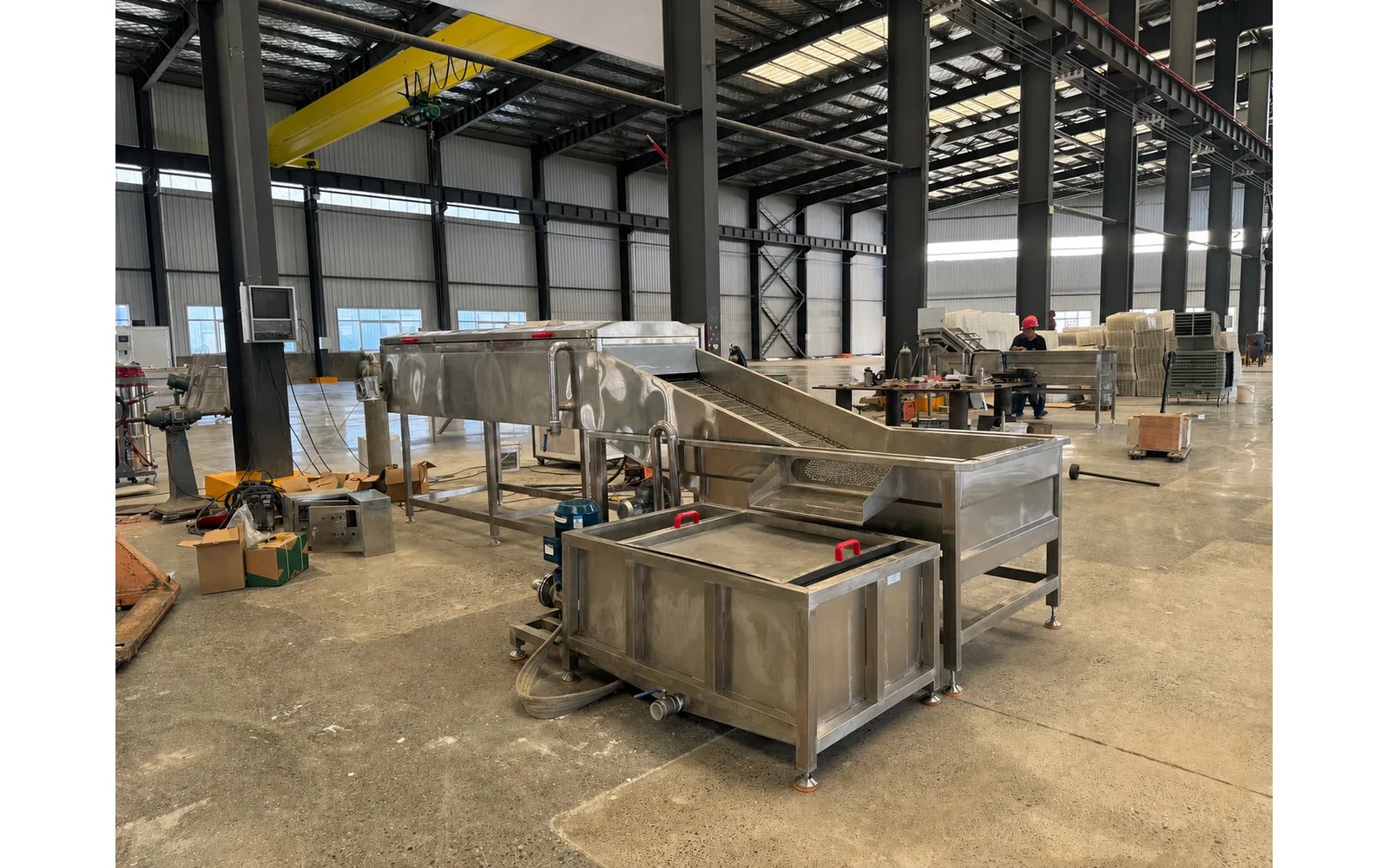
Know when a standard reference is no longer enough. The published reference describes a product and a rhythm that may not be the buyer's, and it stops being useful when the crop, the output or the changeover pattern moves outside it. Recognising that point is what triggers a higher-duty or custom review instead of a forced fit.
Signal the departure from the reference in writing. State which input leaves the standard envelope and ask for the review path that covers it. Continuing to apply a standard reference beyond its limits is how a vegetable line is bought for one duty and run on another, and the mismatch is paid for in lost rhythm.
Read Physical Interfaces Before Approving the Layout
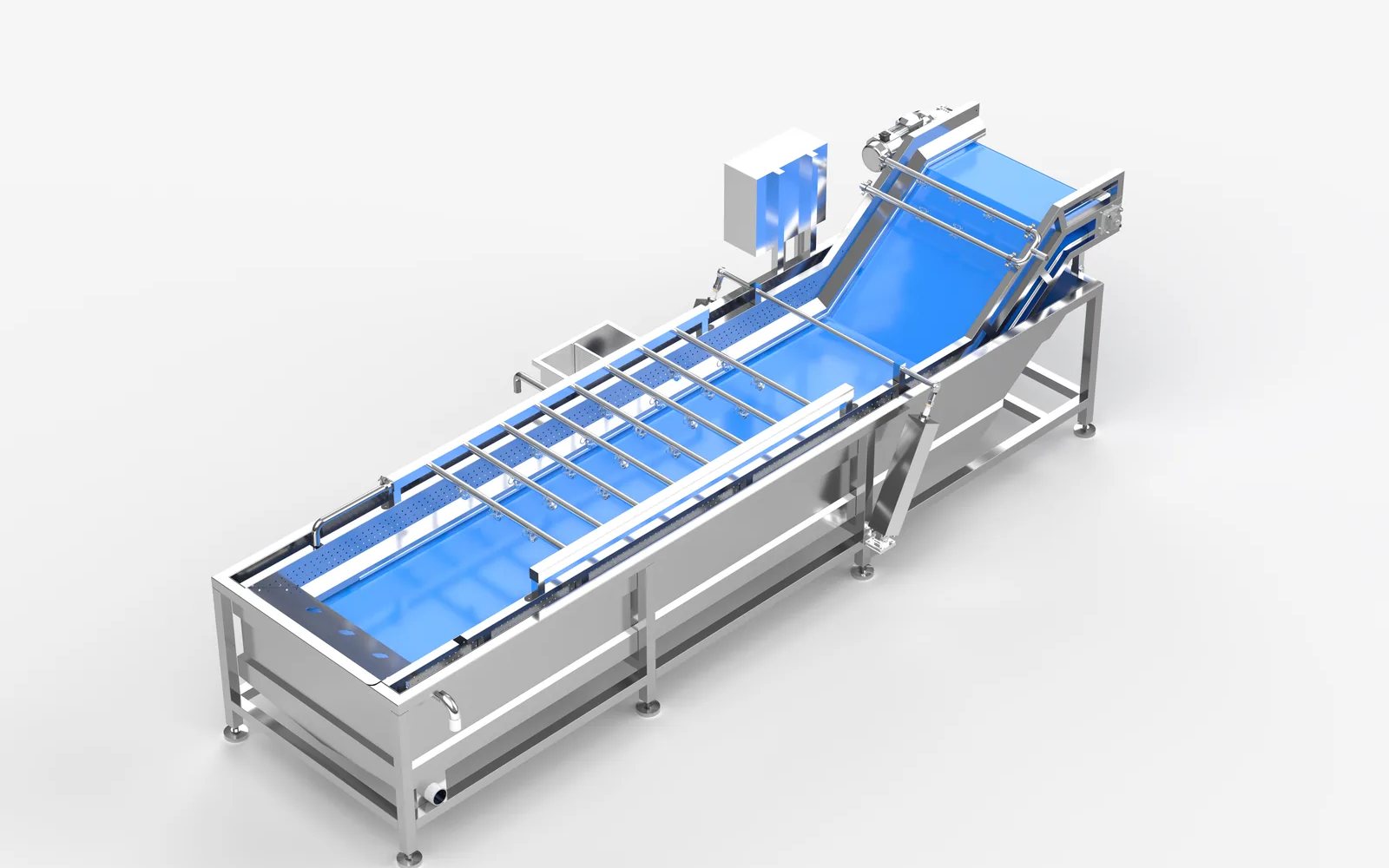
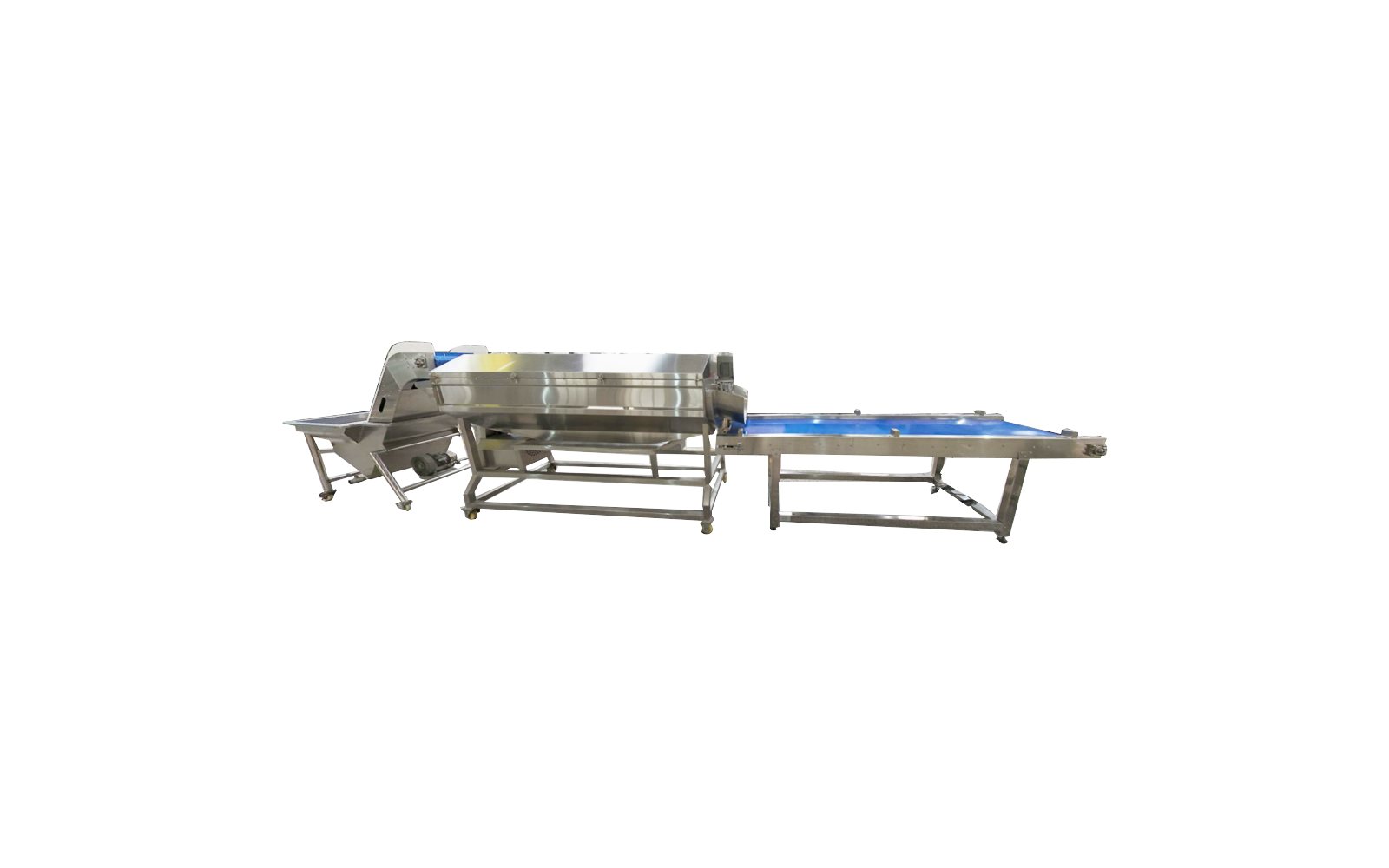
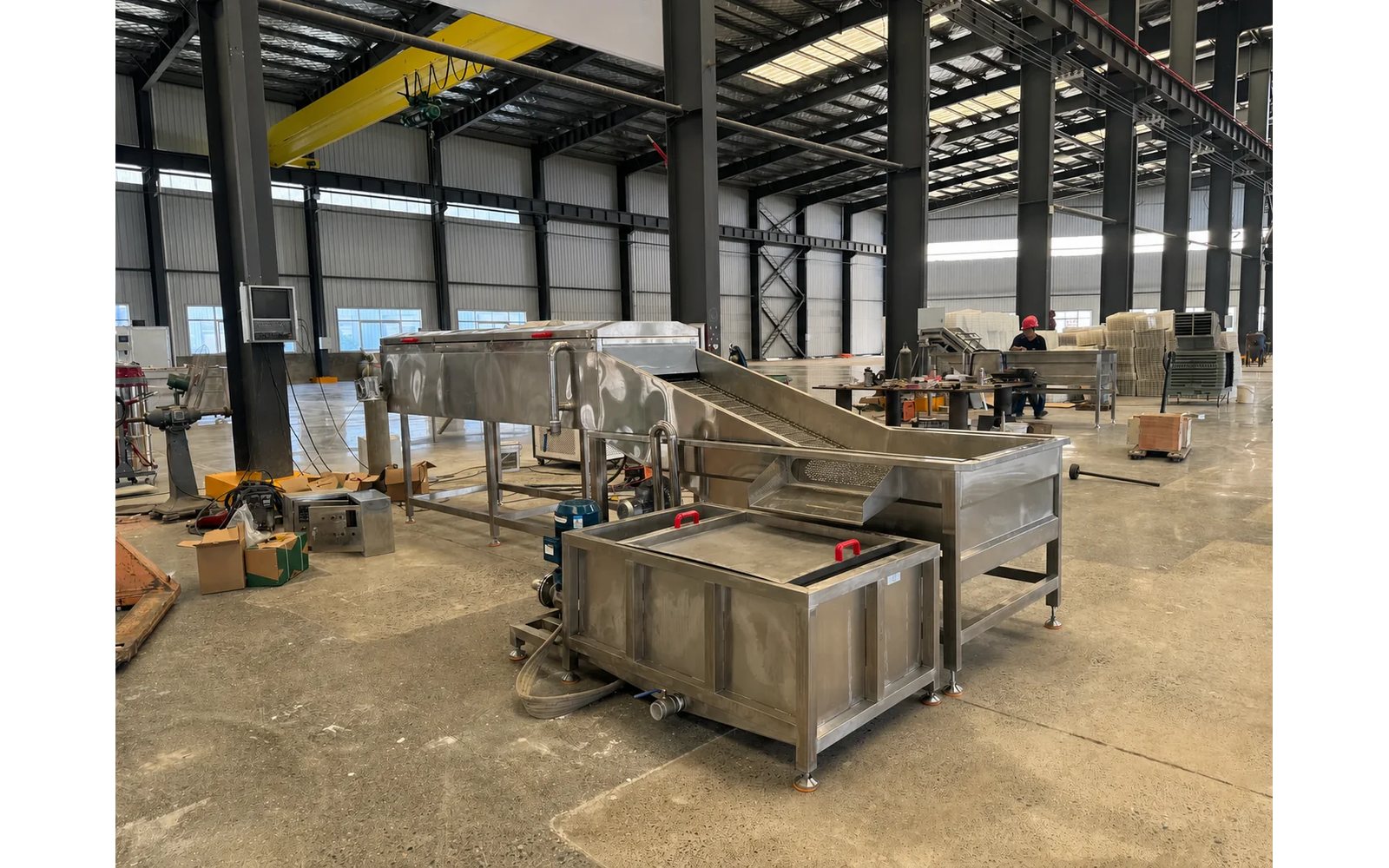
The conveyor photograph shows why line balance is more than a spreadsheet. Belt width, elevation, support structure, operating side and clean-down access occupy real space and influence product travel.
| Width and loading | Match the actual product depth and distribution, not only an average mass rate |
|---|---|
| Elevation and fall | Limit damage, splash and uncontrolled accumulation between duties |
| Control handoff | Assign run signals, stops, sensors, alarms and restart behavior |
| Service access | Reserve room for inspection, sanitation, belt tracking and component removal |
Test basis, FAT, acceptance and maintenance basis
Read the physical interfaces before approving the layout, because the rhythm of a vegetable line is set at its transfers. The feed into each stage, the discharge and the buffer between stages decide whether product moves steadily or waits, and the layout must be read as a set of interfaces rather than a floor plan.
Check each interface against the product family. A transfer that works for firm produce may damage a fragile leaf, and a buffer that suits one family may be wrong for another. The layout is approved only when each interface is confirmed for the products the line must run.
Check each interface against the product family, because a transfer that works for firm produce may damage a fragile leaf.
Verify One Declared Operating Window
A useful test plan names the product, loading, settings, duration, sample points, observable criteria, responsible parties and limits of the available factory test.
Product trial record
Record the representative material, incoming variation, settings, wash or cut result, product loss and operator intervention.
FAT and acceptance record
Define which connected duties are present, the agreed substitute where final product is unavailable, measurement method and sign-off route.
Maintenance basis
Review access, cleaning frequency, tooling or wear parts, lubrication, inspection points, spare parts and the party responsible for routine work.
Verify one declared operating window rather than optimising in the abstract. The window states the product, the input conditions, the output and the permitted variation, and it is the target the line is tuned to. Optimisation is then the work of bringing the line inside that window, not a vague pursuit of more speed.
Run the line against the window and record the result. If the line holds the window, the optimisation is verified; if it does not, the measurement shows which condition drifted. The declared window is what makes optimisation a measurable task with an end point.
Run the line against the window and record the result, and the measurement shows which condition drifted when the window is missed.
Carry the Same Basis Into Model and Quotation Review
The technical parameters below are review inputs, not missing-value placeholders. The selected equipment, output basis, utilities, documentation and acceptance scope are confirmed against the approved project record.
Vegetable-line engineering FAQ
Start the technical review
Carry the same basis into the model and quotation review so the optimised line is the line that is quoted. The product family, the input conditions and the operating window that were used for the optimisation must be the same in the model selection and the quotation, or the three documents describe different machines.
Update the basis in one place and let the changes flow through the model and the quotation. When the basis stays connected, the buyer can see whether the quoted line will hold the window that was verified, and the review ends with a machine that matches the measurement instead of a machine that matches the brochure.
Update the basis in one place and let the changes flow through the model and the quotation, so the quoted line is the line that was verified.
The product family, the input conditions and the operating window used for optimisation must be the same in the model selection and the quotation, or the documents describe different machines.
Send the Product Matrix and Production Rhythm
Include representative crop information, finished formats, kg/h or batches per day, recipe sequence, available utilities, dimensioned layout and the required next-stage condition.
- Product evidenceCrop, variety, dimensions, soil, firmness and incoming state
- Result criteriaCleaning condition, cut geometry, acceptable loss and damage
- Operating windowNormal and peak rate, shifts, batches and changeovers
- Factory interfaceWater, drainage, power, space, access and downstream duty
| Product input | Crop, variety, dimensions, soil load, firmness and incoming state |
|---|---|
| Finished-format input | Wash condition, cut geometry, acceptable loss, damage limit and next-stage condition |
| Operating input | Normal and peak rate, batches, shifts, recipe sequence and changeovers |
| Factory input | Water, drainage, power, layout, access, controls and downstream interface |
Frequently asked questions
Which inputs are required for vegetable-line batch optimization?
Why can nominal machine capacities fail to predict line output?
When is a higher-duty or custom configuration review required?
What should be measured during a product trial?
How are FAT, acceptance and maintenance connected?
Send the product matrix and the production rhythm together before requesting a model. The matrix lists the vegetable families, their conditions and their constraints; the rhythm lists the shifts, the changeovers and the cleaning time. Together they describe the duty the line must actually perform, and they are the input a supplier needs to size it.
Keep the matrix and the rhythm with the quotation and the acceptance plan. The line is then specified, quoted and accepted against the same set of products and the same operating pattern, and the optimisation work is not lost when the project moves from review to purchase.
Related pages
Vegetable Processing Line
Configure root, leafy or mixed vegetable preparation around product risks, washing and cutting duties, water, factory interfaces and acceptance.
Vegetable Washing Equipment
Compare verified Hadof washer references, washing mechanisms, product risks, line interfaces, test evidence and project configuration inputs.
Vegetable Cutting Machine
Compare verified Hadof vegetable cutter references by crop, finished geometry, tooling, output, line handoff and acceptance requirements.
Fruit & Vegetable Processing Systems
Configure washing, peeling, cutting, thermal preparation, freezing or sauce processing around crop condition and finished-product requirements.